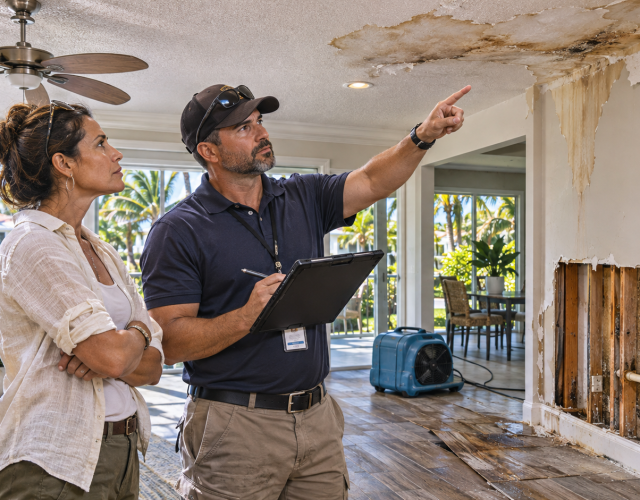
After filing a property insurance claim in Florida, you may expect the insurance adjuster’s first inspection to identify all the damage to your home or business. However, some problems are not immediately visible, and certain repairs may require more work than the original insurance estimate includes.
A property insurance claim reinspection in Florida may be appropriate when important damage was missed, additional damage becomes visible, or new documentation shows that the initial assessment may be incomplete.
At PICC FLA, we help Florida property owners review insurance claim estimates, document damage, and address concerns involving incomplete or disputed property loss evaluations.
You should consider requesting a reinspection when you have credible new evidence of missed damage, hidden property damage, or necessary repairs that were not adequately evaluated during the original inspection.
A second inspection is not automatically required simply because you disagree with an estimate. The strongest requests explain what needs another evaluation and provide supporting evidence.
Our residential insurance claim services help homeowners understand their claim documentation and prepare supporting information for the insurance company.
What Is a Property Insurance Claim Reinspection in Florida?
A reinspection is an additional examination of damaged property after an initial insurance inspection.
During the first inspection, an adjuster may photograph affected areas, measure damage, review the apparent cause of loss, and prepare information for the insurer’s evaluation.
However, the first visit does not necessarily identify every affected material or establish the complete repair scope.
A second damage inspection may help evaluate:
- Property damage not previously documented.
- Hidden damage discovered after the initial visit.
- Differences between repair estimates.
- Additional findings from contractors.
- Areas requiring further investigation.
The insurance company may review new documentation before deciding whether another physical inspection is necessary.
Our guide explaining what happens after an insurance adjuster inspects your home provides additional information about the steps following an initial property assessment.
At PICC FLA, we focus on connecting the requested additional evaluation to specific evidence rather than assuming another inspection will automatically change the claim outcome.
When Should You Request a Second Damage Inspection?
A second inspection becomes especially relevant when new information raises reasonable questions about the original damage assessment.
We recommend considering a reinspection under several circumstances.
What If the Insurance Adjuster Missed Visible Damage?
An initial inspection may overlook an affected room, damaged building component, or portion of the property connected to the reported incident.
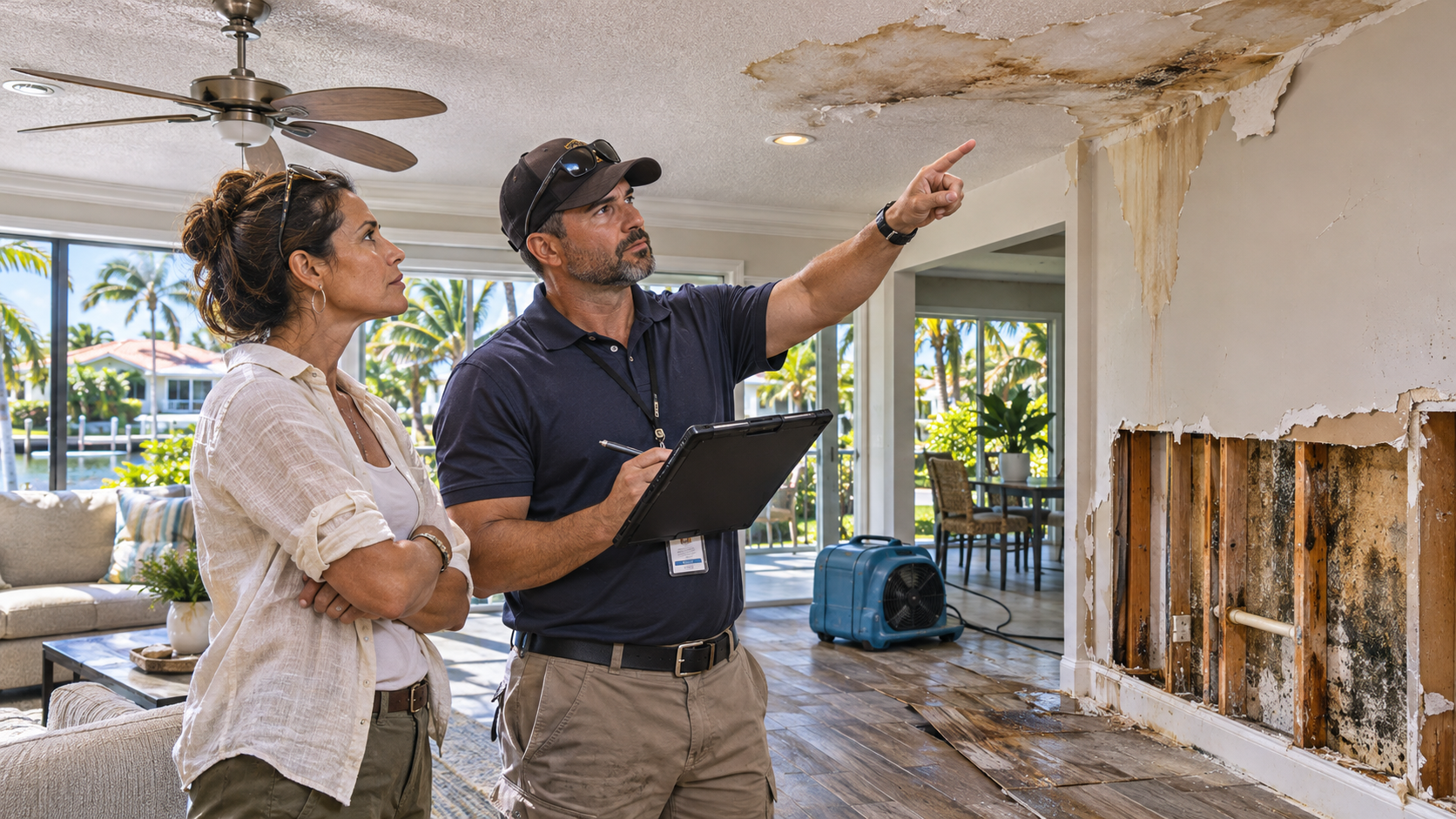
For example, an estimate might address ceiling damage while leaving out documented damage to adjoining walls or flooring.
Before requesting another inspection, identify the exact areas that were omitted.
Photographs, measurements, and descriptions can help establish whether the missed damage requires further evaluation.
What If Additional Damage Appears After the First Inspection?
Some property damage develops or becomes apparent after the initial inspection.
Water may remain concealed beneath flooring, inside cabinetry, or behind drywall. Storm-related roof damage may also affect areas that were not accessible during the first visit.
If additional damage becomes visible, document its location and condition promptly.
Our water damage insurance claim services address property losses involving plumbing failures, water intrusion, and other water-related incidents.
We help policyholders organize evidence that may establish the extent of damage associated with the reported loss.
How Can Hidden Property Damage Support a Reinspection Request?
Hidden damage is an important reason to review whether another inspection is appropriate.
For example, a homeowner may initially notice a water stain on the ceiling. Later, repair work may reveal affected insulation, deteriorated drywall, or moisture beneath nearby flooring.
Those findings may provide new information relevant to the original loss.
However, the existence of concealed damage does not automatically establish insurance coverage.
The cause of damage, policy provisions, exclusions, and supporting documentation must still be evaluated.
We recommend preserving:
- Photographs before affected materials are removed.
- Pictures of newly exposed damage.
- Inspection findings and moisture readings, when available.
- Repair records and contractor observations.
- Documentation connecting the damage to the original incident.
Our guide on proving hidden water damage in an insurance claim explains how supporting evidence can help establish damage that was not visible during the initial assessment.
Can an Updated Contractor Estimate Justify Another Inspection?
Yes. An updated contractor estimate can provide useful supporting information when it identifies damage or necessary repairs that differ from the insurer’s original evaluation.
However, a higher estimate alone does not automatically establish that the insurance company’s assessment is incorrect.
The important question is why the estimates differ.
An updated contractor estimate may identify:
- Additional damaged materials.
- Incorrect measurements or quantities.
- Missing repair procedures.
- Differences in material specifications.
- Necessary work discovered during repairs.
- Additional labor or repair requirements.
How Should You Compare the Two Estimates?
We recommend comparing the insurer’s estimate and the contractor’s findings line by line.
Look beyond the final dollar amount.
For example, if both estimates include kitchen flooring but only one addresses damaged underlayment, determine whether the additional work is supported by the documented conditions.
Our guide on reading an insurance claim estimate explains how to review repair quantities, materials, pricing, and the overall scope of work.
At PICC FLA, we evaluate available estimates alongside the physical evidence and relevant insurance policy provisions.
When Should Roof Damage Be Inspected Again?
Roof damage can be difficult to evaluate during a single inspection, especially when access is limited or certain damage is not immediately visible.
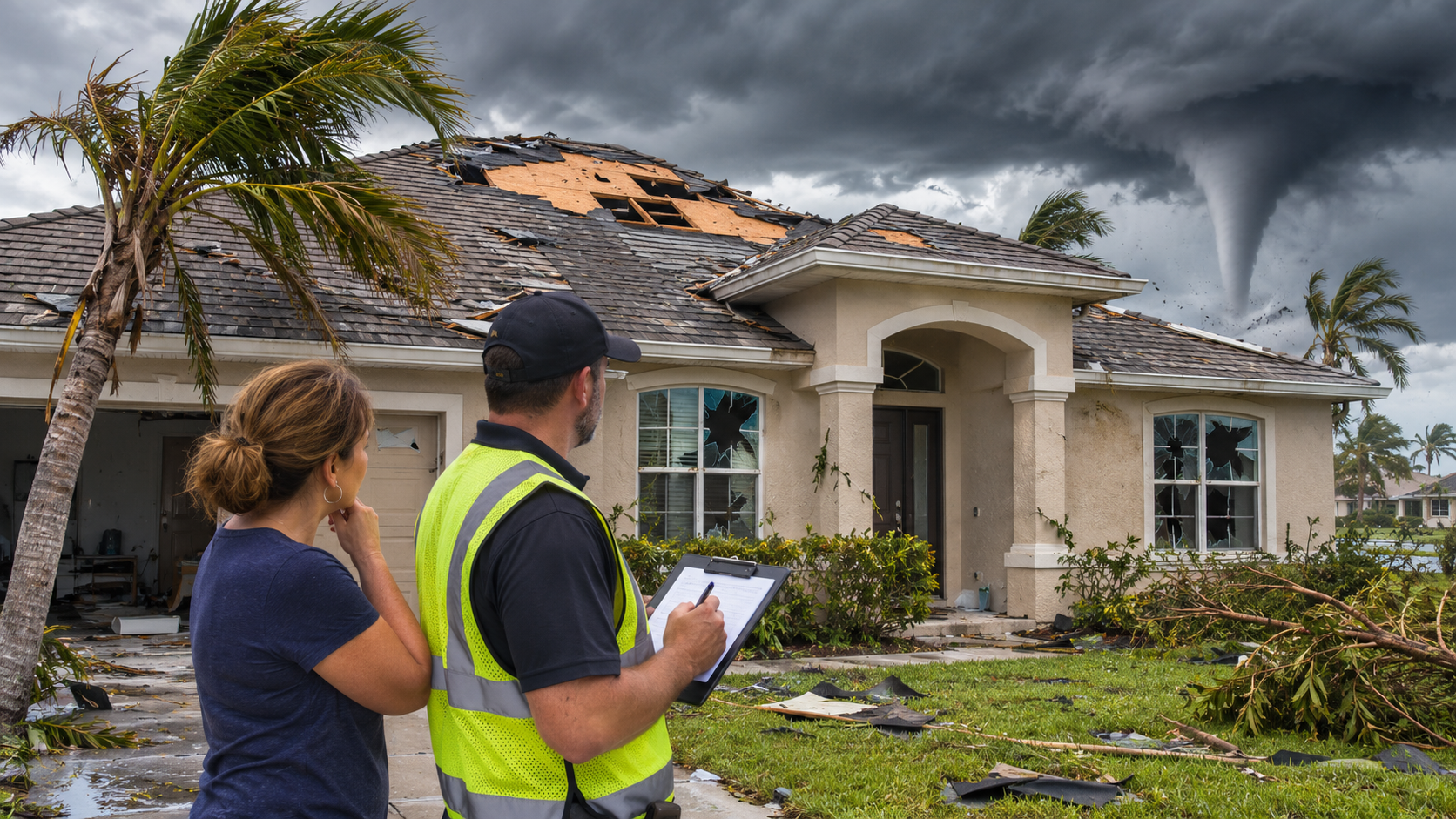
Following a hurricane, windstorm, or hail event, a homeowner may discover additional roofing problems after the initial claim inspection.
A reinspection may be worth requesting when new evidence identifies:
- Previously undocumented roof damage.
- Additional areas affected by the reported storm.
- Interior water damage associated with a roof opening.
- Repair conditions not reflected in the original estimate.
The cause of the damage must still be established.
Not every roof problem discovered after a storm is necessarily storm-related or covered by insurance.
Our roof damage insurance claim services help property owners document roofing losses and evaluate claim-related repair information.
What Evidence Should You Gather Before Requesting a Reinspection?
A well-supported request should clearly explain why the original assessment needs another review.
We recommend organizing your documentation before contacting the insurance company.
Your supporting records may include:
- Original insurance estimate: Keep the initial evaluation and identify disputed or missing items.
- Current photographs: Capture newly discovered damage and affected areas.
- Updated contractor estimate: Include itemized repairs and supporting explanations.
- Inspection findings: Preserve relevant reports, photographs, and measurements.
- Repair records: Keep invoices and documentation showing what was discovered during work.
- Claim correspondence: Retain emails, letters, and previous inspection information.
The goal is to show what changed or what was overlooked, rather than simply requesting a higher settlement.
For situations involving emergency protection of damaged property, our guide to temporary repairs before an insurance inspection explains why preserving evidence and repair receipts matters.
Safety and preventing additional property damage should remain priorities.
How Do You Request a Property Damage Reinspection From Your Insurance Company?
A reinspection request should be clear, specific, and supported by documentation.
We recommend following these steps:
- Review the original estimate and inspection findings.
- Identify each area that needs further evaluation.
- Gather photographs, reports, and updated repair information.
- Contact the insurer through an appropriate claim communication channel.
- Explain which findings were missed or require clarification.
- Submit the supporting evidence and request written acknowledgment.
- Keep copies of all communications and responses.
Your written request should reference the existing claim number and date of loss.
Explain why an additional physical inspection may be necessary, especially when newly discovered damage cannot be adequately assessed through documents alone.
The insurer may agree to inspect again, request further information, or review the evidence without scheduling another visit.
Requesting a reinspection does not guarantee another site visit, additional coverage, or an increased claim payment.
What Happens If the Insurance Company Does Not Agree to Reinspect?
If the insurer declines another inspection, request an explanation of its position and ask how your additional evidence was evaluated.
Review whether the disagreement concerns:
- The cause of the damage.
- The policy’s available coverage.
- The extent of the documented loss.
- The estimated cost of necessary repairs.
- Missing information or disputed findings.
These issues are not always resolved through a physical reinspection.
At PICC FLA, we help property owners review claim documentation and communicate disputed loss information.
Our guide on what to do when an insurance estimate is too low explains how supporting estimates and evidence can help identify differences in the assessed repair scope.
Can a Reinspection Lead to a Supplemental Insurance Claim?
Yes. Newly documented damage may support a supplemental insurance claim when it qualifies under the applicable policy and legal requirements.
A supplemental claim generally involves additional loss or damage from the same event that the insurer previously adjusted, or qualifying additional costs associated with repairs under an existing claim.
A reinspection and a supplemental claim are related but different.
The reinspection evaluates property conditions. A supplemental claim formally presents qualifying additional loss or damage.
Our guide on supplemental insurance claims in Florida explains how additional property damage and repair costs may be addressed.
What Deadlines Should Florida Property Owners Consider?
Under Florida Statutes section 627.70132, the general notice deadlines for claims subject to the current requirements are:
- Initial claims and reopened claims: Within one year after the date of loss.
- Supplemental claims: Within 18 months after the date of loss.
The statute also defines reopened and supplemental claims differently and includes a limited tolling provision for qualifying military deployment.
Earlier policy contracts and certain circumstances may involve different applicable legal requirements. Policyholders should verify which rules govern their particular loss.
Requesting another inspection should not be treated as automatically satisfying the notice requirements for a supplemental or reopened claim.
We encourage property owners to address newly discovered damage promptly rather than assuming additional time is available.
How Can PICC FLA Help With a Property Damage Reinspection?
At PICC FLA, we represent Florida policyholders in property insurance claims involving water damage, roof damage, hurricanes, fire, and other covered property losses.
When homeowners believe an initial assessment may be incomplete, we can help by:
- Reviewing available policy and claim information.
- Inspecting and documenting property damage.
- Evaluating original and updated repair estimates.
- Identifying differences in documented repair requirements.
- Organizing supporting claim materials.
- Communicating and negotiating with the insurer on behalf of the policyholder.
Our objective is to help present an accurate, evidence-supported evaluation of the property loss.
We do not guarantee that every reinspection request will be approved or that every disputed repair item will be covered.
If your insurance claim appears incomplete, contact PICC FLA for a free claim review and discuss whether additional documentation or claim evaluation may be appropriate.
What Should You Remember Before Requesting a Property Damage Reinspection?
A second damage inspection can be useful when new evidence identifies missed damage, concealed property damage, or repair requirements that were not fully addressed during the initial inspection.
The most effective approach is to explain the specific concern and support it with reliable documentation.
Before requesting another inspection, compare the original estimate with updated findings, preserve photographs and repair records, and review applicable claim deadlines.
At PICC FLA, we help Florida property owners understand their claim documentation, evaluate disputed property losses, and navigate the insurance claim process.
Our focus is on helping policyholders pursue a properly supported evaluation of damage under their applicable insurance coverage.
Which Organizations Support This Guidance in the Works Cited?
Florida Department of Financial Services. “General Insurance Coverage FAQs.” Division of Consumer Services, https://www.myfloridacfo.com/division/consumers/storm/general-disaster-faqs. Accessed 26 Nov. 2026.
Florida Legislature. “Section 627.70131: Insurer’s Duty to Acknowledge Communications Regarding Claims; Investigation.” The 2026 Florida Statutes, https://www.flsenate.gov/Laws/Statutes/2026/627.70131. Accessed 26 Nov. 2026.
Florida Legislature. “Section 627.70132: Notice of Property Insurance Claim.” The 2026 Florida Statutes, https://www.flsenate.gov/Laws/Statutes/2026/627.70132. Accessed 26 Nov. 2026.
Florida Legislature. “Section 627.7142: Homeowner Claims Bill of Rights.” The 2026 Florida Statutes, https://www.flsenate.gov/Laws/Statutes/2026/627.7142. Accessed 26 Nov. 2026.