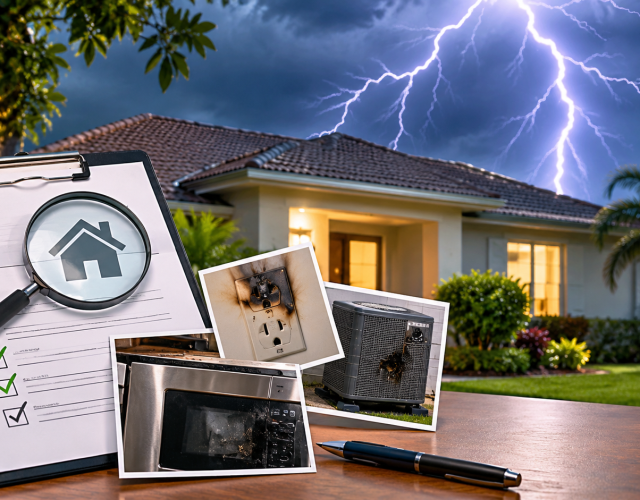
A lightning strike can cause serious property damage in seconds. You may discover that your electrical outlets stopped working, appliances suddenly failed, or your home’s electrical system is no longer functioning properly. While some damage is immediately visible, other problems may remain hidden until you inspect the affected systems.
If you are filing a lightning damage insurance claim, proving what happened is one of the most important parts of the process. Insurance companies need evidence connecting the damage to a covered event. Without adequate documentation, certain losses may be questioned, excluded, or valued differently than expected.
At PICC FLA, we help Florida homeowners and property owners identify, document, and present lightning-related damage to their insurance companies. Our lightning damage insurance claim services focus on evaluating the extent of the loss, reviewing applicable insurance coverage, and helping policyholders pursue fair settlements.
In this guide, we explain how to prove lightning damage, what evidence you should collect, and how our public adjusters can assist throughout the claims process.
What Evidence Do You Need to Prove Lightning Damage?
Proving lightning damage generally involves showing when the incident occurred, identifying the affected property, and establishing a reasonable connection between the damage and the lightning event.
A successful claim depends on the available evidence, the cause of the loss, and your insurance policy’s coverage provisions.
We recommend collecting several types of documentation:
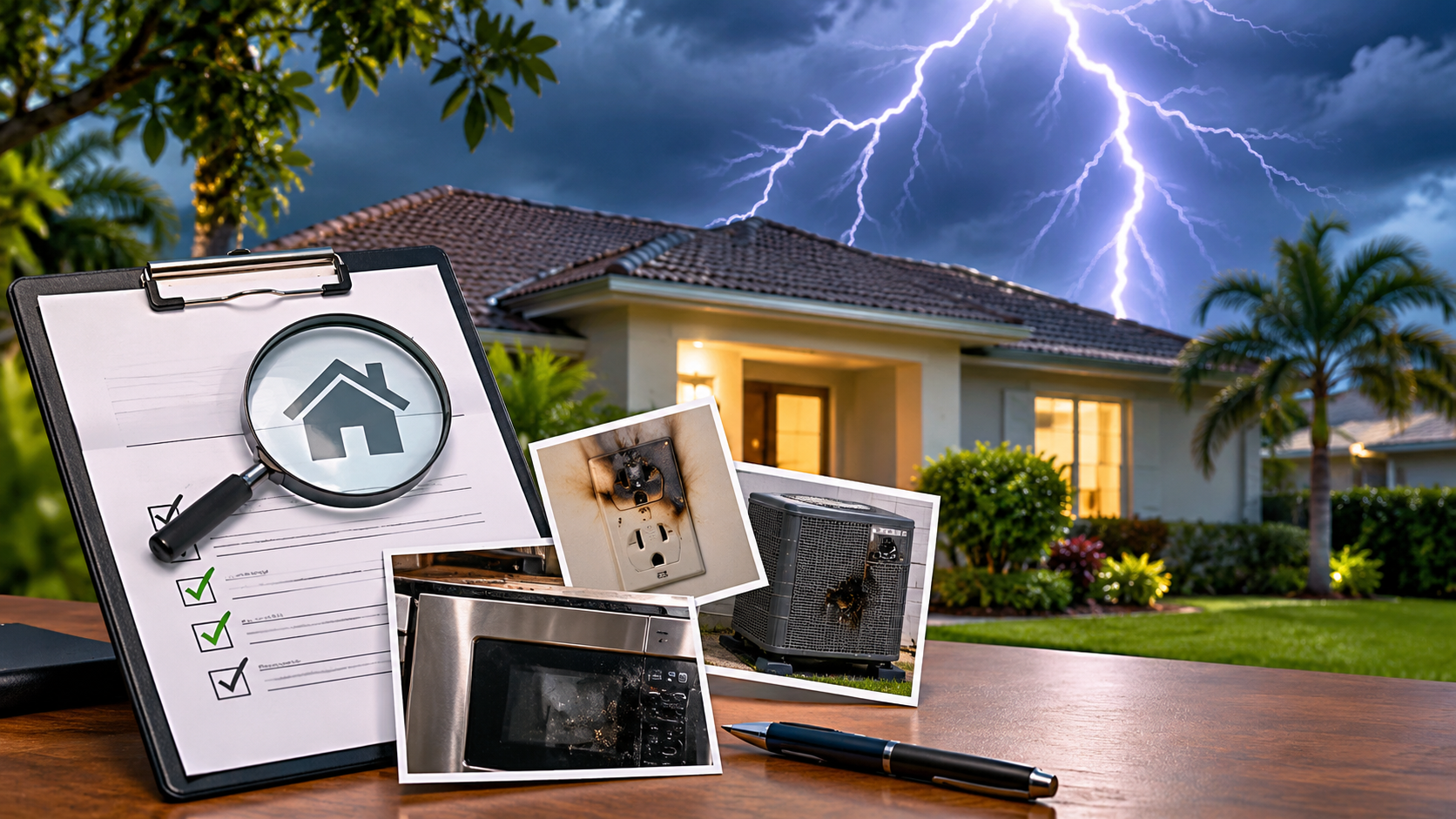
- Photographs and videos: Capture visible damage to your roof, electrical outlets, appliances, and other affected property.
- Weather records: Obtain available information confirming lightning activity near your property around the time of the incident.
- Professional inspection reports: Request written findings from qualified electrical professionals or other appropriate specialists.
- Repair estimates: Gather itemized estimates explaining the work necessary to repair or replace damaged components.
- Property records: Keep appliance receipts, maintenance documentation, and relevant repair histories.
- Incident timeline: Record when the storm occurred, when you noticed the damage, and which systems stopped functioning.
No single document necessarily proves every aspect of a lightning loss. Combining different forms of evidence can help establish a more complete picture.
At PICC FLA, we examine these materials as part of our property insurance claim process.
How Can You Tell Whether Lightning Damaged Your Property?
Lightning can affect a property through a direct strike or through electrical surges traveling along connected systems.
The damage may involve wiring, appliances, electronic equipment, HVAC components, or structural materials.
What Are the Common Signs of Electrical Lightning Damage?
Possible warning signs include:
- Electrical outlets or switches that no longer function
- Circuit breakers that trip unexpectedly
- Appliances that stopped working immediately after a storm
- Burn marks around electrical equipment
- Damaged wiring or electrical panels
- HVAC equipment that no longer operates normally
- Multiple electronic devices failing around the same time
These signs can suggest an electrical problem, but they do not independently confirm lightning as the cause.
Other conditions, including equipment failure, electrical faults, or unrelated power disturbances, may produce similar symptoms.
We recommend having qualified professionals evaluate the affected equipment before concluding that lightning caused the damage.
Can Lightning Damage Exist Without Visible Burn Marks?
Yes. Electrical damage may occur even when there are no obvious signs of burning or a direct strike.
Electrical surges can affect internal components without leaving visible damage on the exterior of an appliance.
For example, an air conditioning unit may appear physically intact but fail to operate after a nearby lightning event.
We consider this possibility when evaluating the extent of a property loss. Our goal is to identify damage supported by inspection findings rather than relying only on what can be seen from the outside.
How Do You Document Lightning Damage Before Filing a Claim?
Proper documentation should begin as soon as conditions are safe.
The first priority is protecting yourself and preventing additional property damage.
Do not touch exposed wiring, damaged electrical panels, or equipment that may still present an electrical hazard. If you notice smoke, sparking, or signs of fire, contact the appropriate emergency professionals.
Once the property is safe, follow these steps.
How Should You Photograph and Record the Damage?
Take clear pictures of each affected area from multiple angles.
For appliances and electrical equipment, photograph the exterior, model information when accessible, and any visible damage.
Record the date and approximate time you discovered each problem.
If several appliances stopped operating during the same storm, document them individually rather than grouping everything under one description.
A detailed inventory helps establish the scope of your potential lightning appliance damage claim.
Why Should You Keep Damaged Appliances and Repair Records?
Damaged equipment may provide useful information during an insurance inspection.
Before disposing of an appliance, photograph it and preserve available information about its condition.
Keep repair invoices, diagnostic findings, replacement estimates, and purchase documentation.
If equipment must be removed because it creates an immediate safety hazard, document its condition whenever safely possible and retain relevant records.
For guidance on protecting your property while preserving evidence, review our article on temporary repairs before an insurance inspection.
How Can Professional Inspections Strengthen a Lightning Damage Claim?
A professional inspection can help distinguish lightning-related damage from ordinary equipment failure.
For an electrical damage insurance claim, a qualified electrician’s written findings may be especially valuable.
An inspection report may identify:
- The equipment or electrical components examined
- The damage discovered during testing
- Whether the findings are consistent with an electrical surge
- Other possible causes considered during the evaluation
- Recommended repairs or replacements
- Estimated costs of correcting the damage
A report should explain the professional’s findings rather than simply state that an appliance stopped working after a storm.
At PICC FLA, our public adjusters review damage documentation, evaluate the claim, and coordinate the supporting information needed to present the loss.
Our role is to assess and document the insurance claim. Technical electrical repairs and specialized safety testing should be performed by appropriately qualified professionals.
Does Homeowners Insurance Cover Lightning Strikes and Power Surges?
Many homeowners insurance policies provide coverage for certain losses caused by lightning. However, the exact protection depends on the policy language and circumstances surrounding the damage.
When reviewing lightning strike homeowners insurance coverage, it is important to distinguish direct physical damage from other electrical problems.
Possible categories of loss include:
- Damage to the home’s electrical wiring
- Lightning-related damage to appliances
- Damage to HVAC equipment
- Fire damage caused by a lightning strike
- Structural damage to the building
- Damage to covered personal belongings
Coverage should never be assumed simply because the damage occurred during a thunderstorm.
Some policies contain exclusions, limitations, deductibles, or specific conditions affecting electrical equipment and power surge losses.
We review relevant policy provisions and documented damage as part of our residential insurance claims services.
Can Lightning Damage to Appliances Be Covered?
A lightning appliance damage claim may involve refrigerators, televisions, computers, air conditioning equipment, and other covered appliances or electronics.
The important questions are whether the equipment was damaged by the reported event and whether the policy covers that particular loss.
For example, a refrigerator that suddenly fails after a lightning storm may require professional evaluation to determine whether the damage resulted from an electrical surge or an unrelated mechanical problem.
Receipts, diagnostic reports, photographs, and repair estimates can help support the claim.
What Happens If Lightning Causes Fire or Roof Damage?
Lightning-related losses are not limited to appliances.
A direct strike may cause fire, damage roofing materials, or affect building components.
When these conditions occur, the claim may require documentation beyond an electrical inspection.
We assist property owners with fire damage insurance claims and roof damage insurance claims, including identifying affected areas and evaluating applicable policy provisions.
Any associated damage should be investigated and documented according to its actual cause.
How Do You File a Lightning Damage Insurance Claim?
Filing a lightning damage claim generally involves notifying your insurer, documenting the damage, and cooperating with the claim investigation.
We recommend the following process.
- Protect the property. Address immediate safety concerns and take reasonable steps to prevent additional damage.
- Notify your insurance company. Report the incident promptly and follow your policy’s notice requirements.
- Document the loss. Collect photographs, weather information, inventories, and inspection records.
- Review your policy. Identify applicable coverage, deductibles, conditions, and exclusions.
- Obtain repair estimates. Request professional assessments and itemized costs for damaged property.
- Participate in the inspection. Make the documented damage available for evaluation.
- Review the claim decision. Compare the insurer’s conclusions with the evidence and applicable coverage.
At PICC FLA, we help policyholders organize these steps, prepare supporting claim materials, and communicate with insurers.
Our involvement is particularly useful when the extent of the damage is uncertain or the initial assessment does not appear to include all affected property.
What Should You Do If Your Lightning Damage Claim Is Underpaid?
An insurance settlement may not reflect every documented loss.
For example, an initial estimate could address a visibly damaged electrical component without including additional equipment problems identified during a later inspection.
If your claim payment seems insufficient, we recommend comparing the insurer’s estimate with your available evidence.
Consider whether:
- All reported damaged appliances were evaluated
- Electrical inspection findings were considered
- Repair costs match the documented scope
- Relevant building damage was included
- Deductibles and depreciation were correctly explained
- Policy limitations were applied appropriately
Our guide on how to read an insurance claim estimate explains how to examine claim calculations and identify possible differences.
Additional compensation is not automatic. Any request for reconsideration or supplemental payment must be supported by the policy, evidence, and applicable deadlines.
How Can PICC FLA Help Prove Your Lightning Damage Claim?
At PICC FLA, we understand how difficult it can be to determine the full extent of lightning damage, especially when appliances and electrical systems appear normal from the outside.
As Florida public adjusters, we represent policyholders during the property insurance adjustment process.
Our services include:
- Reviewing relevant insurance policy provisions
- Inspecting and evaluating reported property damage
- Identifying potential hidden losses requiring further investigation
- Organizing photographs, reports, and supporting documentation
- Preparing property damage estimates when appropriate
- Communicating with insurance companies
- Negotiating claim settlements on behalf of policyholders
We focus on presenting a clear, evidence-supported account of the loss.
If your claim has already been evaluated, we can also review the available documentation to determine whether additional claim assistance may be appropriate.
Why Is Accurate Documentation Important for Lightning Insurance Claims?
Lightning damage claims can involve several connected issues.
An electrical surge may affect multiple appliances, while a direct strike may create additional building damage. Each affected item needs appropriate documentation.
Incomplete records can make it harder to explain the timing, cause, and value of the loss.
At PICC FLA, our approach is to document the circumstances carefully and evaluate the available evidence alongside the applicable insurance policy.
We want property owners to understand that proving damage involves more than listing broken equipment. It requires reliable information connecting the incident to the claimed loss.
Good documentation helps create a clearer basis for the insurer’s investigation and any subsequent review.
How Can You Get Help With Your Lightning Damage Insurance Claim?
Lightning damage is not always easy to identify, and the insurance process can become more complicated when electrical systems, appliances, or building components are affected.
At PICC FLA, we help Florida property owners document losses, understand relevant coverage, and present insurance claims supported by available evidence.
Whether you are preparing a new claim or reviewing an existing settlement, proper documentation is an important starting point.
If you need assistance proving lightning damage, contact PICC FLA to request a consultation and discuss your property insurance claim.
Our goal is to help you pursue a fair settlement based on your policy and the documented extent of your loss.
Which Organizations Provide Supporting Information?
Florida Department of Financial Services. “Homeowners Insurance Overview.” Division of Consumer Services, https://www.myfloridacfo.com/division/consumers/understanding-insurance/homeownersinsuranceoverview. Accessed 19 Nov. 2026.
Florida Department of Financial Services. “Hurricane Recovery Resources.” Office of the Insurance Consumer Advocate, https://myfloridacfo.com/division/ica/storm. Accessed 19 Nov. 2026.
National Weather Service. “Lightning Indoors.” Lightning Safety, https://www.weather.gov/safety/lightning-indoors. Accessed 19 Nov. 2026.
National Weather Service. “Lightning Tips.” Lightning Safety, https://www.weather.gov/safety/lightning-tips. Accessed 19 Nov. 2026.