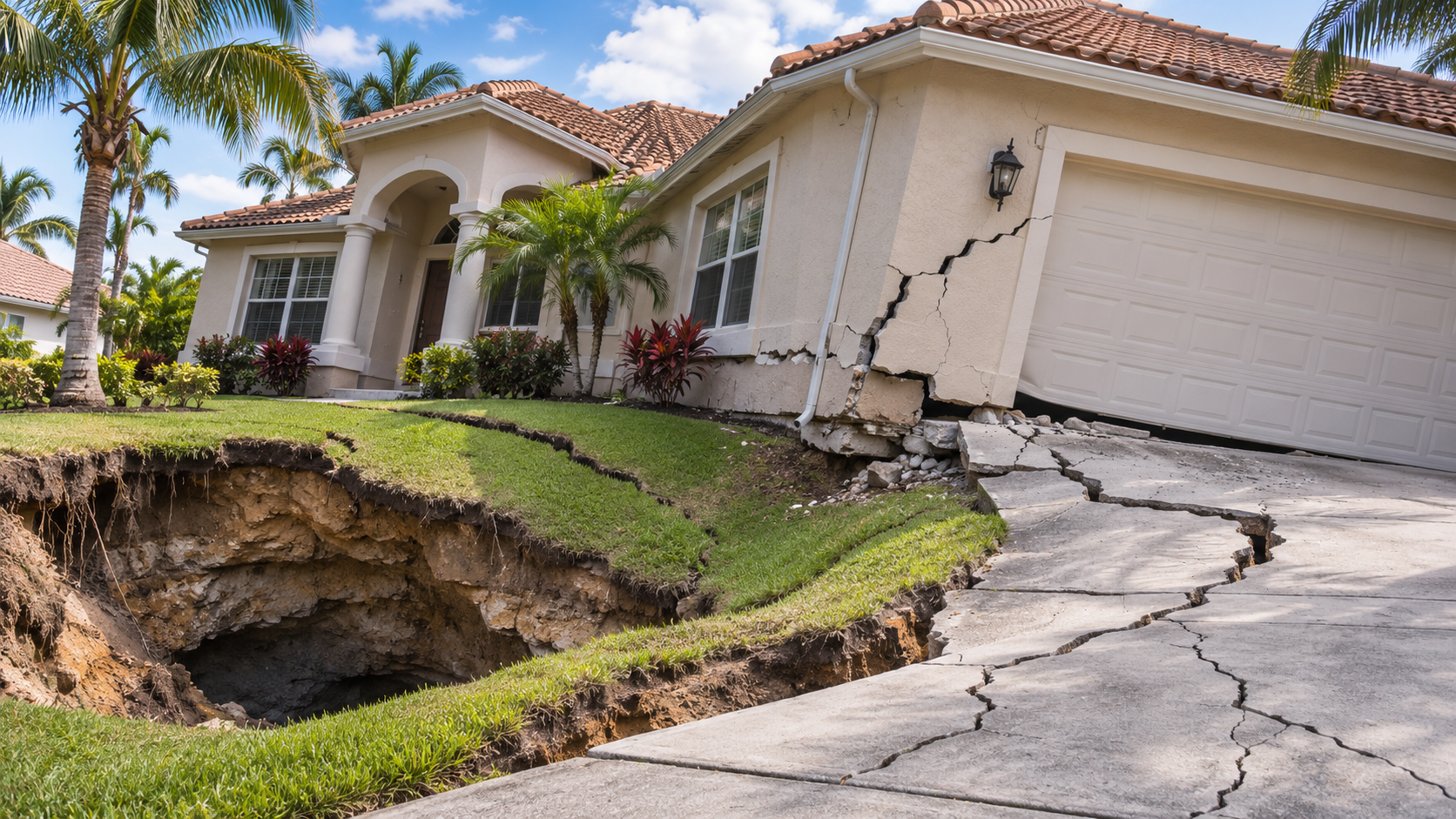
When cracks appear in your home’s foundation, floors begin to slope, or the ground surrounding your property starts to sink, it is natural to worry about a possible sinkhole. For Florida homeowners, these warning signs also raise an important insurance question: What is the difference between catastrophic ground cover collapse and sinkhole damage?
Although these terms are related, they do not mean the same thing under Florida insurance law. Understanding the difference between sinkhole vs catastrophic collapse coverage can help homeowners recognize what their insurance policy may cover and what documentation may be required.
Under Florida Statutes Section 627.706, property insurers must provide catastrophic ground cover collapse coverage. However, broader sinkhole loss coverage is generally available for an additional premium and may not be included in every homeowners insurance policy.
At PICC FLA, we help Florida property owners navigate sinkhole damage insurance claims, including property damage inspections, claim documentation, policy reviews, and negotiations with insurance companies.
Understanding these coverage differences is an important first step when determining how to approach a potential ground movement insurance claim.
What Is Catastrophic Ground Cover Collapse in Florida?
Catastrophic ground cover collapse is a specific type of geological event defined under Florida insurance law. It involves a sudden collapse of the ground that causes significant structural damage and results in the insured building being officially condemned and ordered vacated.
Florida Statutes Section 627.706 establishes four conditions that must all be satisfied for an event to qualify as catastrophic ground cover collapse:
- Abrupt ground collapse: The ground cover must collapse suddenly.
- Visible ground depression: A depression in the ground must be clearly visible to the naked eye.
- Structural damage: The collapse must cause structural damage to the covered building, including its foundation.
- Government condemnation: An authorized government agency must condemn the insured structure and order it vacated.
All four conditions must be present.
This is an important distinction because visible cracks, uneven floors, or minor settlement do not automatically qualify as catastrophic ground cover collapse.
Even substantial property damage does not necessarily satisfy this definition unless the required statutory conditions are established.
What Is a Sinkhole and How Does It Affect a Home?
A sinkhole is a landform created when soil, sediment, or rock subsides as underlying rock formations are dissolved by groundwater.
Florida’s geological conditions make sinkhole activity an important concern for some property owners.
Sinkholes can develop when underground materials weaken or move into cavities beneath the surface. Depending on the circumstances, this movement may affect the ground supporting a building.
At PICC FLA, we recognize that suspected sinkhole damage does not always begin with a dramatic opening in the ground.
Potential warning signs may include:
- Cracks forming in interior or exterior walls
- Uneven or sloping floors
- Doors and windows becoming difficult to open
- Separation between walls and ceilings
- Foundation movement
- Cracked flooring or tiles
- Depressions developing around the property
These conditions deserve attention, but they do not independently establish that sinkhole activity caused the damage.
Other structural or foundation problems can produce similar symptoms.
Determining whether sinkhole activity is responsible may require evaluation by appropriately qualified geological or engineering professionals.
Our Florida sinkhole damage claims services address the importance of evaluating structural conditions, reviewing technical evidence, and preparing supporting claim documentation.
What Is the Difference Between Sinkhole Loss and Catastrophic Ground Cover Collapse?
The main difference is the type of damage that qualifies and the insurance coverage available.
Catastrophic ground cover collapse has a narrow legal definition that requires sudden ground collapse, a visible depression, structural damage, and government condemnation with an order to vacate.
A sinkhole loss, however, is defined as structural damage to a covered building, including its foundation, caused by sinkhole activity.
This means a covered sinkhole loss does not necessarily require the property to collapse suddenly or be condemned.
However, the damage must still satisfy Florida’s statutory definition of structural damage and the applicable insurance policy requirements.
How Do the Two Types of Coverage Compare?
| Coverage factor | Catastrophic ground cover collapse | Sinkhole loss |
| Florida coverage requirement | Mandatory for property insurers | Generally offered for an additional premium |
| Sudden ground collapse | Required | Not necessarily required |
| Visible ground depression | Required | Not necessarily required |
| Qualifying structural damage | Required | Required |
| Government condemnation and order to vacate | Required | Not required |
| Applicable policy terms | Yes | Yes |
This distinction matters because a homeowner might experience sinkhole-related structural damage without meeting the four conditions required for catastrophic ground cover collapse.
In that situation, additional sinkhole coverage may be necessary for the damage to qualify for insurance payment.
Does Homeowners Insurance Cover Catastrophic Ground Cover Collapse?
Florida law requires property insurers to provide coverage for catastrophic ground cover collapse.
However, this requirement does not mean every foundation crack, ground depression, or structural problem will qualify.
The event must meet the statutory conditions, and the claim remains subject to applicable policy provisions.
For example, a homeowner may notice cracks developing around a foundation or a depression forming in the yard. These conditions alone are not sufficient to establish catastrophic ground cover collapse.
Even where substantial damage exists, the government condemnation and evacuation requirement remains important.
What Does Ground Cover Collapse Insurance Actually Protect?
Ground cover collapse insurance addresses losses resulting from catastrophic ground cover collapse as defined by Florida law.
The statute also provides for contents coverage when a loss results from a qualifying catastrophic ground cover collapse.
However, insurers may restrict applicable ground cover collapse and sinkhole loss coverage to the principal building, as defined in the policy.
For this reason, homeowners should review their insurance documents rather than assume all structures and belongings receive identical protection.
Our property insurance claim process explains why reviewing policy terms, documenting property conditions, and maintaining accurate records are important parts of preparing a claim.
Does Florida Homeowners Insurance Automatically Cover Sinkhole Damage?
Not necessarily.
Florida law distinguishes mandatory catastrophic ground cover collapse coverage from additional sinkhole loss coverage.
Property insurers are required to make sinkhole loss coverage available for an appropriate additional premium, subject to applicable statutory provisions.
This optional coverage can address qualifying structural damage caused by sinkhole activity even when the building has not been condemned.
However, buying sinkhole coverage does not mean every crack or instance of settlement will qualify as a covered sinkhole loss.
Florida law establishes specific structural damage criteria.
These address serious conditions involving structural components, foundation displacement, safety hazards, or other qualifying structural damage.
The actual cause and severity of the damage must be established.
What Should Homeowners Check in Their Insurance Policies?
When reviewing Florida ground collapse coverage, we recommend checking:
- Whether the policy includes a sinkhole loss endorsement
- Whether catastrophic ground cover collapse coverage is identified
- Applicable deductibles
- Coverage limits and exclusions
- Building and contents coverage provisions
- Inspection and claim documentation requirements
- Conditions governing structural damage claims
Under Florida law, residential sinkhole coverage may include deductibles of 1%, 2%, 5%, or 10% of the dwelling coverage limit.
The deductible that applies depends on the policy purchased.
Understanding these details before submitting a claim can help homeowners identify what information may be necessary.
What Are the Warning Signs of Possible Sinkhole Damage?
Ground movement can create visible changes throughout a property.
Some homeowners first notice small cracks around windows or doors. Others discover uneven floors or separation between structural components.
Potential signs include foundation cracks, changes in floor elevation, leaning walls, and unexplained depressions in the surrounding ground.
However, not every crack indicates sinkhole activity, and no single warning sign confirms a covered sinkhole loss.
This is why documentation and qualified evaluation are important.
If homeowners discover concerning property damage, we recommend recording the visible conditions without making assumptions about the cause.
If there is a possibility of structural instability, safety should take priority over inspecting or photographing the damage.
How Can Homeowners Document Suspected Sinkhole Damage?
Careful documentation helps establish the condition of the property and provides supporting information during the insurance claim process.
Once the property is safe to access, homeowners can begin gathering evidence.
We recommend:
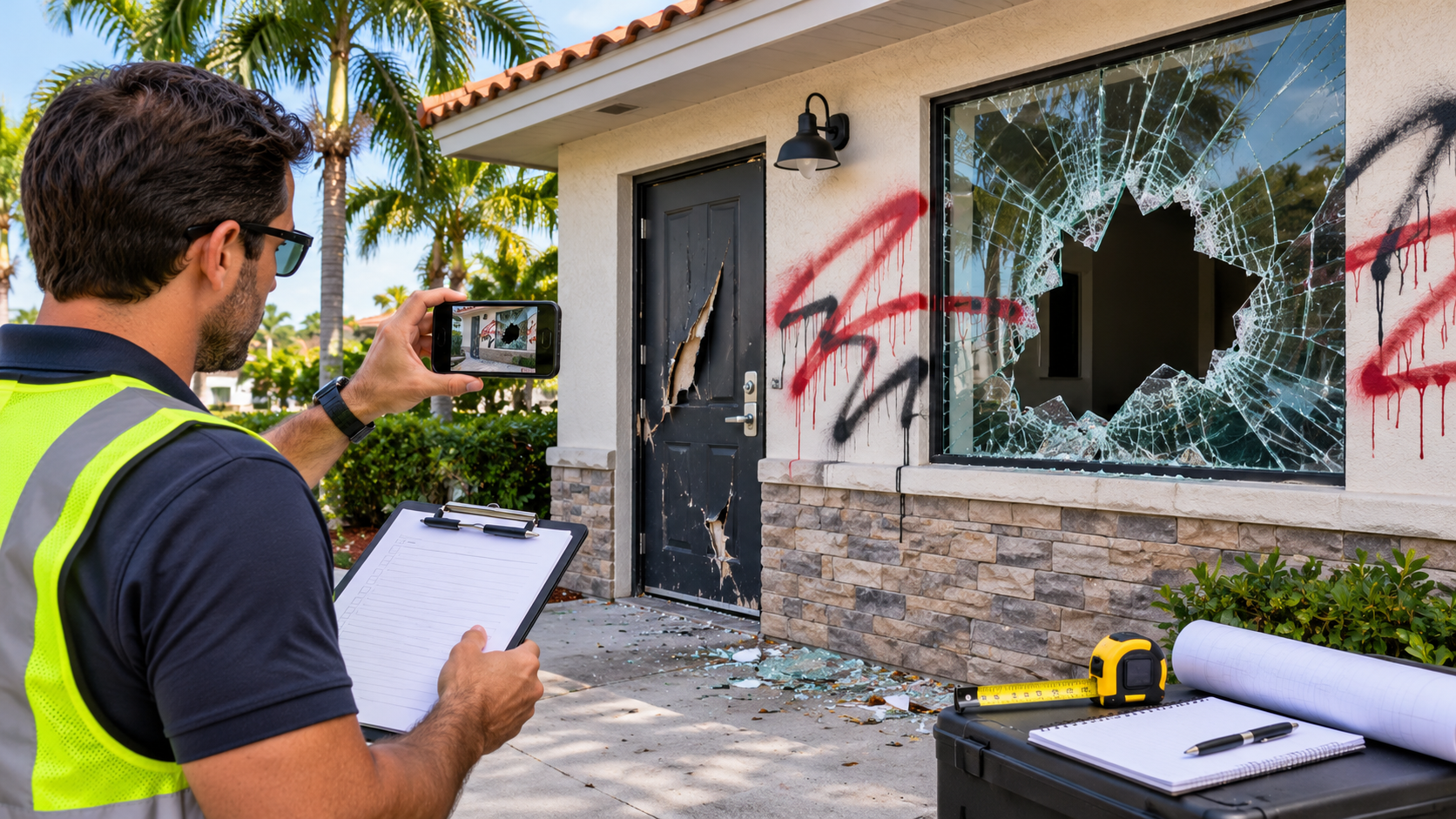
- Photographing visible foundation and wall cracks
- Recording uneven flooring or other visible movement
- Documenting ground depressions
- Keeping dated photographs and videos
- Saving previous inspection reports
- Maintaining repair estimates and invoices
- Keeping insurance correspondence
- Recording when damage was first observed
- Preserving relevant engineering or geological reports
Avoid filling depressions, covering cracks, or removing damaged materials before appropriate documentation when it is safe and practical to preserve them.
Any immediate safety concerns should be addressed by qualified professionals.
Our guide on how to file a homeowners insurance claim explains the importance of documenting damage, reviewing insurance policies, and preserving relevant records.
How Do Insurance Companies Evaluate Sinkhole Claims?
An insurance claim involving suspected sinkhole activity may require more technical evaluation than an ordinary property damage claim.
The investigation may involve reviewing foundation conditions, identifying structural damage, and evaluating whether geological activity contributed to the loss.
Depending on the circumstances and applicable legal requirements, qualified professionals may be involved in assessing the cause of damage.
Florida’s statutory definition of sinkhole activity is specific. It concerns movement or weakening of the earth supporting the covered building associated with soil, sediment, or rock moving into underground voids created by water acting on limestone or similar formations.
That distinction matters because not every foundation problem results from sinkhole activity.
At PICC FLA, we help policyholders review documentation, assess damage, prepare claim estimates, and communicate with insurers.
Our guide explaining what happens after an insurance adjuster inspects your home provides additional insight into how inspections fit into the broader property insurance claim process.
What Happens If a Sinkhole Insurance Claim Is Denied?
An insurance company may deny a claim when it determines that the reported damage does not meet the requirements of the applicable coverage.
For example, a claim submitted under catastrophic ground cover collapse coverage may not qualify when the building has not been condemned and ordered vacated.
A claim involving optional sinkhole loss coverage may also be disputed based on the cause of damage, structural damage findings, policy terms, or supporting evidence.
If a claim is denied, the homeowner should carefully review the written explanation.
Important considerations include:
- Which policy provision was used to deny the claim?
- What cause of damage did the insurer identify?
- Were geological or engineering findings considered?
- Does the damage satisfy the applicable structural damage requirements?
- Is additional documentation available?
- Was any portion of the claim accepted?
A denied claim does not automatically mean the insurer’s decision was incorrect. However, reviewing the decision against the available evidence can help identify whether further evaluation is appropriate.
Our guide on understanding a home insurance claim denial letter explains how homeowners can review the stated reasons for a denial.
What If the Insurance Company Accepts Only Part of the Damage?
Sometimes, an insurer accepts coverage for certain damage while declining another portion of the claim.
This is known as a partial denial.
In a suspected sinkhole claim, disagreements may involve the cause of particular cracks, the structural significance of damage, or which repairs are associated with a covered loss.
Homeowners should review what was accepted, what was excluded, and the supporting explanation.
At PICC FLA, we help policyholders evaluate claim documentation and compare insurer findings with available property evidence.
Our article on partial denial of an insurance claim explains how to approach this type of coverage decision.
How Can PICC FLA Help With Sinkhole and Ground Collapse Claims?
At PICC FLA, we represent Florida property owners during property insurance claims, including claims involving sinkhole damage.
We understand that suspected foundation damage and ground movement can create uncertainty, particularly when homeowners are unsure which coverage applies.
Our services can include:
- Reviewing insurance policies and claim information
- Inspecting and documenting property damage
- Evaluating available technical reports
- Preparing claim documentation and repair estimates
- Identifying differences between documented damage and insurer estimates
- Communicating with insurance companies
- Negotiating property claims on behalf of policyholders
When technical geological or engineering questions arise, the appropriate qualified professionals may be needed to determine the cause and severity of structural damage.
Our role is to help organize, document, and present the property insurance claim from the policyholder’s perspective.
Homeowners can also learn more about how to read an insurance claim estimate when reviewing repair scopes and damage assessments.
What Should Florida Homeowners Remember About Ground Collapse and Sinkhole Coverage?
The difference between catastrophic ground cover collapse and sinkhole loss is important because Florida law establishes separate coverage requirements.
Catastrophic ground cover collapse coverage is mandatory, but it applies only when all four statutory conditions are satisfied.
Additional sinkhole loss coverage may protect against qualifying structural damage caused by sinkhole activity without requiring the property to be condemned.
However, the presence of foundation cracks or ground settlement does not automatically establish insurance coverage.
At PICC FLA, we help Florida homeowners understand the property insurance claim process, document damage, review claim information, and navigate disputes involving covered losses.
If you suspect sinkhole damage or have received an unfavorable insurance decision, visit piccfla.com to learn how we can assist with your property insurance claim.
Which Organizations Support This Information?
Works Cited
Florida Department of Financial Services. Sinkholes and Catastrophic Ground Cover Collapse. Division of Consumer Services, 2026. https://www.myfloridacfo.com/docs-sf/consumer-services-libraries/consumerservices-documents/understanding-coverage/consumer-guides/english—sinkholes-and-catastrophic-ground-cover-collapse-guide.pdf.
Florida Legislature. “Sinkhole Insurance; Catastrophic Ground Cover Collapse; Definitions.” The 2026 Florida Statutes, sec. 627.706, 2026. https://www.flsenate.gov/Laws/Statutes/2026/627.706.