Discovering that someone has stolen your belongings can be upsetting, especially when the theft involves valuable personal property or damage to your home or business. Once the immediate situation is under control, you may wonder: What proof do you need for a theft insurance claim?
A theft insurance claim generally requires documentation showing that the theft occurred, identifying the missing property, establishing ownership, and supporting the value of the stolen items. Depending on your insurance policy, this may include a police report, photographs, purchase records, an inventory of stolen belongings, and other supporting evidence.
At PICC FLA, we help Florida homeowners and business owners navigate theft and vandalism property insurance claims. Our role includes documenting property damage, reviewing available claim information, preparing supporting materials, and representing policyholders during the adjustment process.
Understanding what evidence to collect can help you prepare a more complete and accurate claim.
What Evidence Is Needed to Support a Theft Insurance Claim?
A theft insurance claim should establish what happened, what property was taken, and the amount of the reported loss.
Insurance companies may request different forms of evidence depending on the circumstances, policy requirements, and type of stolen property.
Common supporting documents include:
- Police reports documenting the reported theft
- Photographs or videos showing property damage
- An inventory of stolen belongings
- Purchase receipts or invoices
- Bank or credit card statements
- Available warranty and product registration records
- Appraisals for valuable property
- Repair estimates for damaged doors, windows, or locks
- Other records supporting ownership and value
Not every document will be required for every claim. The important consideration is whether the available evidence supports the circumstances and amount of the reported loss.
Our vandalism and theft insurance claim services explain how we assist Florida property owners with these types of claims.
Why Is a Police Report Important for a Theft Insurance Claim?
A police report is an important part of documenting a reported burglary or theft.
Many property insurance policies require policyholders to notify law enforcement following a theft. The insurer may also request a copy of the police report during its investigation.
When reporting an incident, provide accurate information about when the theft was discovered, where it occurred, and which belongings appear to be missing.
A police report may contain:
- The date and location of the reported incident
- The reported circumstances
- Details about missing or damaged property
- Information concerning signs of forced entry
- The incident or report number
- Other information recorded during the investigation
If additional stolen items are discovered after the initial report, contact the investigating agency to ask how the information should be updated.
A police report supports the documentation of an incident, but it does not automatically establish insurance coverage or guarantee payment.
At PICC FLA, we encourage policyholders to preserve police documentation alongside photographs, property inventories, and other claim records.
What Burglary Insurance Claim Evidence Should You Document?
Burglary insurance claim evidence may involve more than a list of missing belongings.
A break-in can also cause physical damage to the property.
For example, someone may force open a door, break a window, damage a lock, or remove installed fixtures while entering or leaving a building.
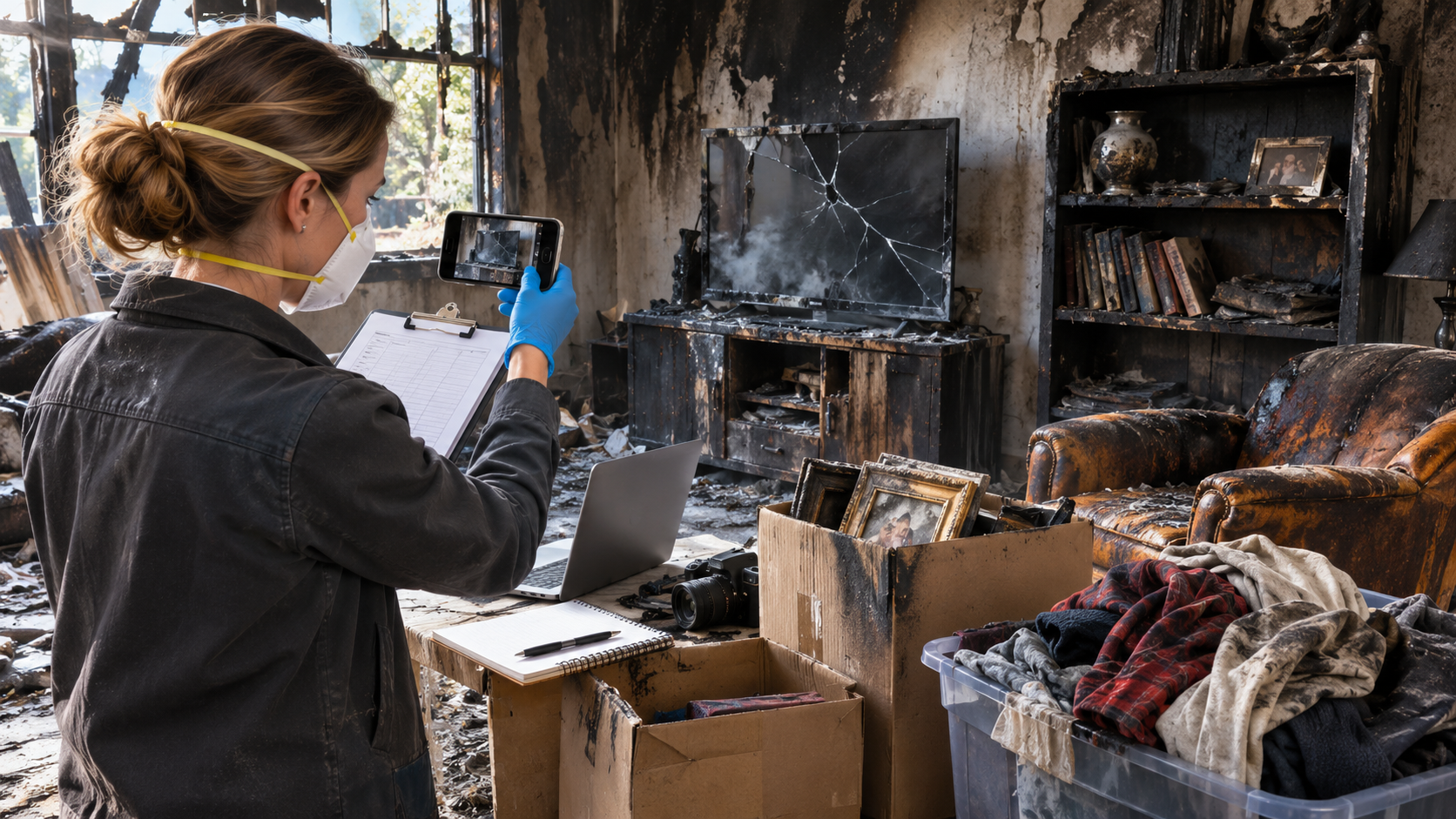
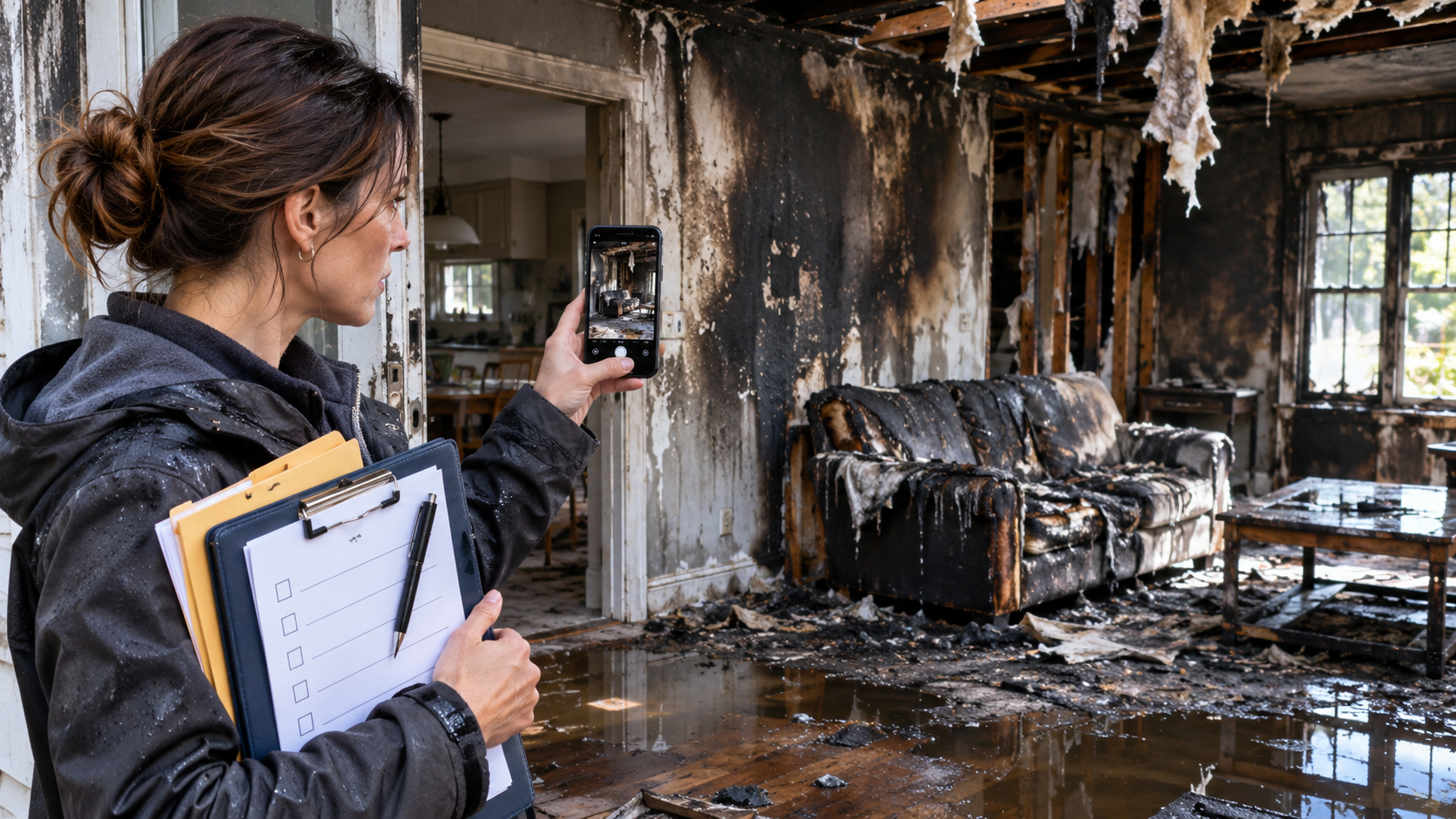
When safe and permitted by law enforcement, photograph the affected areas before making permanent repairs.
Document visible conditions such as:
- Broken windows and glass
- Damaged exterior or interior doors
- Forced or damaged locks
- Damaged cabinets and storage areas
- Missing or damaged fixtures
- Other visible damage associated with the reported incident
Photograph the property from several angles and retain any relevant photographs taken before the incident.
If temporary repairs are necessary to secure the property, document the condition beforehand when possible and keep the repair receipts.
Our guide on what to do after property damage explains why photographs, inventories, and supporting documents are important when preparing a claim.
How Do You Create an Inventory of Stolen Property?
An accurate stolen property inventory is one of the most useful documents you can prepare.
The inventory identifies the items you believe were stolen and provides information the insurer can use to evaluate the reported loss.
We recommend documenting each item separately whenever practical.
What Information Should Your Stolen Property Inventory Include?
For each item, include:
- A clear description of the item
- The quantity stolen
- The make or model, if known
- The approximate purchase date
- The original purchase price, if known
- Any available serial number
- Supporting ownership documents
- An estimated replacement cost, when reasonably supported
For example, instead of recording only “computer,” identify the type of computer, its approximate age, available specifications, and supporting purchase information.
Do not guess at exact details when you are uncertain. Identify estimates as estimates and update the inventory when reliable information becomes available.
Our property insurance claim process emphasizes maintaining photographs and records of personal belongings to help document losses.
How Can You Establish Stolen Property Proof of Ownership?
Stolen property proof of ownership helps establish that the reported items belonged to you or were otherwise insured under the applicable policy.
Receipts are useful, but they are not the only possible form of evidence.
Depending on the circumstances, supporting documents may include purchase confirmations, financial statements, photographs, product registrations, warranties, or appraisals.
Photographs showing a stolen item inside your property before the incident can be particularly useful when original purchase records are unavailable.
For valuable belongings, appraisal records may also help establish identifying characteristics and an earlier valuation.
However, proof of ownership and proof of value are not always the same thing. A photograph may help establish possession of an item without confirming its purchase price or current replacement cost.
At PICC FLA, we focus on organizing the available documentation so that the claim is supported by accurate information.
What Happens When Theft Claim Receipts Are Missing?
Having missing purchase receipts does not automatically mean every stolen item will be excluded from your insurance claim.
However, the insurer may require other documentation to establish ownership, existence, and value.
If you are dealing with theft claim receipts missing from your records, begin by gathering available alternatives.
What Can You Use Instead of Original Purchase Receipts?
Consider looking for:
- Bank statements reflecting purchases
- Credit card transaction records
- Digital purchase confirmations
- Photographs or videos showing the items
- Warranty documents
- Product registration information
- Previous appraisals
- Available documentation of gifts or inherited belongings
For example, if a television was purchased several years ago and the receipt is no longer available, photographs, financial records, and product information may help support its ownership and characteristics.
Explain any missing records accurately rather than creating replacement documents or presenting unsupported estimates as confirmed facts.
The insurer will evaluate whether the available evidence satisfies the policy’s requirements.
Our guide on how to file a homeowners insurance claim explains the importance of preserving claim information and submitting accurate documentation.
How Is the Value of Stolen Property Determined?
The value of stolen property depends on the applicable insurance coverage and the information supporting each item.
Some policies settle qualifying personal property losses using actual cash value. Others provide replacement cost coverage, subject to their terms and conditions.
Actual cash value generally accounts for depreciation, while replacement cost coverage may provide for the cost of replacing qualifying property with comparable items.
For example, an older electronic device may have a different depreciated value than the cost of purchasing a comparable replacement.
Deductibles, coverage limits, and special limits for particular categories of belongings can also affect payment.
We encourage policyholders to review how the insurer calculated the amount of loss rather than assuming the original purchase price is automatically payable.
Our article on how to read an insurance claim estimate explains depreciation, replacement cost, deductibles, and other factors that can affect claim valuation.
Does Homeowners Insurance Cover Every Stolen Item?
Not necessarily.
Homeowners insurance commonly includes coverage for qualifying theft losses involving personal property. However, the exact protection depends on the policy.
Some categories of property may have special coverage limits, particularly for theft involving jewelry, cash, certain collectibles, and other valuables.
Coverage may also depend on where the theft occurred, whether the property qualifies as insured personal property, and whether exclusions apply.
Commercial property policies may treat business equipment, inventory, and theft losses differently from homeowners policies.
For this reason, we recommend reviewing the actual policy rather than assuming every reported item is automatically covered.
What Should You Do Immediately After Discovering a Theft?
Your first priority should be personal safety.
If you suspect someone may still be inside the property, avoid entering or confronting anyone. Contact law enforcement and follow their instructions.
After the immediate danger has passed, take steps to preserve evidence and begin the insurance process.
We recommend the following approach:
- Report the incident. Contact law enforcement and obtain the available incident information.
- Notify your insurance company. Report the loss promptly and follow the policy’s notification requirements.
- Document the property. Photograph visible damage once it is safe and appropriate to do so.
- Prepare an inventory. Record missing belongings and their identifying details.
- Collect ownership records. Gather available receipts, photographs, financial statements, and other evidence.
- Secure the property. Make reasonable temporary protective repairs when necessary.
- Preserve claim communications. Keep copies of documents submitted and responses received.
The insurer may request further information during the investigation.
Our guide explaining what happens after an insurance adjuster inspects your home discusses why documentation and follow-up requests remain important after the initial inspection.
Can an Insurance Company Require a Proof of Loss for Theft?
Yes. Depending on the applicable policy, an insurer may require a formal proof of loss.
A proof of loss is a statement identifying the claimed loss and the amount being requested.
It may require supporting documentation, and some policies require the statement to be signed and sworn.
The applicable submission deadline depends on the policy and the insurer’s requirements.
Before signing, carefully review the inventory, reported values, incident information, and supporting records.
At PICC FLA, we emphasize that the information presented in a property insurance claim should reflect the actual documented loss.
Our guide on what a proof of loss is and when it is due provides additional guidance on these requirements.
Why Might a Theft Insurance Claim Be Denied or Underpaid?
A theft claim may become disputed when the insurer questions the reported circumstances, ownership of missing belongings, valuation, or applicable coverage.
Common issues include:
- Missing or incomplete ownership documentation
- Inconsistent descriptions of stolen items
- Unsupported property valuations
- Missing information about the incident
- Policy exclusions or special coverage limits
- Disagreements about the amount of physical damage
- Unresolved questions about the reported loss
A missing document does not always establish that the claim is invalid. However, policyholders remain responsible for complying with applicable claim requirements.
If the insurer’s payment appears lower than the documented loss, review the explanation and compare it with the available evidence.
Our guide on underpaid property damage insurance claims discusses how supporting documents may help address differences in claim evaluations.
How Can PICC FLA Help With a Theft Insurance Claim?
At PICC FLA, we represent Florida policyholders during theft, burglary, vandalism, and other property insurance claims within the scope of our public adjusting services.
When a theft involves stolen belongings or physical property damage, we can help review available policy and claim information, inspect affected areas, organize supporting evidence, prepare claim documentation, and communicate or negotiate with the insurer.
We understand that recovering from a theft can involve more than replacing missing belongings. Property owners may also need to address damaged locks, doors, windows, fixtures, or other affected components.
Our goal is to help you document the reported loss accurately and present the claim based on the applicable policy and available evidence.
If your home or business has experienced a theft or burglary, contact PICC FLA for a claim review. We can discuss your circumstances and explain how our public adjusting services may help.
Which Organizations Support This Theft Insurance Claim Guidance?
Florida Department of Financial Services. “Homeowners Insurance Overview.” Consumer Services, www.myfloridacfo.com/division/consumers/understanding-insurance/homeownersinsuranceoverview. Accessed 12 Nov. 2026.
Florida Department of Financial Services. “Protect.” Office of the Insurance Consumer Advocate, www.myfloridacfo.com/division/ica/planprepareprotect/Protect. Accessed 12 Nov. 2026.
National Association of Insurance Commissioners. “Navigating the Claims Process: Recover and Rebuild.” Consumer Insurance Resources, content.naic.org/article/navigating-claims-process-recover-and-rebuild. Accessed 12 Nov. 2026.