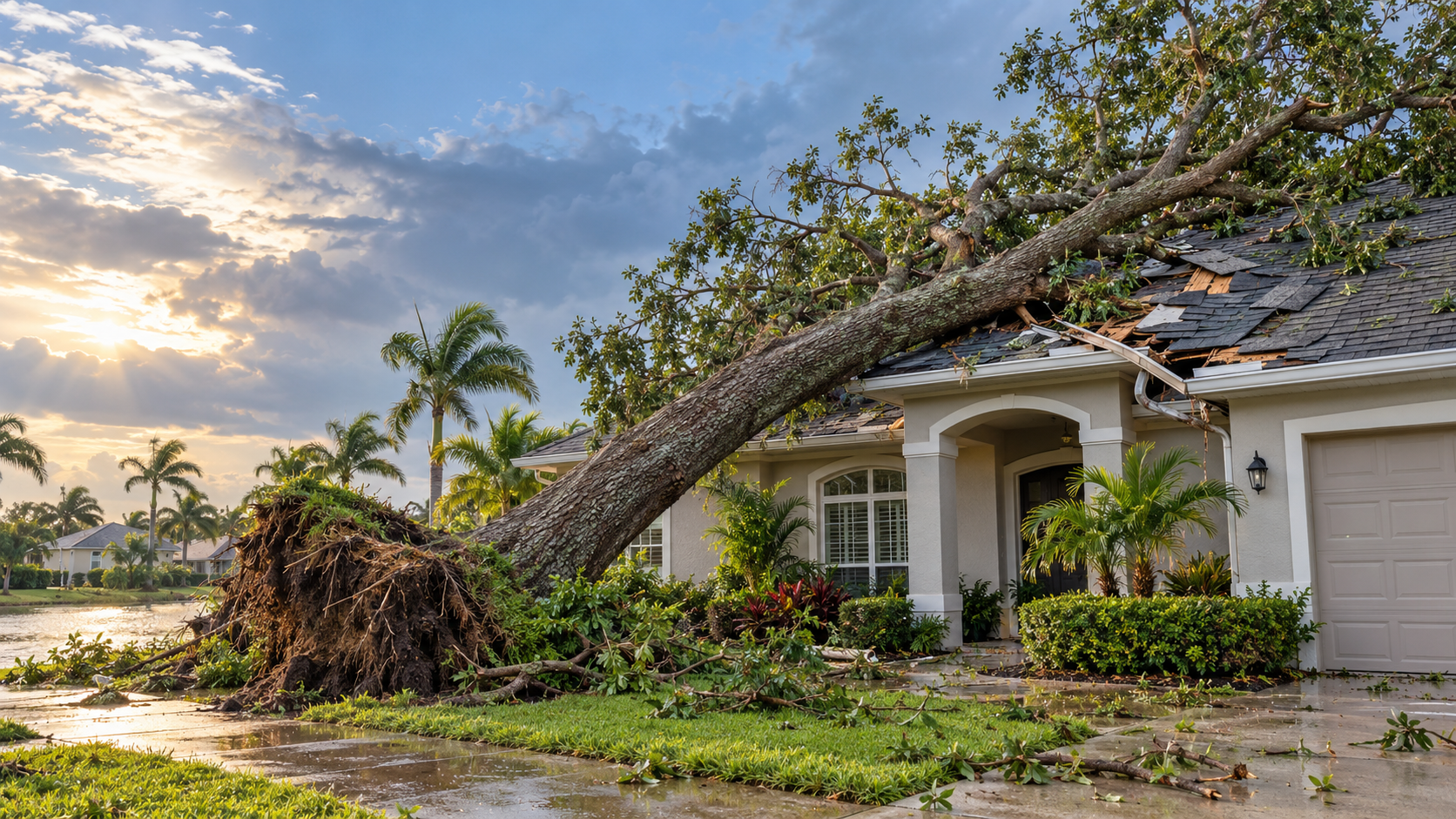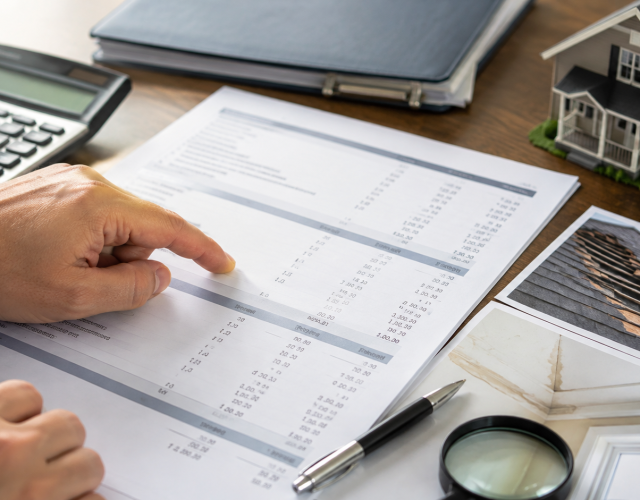
Receiving an insurance claim estimate after property damage can feel overwhelming. You may see several pages of descriptions, quantities, labor charges, material costs, depreciation, deductibles, and totals without immediately understanding what those numbers mean for your actual repairs.
At PICC FLA, we believe one of the most important things a property owner can do is understand how the estimate was put together. The total at the bottom of the page matters, but it does not tell the whole story. What matters just as much is which damage was included, which work was estimated, how much material was calculated, what depreciation was applied, and whether anything appears to be missing.
An insurance adjuster estimate is essentially the insurer’s evaluation of the covered property damage based on the information available during its investigation. It should be reviewed alongside your property conditions, policy provisions, photographs, repair information, and other claim documentation.
If you are trying to understand where an estimate fits into the larger process, our guide to the property insurance claim process explains how inspections, estimates, documentation, communication, negotiation, and payment can fit together.
What Is an Insurance Claim Estimate?
An insurance claim estimate is a detailed calculation of what the insurer believes it may cost to address covered damage to your property, subject to the insurance policy and the insurer’s coverage determination.
The estimate may be prepared after an adjuster inspects the damaged property, reviews photographs and documentation, evaluates the affected areas, and considers the repair work the insurer believes is associated with the covered loss.
It is important to distinguish between an estimate and an actual contractor invoice.
An estimate reflects an evaluation of the loss. The actual cost of repairing your property may be different because of material prices, labor availability, conditions discovered during repairs, quantities, code requirements, or differences regarding the appropriate scope of work.
The estimate also does not automatically tell you whether every damaged item has been addressed. That is why we encourage homeowners to review the document carefully rather than focusing only on the final payment amount.
Our guide explaining what happens after an insurance adjuster inspects your home provides additional information about what happens between the property inspection and the insurer’s claim decision.
Under current Florida law, when an insurer’s adjuster generates a detailed estimate of the amount of loss, the insurer must provide the policyholder with a copy within seven days after the estimate is generated. The law does not require the insurer to create a detailed estimate when one is not reasonably necessary as part of the claim investigation.
How Should You Start Reading an Insurance Adjuster Estimate?
Start at the beginning rather than immediately going to the total payment.
First, confirm that the basic information is correct. Depending on the format of the estimate, this may include:
- Property address
- Claim number
- Date of loss
- Areas or rooms being estimated
- Type of damage being evaluated
- Estimate date
- Applicable deductible
- Replacement cost calculations
- Depreciation calculations
- Actual cash value calculations
A mistake in the basic information does not necessarily mean the entire estimate is wrong, but it should be clarified.
Next, review the estimate room by room or area by area.
For example, if water affected your kitchen, hallway, and adjoining room, check whether all three affected areas appear somewhere in the estimate. If your roof and interior ceiling were damaged during the same covered event, determine whether both portions of the documented damage were evaluated.
The question should not simply be, “How much did the insurer estimate?”
A better question is, “What exactly did the insurer include in this estimate?”
What Do Home Insurance Estimate Line Items Mean?
Home insurance estimate line items break the repair calculation into individual tasks, materials, or portions of work.
Instead of simply stating that a room will cost a certain amount to repair, an estimate may separate work into categories such as:
- Removing damaged materials
- Replacing drywall
- Painting affected surfaces
- Replacing flooring
- Removing debris
- Repairing roofing components
- Replacing damaged insulation
- Performing related labor
The exact descriptions and layout vary from estimate to estimate.
Each line may include a description, quantity, unit of measurement, unit cost, and calculated total. Some estimates also separate labor and materials or apply other calculations elsewhere in the document.
How Should You Review the Quantities in Each Line Item?
Quantities are especially important.
Suppose an estimate recognizes that drywall needs to be replaced but calculates only a small portion of the affected wall. The issue may not be whether drywall was included. The issue may be whether enough drywall was included.
Look closely at measurements involving:
- Square footage
- Linear footage
- Number of individual items
- Number of rooms
- Areas requiring removal
- Areas requiring replacement
- Materials needed to complete related work
This is one reason two estimates can contain similar descriptions but still arrive at very different totals.
What Is the Difference Between Scope and Price?
The scope of work describes what the estimate says needs to be done.
The price describes how much the estimated work is valued.
This distinction is critical when reviewing an insurance claim estimate.
If the estimate is low, first determine whether the problem involves scope, price, or both.
A scope difference might involve:
- A damaged room being left out
- Insulation not being included
- Flooring quantities being incomplete
- Necessary removal work being omitted
- Hidden damage not appearing in the original estimate
A pricing difference may occur when the repair work is included but the estimated cost differs from documented repair pricing.
Our guide on what happens when an insurance estimate appears too low explains how scope, quantities, documentation, and repair costs can contribute to an estimate dispute.
How Do Replacement Cost and Actual Cash Value Affect the Estimate?
Another important part of reading your estimate is understanding how your policy values damaged property.
You may see calculations involving replacement cost value and actual cash value.
Replacement cost generally refers to the estimated cost of repairing or replacing damaged property with comparable property, subject to your policy terms.
Actual cash value generally reflects depreciation being applied to the replacement value.
For example, an estimate may calculate the replacement cost of damaged property and then subtract depreciation before determining the current payment.
The way depreciation applies depends on your policy.
Some depreciation may be recoverable under qualifying replacement cost coverage after applicable policy requirements are satisfied. Other depreciation may be non-recoverable.
Because these calculations can materially change the payment amount, do not skip the depreciation section when reviewing an insurance adjuster estimate.
Our guide to non-recoverable depreciation in an insurance claim provides a closer look at how depreciation can affect claim valuation.
How Does Your Deductible Affect the Estimate?
Your deductible is another important number to identify.
A deductible is generally the portion of the covered loss that remains the policyholder’s responsibility under the applicable policy terms.
This means the estimated covered damage and the amount of the insurance payment are not necessarily the same number.
For example, an estimate may first calculate covered repair costs, then apply depreciation when appropriate, and then account for the applicable deductible when determining the payment.
Always review your policy because the type and amount of deductible can depend on the coverage and loss involved.
What Should You Look for That May Be Missing From the Estimate?
One of the most useful ways to review home insurance estimate line items is to compare them with the property itself.
Walk through the damaged areas and compare what you see with what appears in the estimate.
Ask questions such as:
- Is every affected room identified?
- Are the correct materials listed?
- Do the quantities appear consistent with the damaged areas?
- Is necessary removal included?
- Is replacement work included where appropriate?
- Are related damaged components documented?
- Does the estimate account for damage that became visible after the first inspection?
Property damage is not always fully visible during the original inspection. Water can migrate behind walls, cabinets, flooring, and other materials. Additional damage may also become apparent during demolition or repairs.
If additional damage related to the same loss is discovered, documentation becomes important.
Our guide to supplemental property insurance claims explains how additional covered damage or repair costs may sometimes need to be presented after the original adjustment.
What Should You Do If the Insurance Claim Estimate Seems Too Low?
Do not rely only on the difference between the insurer’s payment and what you expected repairs to cost.
Identify why the numbers differ.
Start by reviewing:
- Missing damage
- Missing repair operations
- Material quantities
- Labor quantities
- Depreciation
- Deductibles
- Differences in repair scope
- Additional damage discovered after inspection
- Supporting photographs and documents
- Available repair estimates or invoices
At PICC FLA, we evaluate property claims from the policyholder’s perspective. Our work can include inspecting the property, reviewing existing claim information, documenting the loss, preparing estimates when appropriate, communicating about the claim, and negotiating with the insurance company.
Our resource on underpaid property damage insurance claims explains additional considerations when a payment does not appear to reflect the documented loss.
Can an Estimate Be Changed After It Is Issued?
An initial estimate does not necessarily capture everything that may ultimately become relevant to the property claim.
Additional documentation may identify damage that was overlooked, demonstrate that quantities need to be reconsidered, or show that the required repair scope differs from the original evaluation.
This does not mean every requested change will automatically result in additional coverage or payment. The policy, cause of loss, evidence, and facts surrounding the claim still control.
When additional covered damage or costs associated with the original loss need to be presented, a supplemental claim may be relevant.
If the disagreement involves the amount of loss rather than whether coverage exists, an insurance appraisal process may also be available in certain situations when provided for by the policy.
Why Is Claim Documentation Important When Reviewing an Estimate?
An estimate should not be evaluated in isolation.
Good documentation gives you something concrete to compare against the home insurance estimate line items.
Useful records may include:
- Photographs and videos
- Property inspection information
- Repair estimates
- Invoices
- Receipts
- Measurements
- Claim correspondence
- Policy documents
- Records of additional damage discovered later
Depending on the claim and policy requirements, you may also be asked to provide a proof of loss.
Our guide explaining what a proof of loss is and when it may be required discusses why this document deserves careful attention during the claim process.
How Can We Help You Understand an Insurance Claim Estimate?
At PICC FLA, we represent policyholders rather than the insurance company. Florida law defines a public adjuster as a person who, for compensation, prepares, completes, or files claims for an insured or acts on behalf of an insured in negotiating or effecting settlement of covered property-loss claims.
Our property claim process focuses on evaluating the damage, estimating repair costs, documenting the loss, preparing and presenting the claim, communicating throughout the process, and negotiating on behalf of our clients.
If you receive an insurance claim estimate that you do not understand, or if the estimate appears to leave out important property damage, you do not have to judge the claim by the final number alone.
We can review the property, the insurer’s estimate, supporting claim documentation, and the applicable policy information to help identify where differences may exist.
You can also review our public adjuster frequently asked questions to better understand how public adjusting representation works.
Which Organizations Support This Information?
Florida Department of Financial Services. “Public Adjusters.” Consumer Services, Florida Department of Financial Services. Accessed 31 Aug. 2026.
Florida Legislature. “Florida Statutes, Section 626.854: ‘Public Adjuster’ Defined; Prohibitions.” The 2026 Florida Statutes, 2026. Accessed 31 Aug. 2026.
Florida Legislature. “Florida Statutes, Section 627.70131: Insurer’s Duty to Acknowledge Communications Regarding Claims; Investigation.” The 2026 Florida Statutes, 2026. Accessed 31 Aug. 2026.