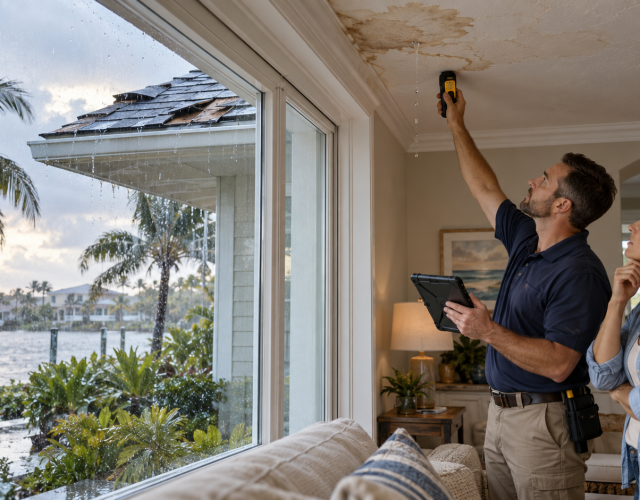
Florida storms can bring heavy rain and powerful winds at the same time. When water suddenly appears on a ceiling, runs down an interior wall, or reaches flooring after a storm, one of the first questions homeowners ask us is: Does homeowners insurance cover wind-driven rain?
The answer depends on how the rain entered the property and what your policy covers.
In Florida, hurricane coverage includes certain interior rain damage when the direct force of a windstorm first damages the building and creates an opening through which rain enters. However, not every situation involving rain entering a home is automatically covered. The specific policy language, cause of damage, condition of the property, exclusions, endorsements, and circumstances of the loss all matter.
At PICC FLA, we help Florida property owners document and navigate claims involving wind, hurricanes, roof damage, water intrusion, and other property losses. When rain enters a home during a storm, one of our priorities is identifying what happened to the property and documenting the damage as thoroughly as possible.
What Is Wind-Driven Rain?
Wind-driven rain is rain that is pushed by strong winds against a building.
During severe weather, rain does not necessarily fall straight down. Strong winds can drive it against roofing systems, windows, doors, exterior walls, vents, and other portions of the building envelope.
The resulting water intrusion may affect:
- Ceilings
- Drywall
- Insulation
- Flooring
- Cabinets
- Interior walls
- Personal property
- Other building materials
Wind-driven rain can be particularly important after a hurricane because wind may damage the exterior of the structure before rain enters.
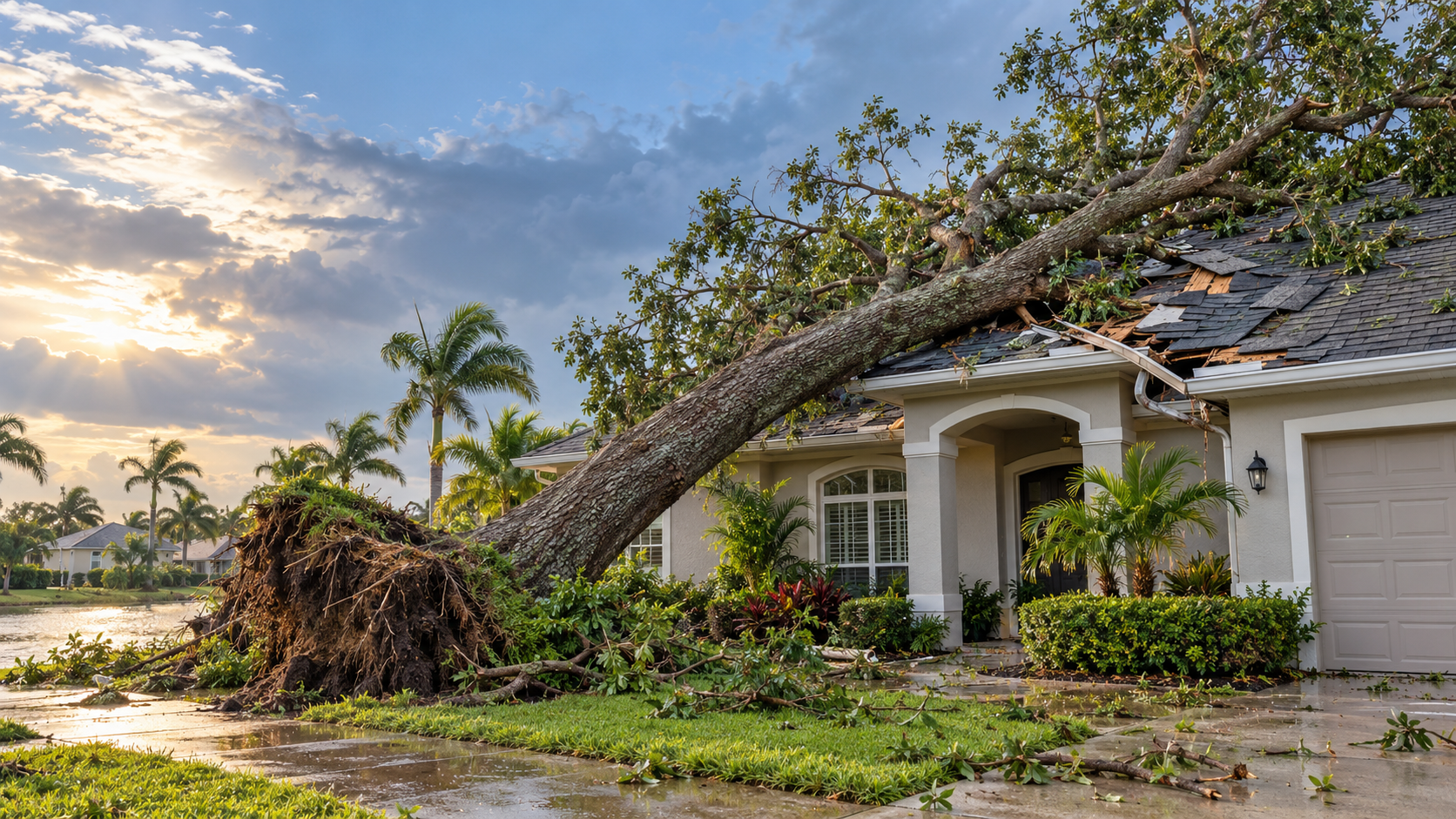
For example, wind could damage roofing materials and create an opening. Rain could then enter through the damaged area and reach the interior.
We explain the relationship between these different types of storm damage in our guide on how to tell wind damage from flood damage after a hurricane.
Does Homeowners Insurance Cover Wind-Driven Rain?
Potentially, but the circumstances matter.
For hurricane coverage in Florida, interior damage caused by rain can fall within hurricane coverage when the direct force of the windstorm first damages the building and creates an opening through which the rain enters.
This makes the cause and path of the water important.
Suppose strong hurricane winds damage part of your roof. Rain then enters through the storm-created opening and damages the ceiling and walls below. That presents a different insurance situation from water entering because of a long-standing maintenance problem or from rising floodwater.
The exact policy still controls.
Some homeowners policies may contain limitations, exclusions, endorsements, or specific requirements affecting wind driven rain coverage. Windstorm coverage itself can also vary.
At PICC FLA, we do not recommend assuming that rain damage is either automatically covered or automatically excluded. We review the available policy information and physical evidence to better understand how the loss should be documented and presented.
Our wind damage claim services address storm losses involving roofs, siding, structural components, wind-driven rain, broken seals, and related interior damage.
Why Does a Storm-Created Opening Matter?
A storm-created opening can be an important part of determining coverage for interior rain damage.
Under Florida’s definition of hurricane coverage, the direct force of the windstorm must first damage the building and cause an opening for the provision addressing ensuing interior rain damage to apply.
That means documentation should not focus only on the wet ceiling or damaged flooring inside the home.
The exterior should also be evaluated.
Possible evidence of storm-related damage may include:
- Missing or displaced roofing materials
- Damaged flashing or other roof components
- Broken windows
- Damaged doors
- Openings caused by debris
- Damaged siding or exterior components
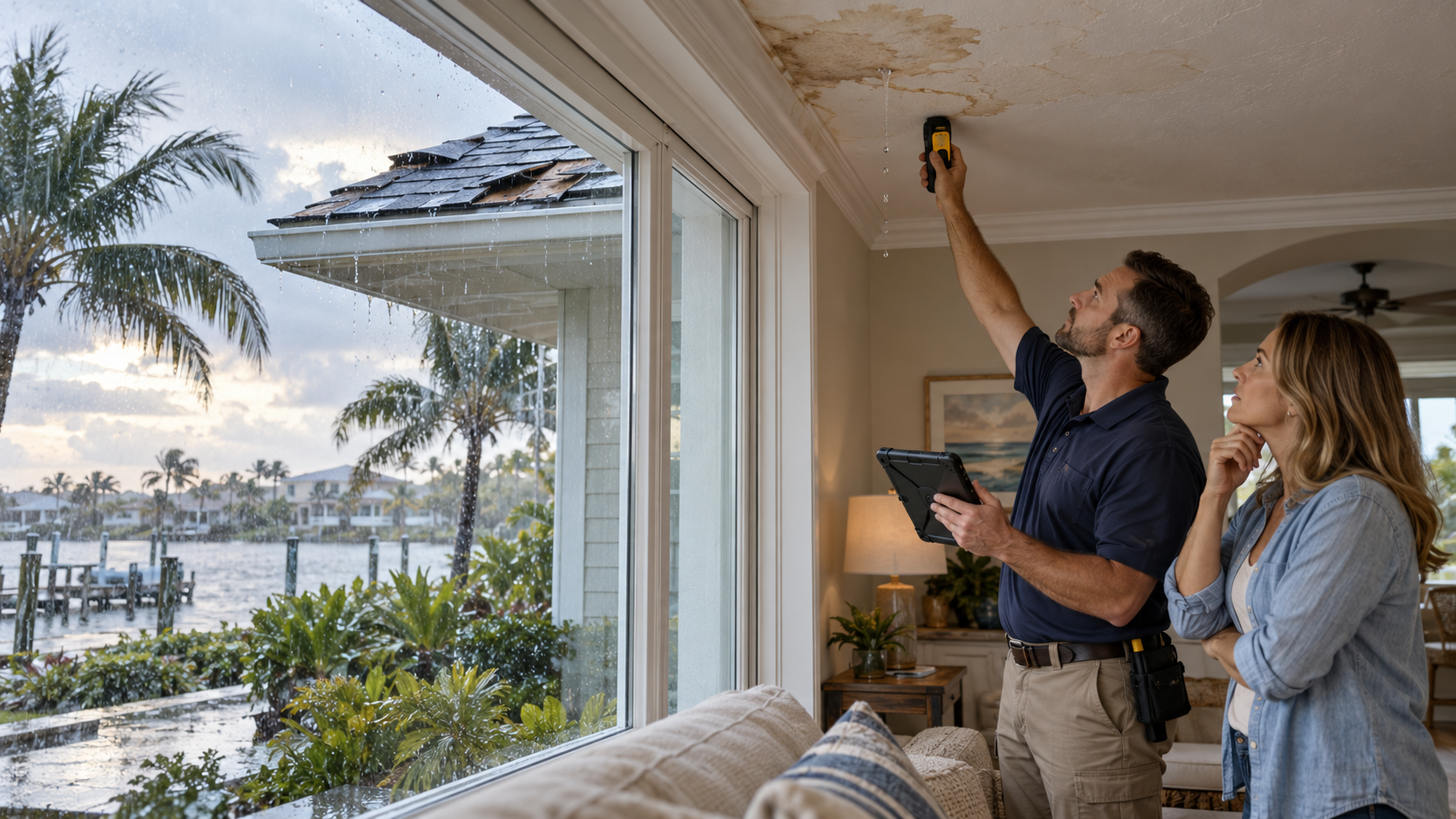
- Interior staining below a damaged roof area
- Water intrusion near a storm-damaged window or exterior opening
Our roof damage claim services include claims involving storm and hurricane damage, roof leaks and water damage, wind damage, and damage associated with fallen debris.
Establishing what happened outside the property can therefore be just as important as documenting the water damage inside.
Is Rain Damage Homeowners Insurance Coverage the Same as Flood Coverage?
No.
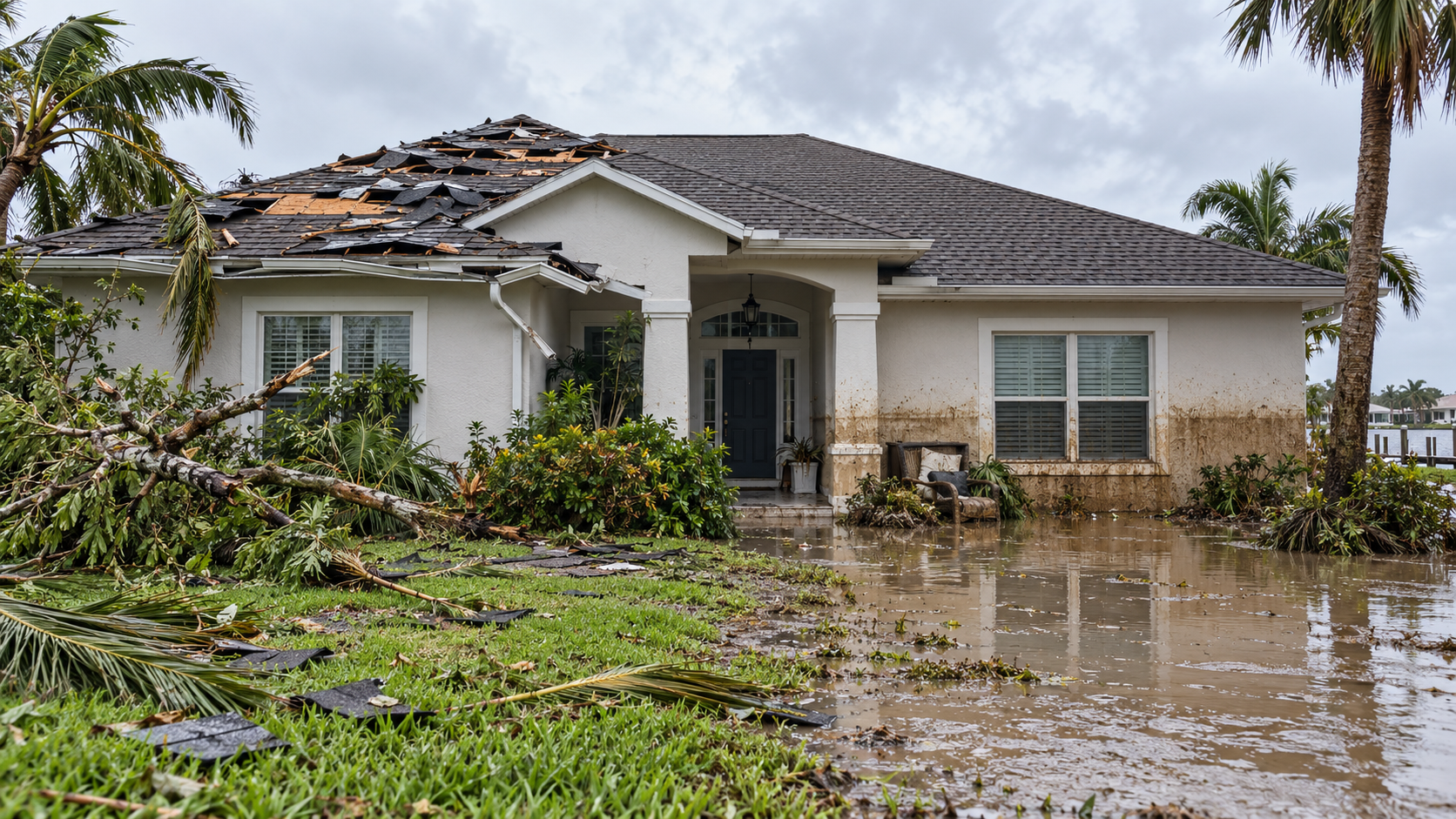
Rain entering through storm-related damage and floodwater entering a property are different types of water losses.
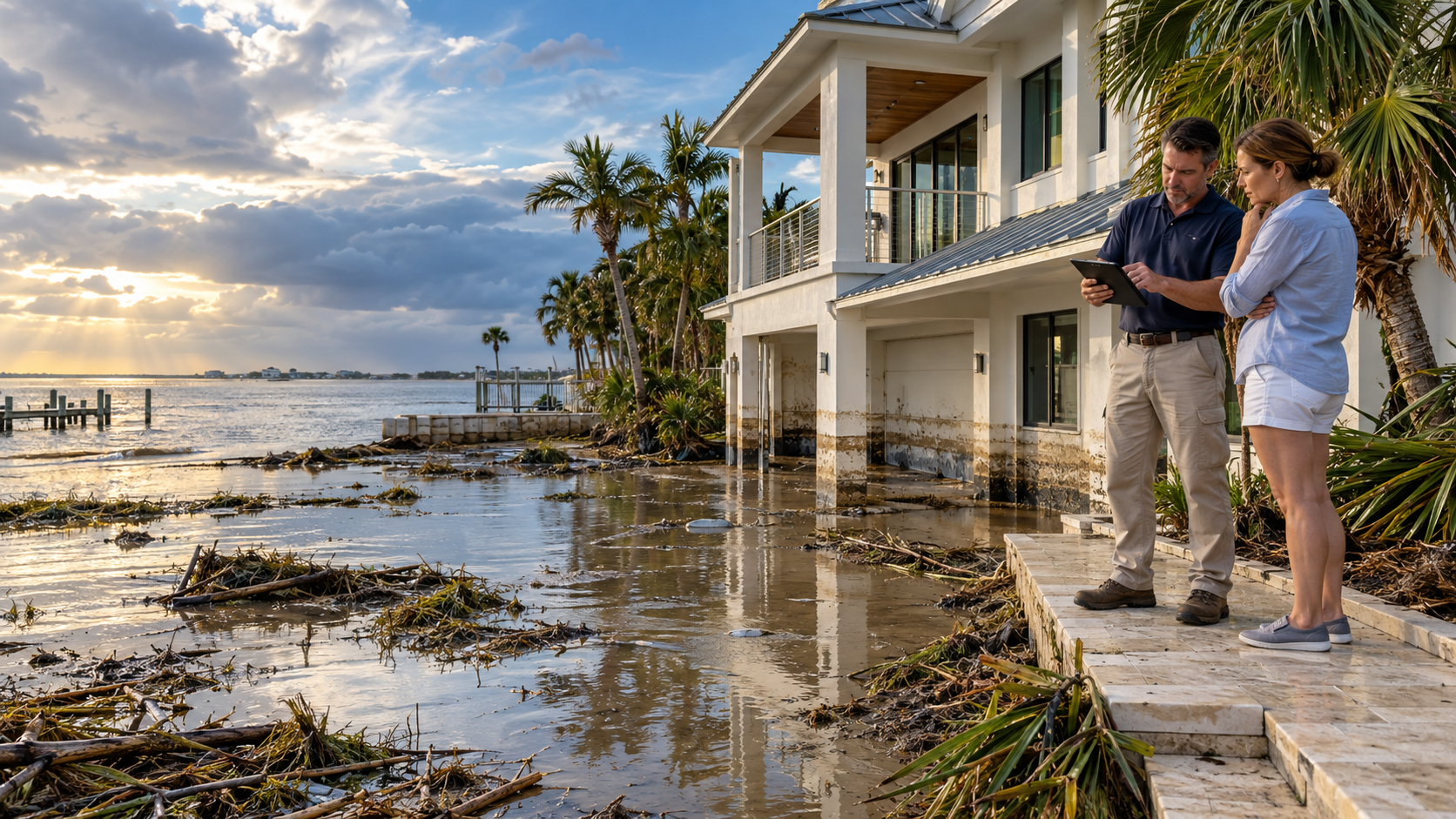
Flooding can involve rising surface water, overflowing waterways, storm surge, and other water that inundates normally dry land. Standard homeowners insurance generally does not cover flood damage.
Wind-driven rain, on the other hand, may enter from above or through a damaged portion of the building.
Imagine a hurricane damages a roof and rain enters through that damaged area. Now compare that with storm surge rising around a home and entering at ground level.
Both situations can leave water inside the property, but the source and path of that water are different.
This is why seeing water inside a home after a hurricane does not automatically tell us what type of loss occurred.
Our property damage claim services address different categories of property losses, including water, wind, hurricane, and roof damage. Coverage varies depending on the policy and cause of damage.
Can a Roof Leak After a Storm Be Covered?
A roof leak after a storm should be evaluated based on what caused the leak and what the applicable policy provides.
A sudden storm event can produce a very different claim from a roof that has been leaking gradually because of deterioration or another pre-existing condition.
For example, if strong wind damages the roof and creates an opening that allows rain inside, documentation may connect the interior water damage to the storm.
If water has instead been entering gradually over an extended period, the coverage analysis may be different.
This distinction is especially important for a storm rain roof leak claim.
When a roof leak appears after severe weather, homeowners should document both the interior and exterior conditions rather than focusing only on the visible ceiling stain.
Our guide on how to file a homeowners insurance claim explains why preserving evidence and documenting the full extent of a loss are important early in the claim process.
What Should You Document After Wind-Driven Rain Damage?
Documentation should begin as soon as it is safe to inspect the property.
Photograph and record the visible damage before permanent repairs change the condition of the affected areas.
Useful documentation may include:
- Photographs of roof or exterior damage
- Videos showing the affected rooms
- Images of ceiling stains and damaged drywall
- Photographs of wet flooring or cabinetry
- Images of damaged windows and doors
- Records of emergency repairs
- Receipts for reasonable mitigation work
- Repair estimates
- Inspection reports
- Claim correspondence
- Copies of relevant policy documents
Do not assume a small visible stain represents the entire extent of the water damage.
Water can travel beyond the area where it first becomes visible. Moisture may reach insulation, drywall, flooring, cabinets, or other concealed materials.
Our guide on how to prove hidden water damage in an insurance claim explains why connecting concealed damage to the reported loss requires evidence rather than assumptions.
What Should You Do Immediately After a Storm Rain Roof Leak?
Safety comes first. Do not climb onto a wet or damaged roof or enter areas that may be structurally unsafe.
Once it is safe, take reasonable steps to prevent additional damage.
Depending on the situation, this may include arranging temporary protection for a damaged roof, addressing broken windows, removing accumulated water, or obtaining professional assistance for necessary mitigation.
Our property insurance claim process recommends documenting the property’s condition and taking reasonable steps to limit additional damage after a loss.
Keep receipts and records associated with emergency work.
Whenever safely possible, document damaged areas before materials are removed or permanent repairs begin. That documentation can become important when the cause and scope of the damage are later evaluated.
What If the Insurance Company Says the Roof Was Already Damaged?
The cause of roof damage can become a major issue in a wind driven rain insurance claim.
An insurer may investigate whether damage resulted from the reported storm or from another condition.
This is why the claim should be supported by available evidence.
Photographs taken before and after the storm can be helpful. Inspection findings, repair records, weather information, photographs of displaced materials, interior water patterns, and other documentation may also help establish what occurred.
At PICC FLA, we focus on documenting the physical loss and reviewing relevant policy information rather than assuming that every roof leak has the same cause.
If your claim has already been denied, our guide on what to do when a homeowners insurance claim is denied in Florida explains why homeowners should carefully review the reason for the denial and supporting documentation before deciding what to do next.
What If Additional Rain Damage Appears Later?
Water damage is not always fully visible during the initial inspection.
Moisture can migrate behind walls, beneath flooring, into insulation, around cabinetry, and into other concealed areas. Roof damage may also involve components that are not immediately visible.
If additional damage becomes apparent, document it promptly.
Do not assume that an initial inspection automatically identified everything affected by the storm.
When additional covered damage or repair requirements associated with the original loss are identified, further documentation may need to be presented during the claim process.
Our guide to supplemental insurance claims explains how newly identified damage or repair costs can be documented when appropriate.
What If the Insurance Estimate Does Not Include All of the Damage?
An insurance estimate is an evaluation of the loss based on the information considered during the adjustment process. It may not necessarily include every item that a property owner or repair professional believes is necessary.
If an estimate appears incomplete, compare it carefully with the documented property damage and required repairs.
Look for issues such as:
- Missing damaged areas
- Incorrect measurements
- Missing materials
- Incomplete repair operations
- Interior water damage that was not included
- Damage discovered after the initial inspection
Our guide explaining what to do when an insurance estimate is too low discusses how photographs, estimates, inspection findings, and other supporting documentation can help identify differences in the scope of a claim.
How Can PICC FLA Help With Wind-Driven Rain Claims?
At PICC FLA, we represent policyholders during the property insurance claim process.
We assist Florida property owners with claims involving wind damage, hurricanes and storms, roof damage, water damage, and other property losses within our scope of services.
Depending on the circumstances of the claim, our work can include reviewing property damage, examining relevant policy information, documenting the loss, preparing claim information and repair estimates, and communicating and negotiating during the claim process.
For a wind-driven rain loss, careful documentation is especially important because the cause and path of the water can affect how the claim is evaluated.
Our goal is to document what happened to the property and present the available evidence supporting the claimed loss.
What Organizations Support This Wind-Driven Rain Insurance Guidance?
Florida Department of Financial Services. “Florida’s Hurricane Deductible.” Division of Consumer Services, Florida Department of Financial Services. The Department explains that hurricane coverage includes interior damage caused by rain when the direct force of a windstorm first damages the building, creating an opening through which the rain enters.
Florida Legislature. “Florida Statutes, Section 627.4025: Definitions.” Florida Statutes. The statute defines hurricane coverage as coverage for windstorm loss during a hurricane and includes ensuing interior rain damage when the windstorm first damages the building and creates an opening through which the rain enters.
Florida Department of Financial Services. “Hurricane Ready.” Division of Consumer Services, Florida Department of Financial Services. The Department advises Florida homeowners to review their policies for windstorm coverage, deductibles, exclusions, and flood coverage before hurricane season.
At PICC FLA, we help Florida property owners navigate wind, hurricane, roof, and water damage claims by documenting the loss, reviewing relevant claim and policy information, and representing the policyholder throughout the adjustment process.
What Should Florida Homeowners Remember About Wind-Driven Rain Insurance?
The most important point is that rain damage homeowners insurance coverage depends on the cause of the water intrusion and the actual terms of the policy.
During a Florida hurricane, wind damage that creates an opening followed by rain entering through that opening can fall within the state’s definition of hurricane coverage. However, that does not mean every roof leak or instance of wind-driven rain is automatically covered.
The condition of the property, source of the water, cause of the opening, policy provisions, exclusions, endorsements, deductibles, and documentation can all affect a claim.
That is why we recommend documenting both the exterior storm damage and the resulting interior water damage.