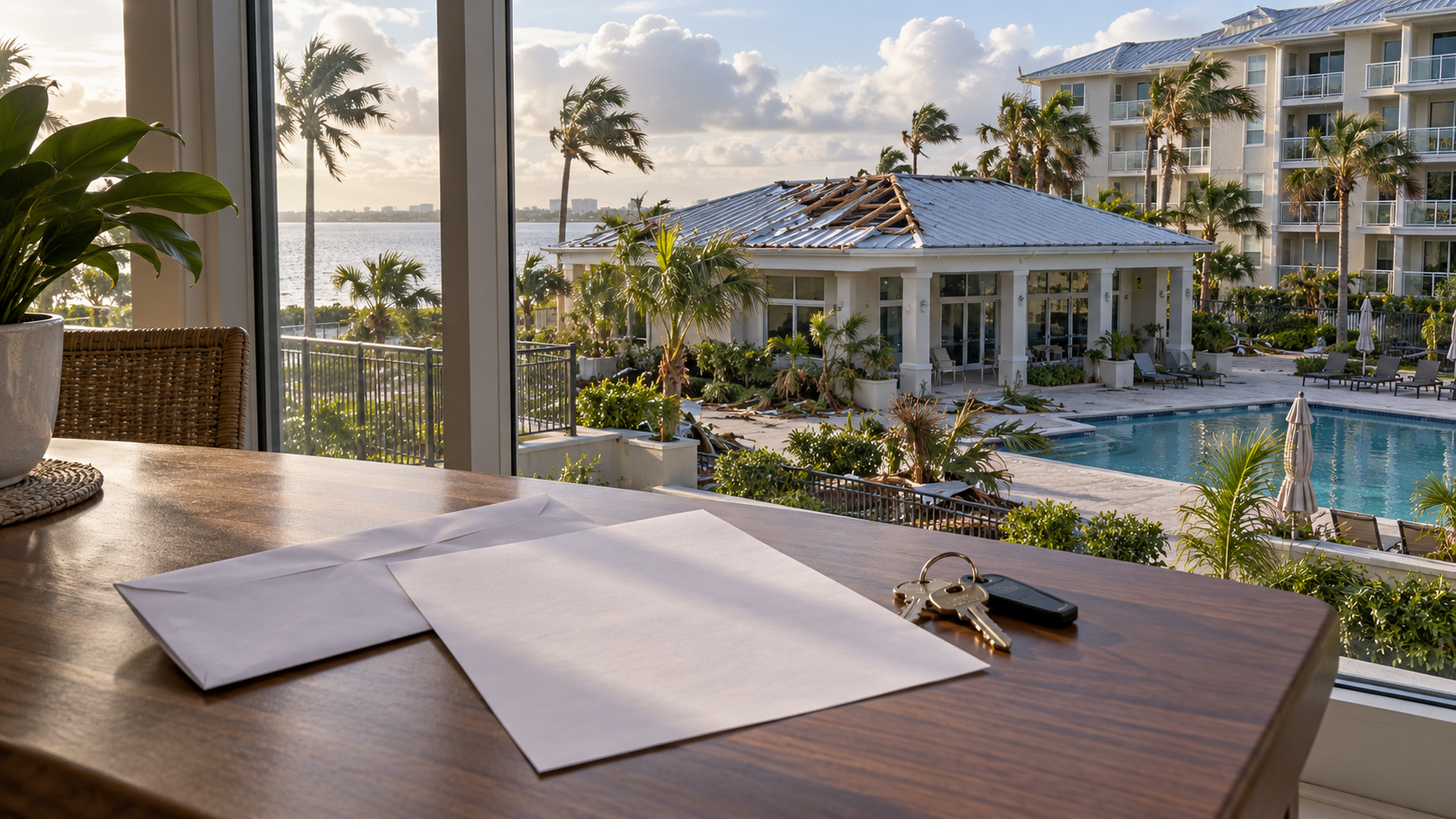
When property damage disrupts your business, the cost of repairs may be only part of the financial problem. You might need to rent another workspace, lease replacement equipment, move inventory, or pay additional labor costs to keep serving customers. These unexpected expenses can add up while your property is being restored.
So, what does extra expense coverage pay for?
Extra expense coverage generally helps pay necessary additional costs a business incurs to continue operations or minimize a shutdown after covered property damage. Depending on the insurance policy, qualifying expenses may include temporary relocation, equipment rental, additional operating costs, and certain expenses that help reduce the interruption.
At PICC FLA, we help Florida business owners document and navigate commercial property and business interruption insurance claims. Our work includes reviewing applicable policy information, examining financial records, documenting losses, and preparing supporting claim information.
Understanding how extra expense coverage works can help you identify which costs may qualify and what evidence you need when filing a claim.
What Is Extra Expense Coverage in Business Insurance?
Extra expense coverage is a form of commercial property insurance protection that may reimburse additional expenses incurred to continue business operations after damage caused by a covered event.
These expenses are generally costs your business would not have incurred if the property damage had never happened.
For example, imagine a fire damages your commercial office and makes the building temporarily unusable. Rather than closing completely, you rent another office and move essential equipment there.
The additional costs associated with maintaining operations at that temporary location may qualify under your extra expense coverage.
However, coverage depends on the insurance policy, the cause of the property damage, and the circumstances surrounding the expenses.
Our business interruption insurance claim services explain how we help Florida business owners document lost income and additional expenses associated with covered business disruptions.
What Expenses Does Extra Expense Insurance Typically Cover?
Business insurance extra expense coverage generally focuses on reasonable and necessary additional costs incurred to continue operations or reduce the interruption.
Common examples may include the following.
Does Extra Expense Coverage Pay for Temporary Relocation?
Yes, temporary relocation costs may qualify when covered property damage prevents normal operations at your existing location.
Depending on the policy, eligible expenses may include:
- Renting a temporary business location
- Moving essential equipment and supplies
- Setting up temporary workstations
- Installing necessary communication services
- Additional operating costs associated with the temporary location
For example, if storm damage makes your commercial property unusable, temporarily moving operations to another suitable location may allow your business to continue serving customers.
The additional expenses must still satisfy the policy’s coverage requirements.
Does Extra Expense Coverage Pay for Replacement Equipment Rentals?
Extra expense coverage may help pay for temporary equipment rentals needed to maintain business operations.
Suppose covered property damage prevents your business from using equipment essential to its daily activities. Renting substitute equipment may allow employees to continue working while the damaged property is repaired or replaced.
Documentation should establish why the rental was necessary, how long it was needed, and how it supported continued business operations.
Permanent equipment replacement costs may fall under different commercial property coverage provisions.
Can Extra Expense Coverage Pay for Additional Labor Costs?
Certain additional labor expenses may qualify when they are necessary to maintain operations or reduce a covered interruption.
Examples may include temporary employees or additional shifts required to operate from a replacement location.
However, ordinary payroll and additional labor costs should not automatically be treated as the same expense.
The policy determines whether each cost qualifies and which coverage provision applies.
How Is Extra Expense Coverage Different From Business Interruption Coverage?
Business interruption extra expense coverage and business income coverage address different financial consequences of property damage.
Business income coverage generally concerns lost income and qualifying continuing operating expenses during a covered interruption.
Extra expense coverage addresses additional costs incurred to continue operations or minimize the interruption.
Consider these differences:
| Coverage | General purpose |
| Business income | Addresses qualifying lost income |
| Continuing expenses | Accounts for eligible ordinary operating expenses during interruption |
| Extra expense | Addresses additional costs to maintain operations or reduce downtime |
| Commercial property damage | Addresses covered physical damage to insured property |
For example, rent that continues during a shutdown may be considered when calculating a covered business income loss.
An additional rental payment for temporary premises may instead qualify as an extra expense.
The applicable policy determines how these costs are treated, and the same expense should not be reimbursed twice.
At PICC FLA, our commercial property insurance claim services involve reviewing property damage and related financial losses so the claim can be presented with supporting documentation.
What Does Expediting Expense Insurance Pay For?
Expediting expense insurance generally addresses certain additional costs incurred to speed up temporary repairs or the permanent repair or replacement of damaged insured property.
These expenses are intended to help restore operations sooner.
Examples may include:
- Additional labor costs for accelerated repairs
- Rush delivery charges for necessary replacement components
- Temporary repairs that allow business operations to resume
- Additional transportation costs to obtain essential repair materials sooner
Although expediting expenses and extra expenses can overlap, they are not always governed by identical coverage provisions.
Some commercial property policies include qualifying expediting expenses within extra expense coverage. Others address them through a separate property coverage provision or endorsement.
Certain policies also limit repair-related extra expenses to the amount by which they reduce an otherwise payable loss.
For this reason, business owners should never assume that paying more for faster repairs automatically creates a covered insurance expense.
Review the actual policy provisions and document why the accelerated work was necessary.
When Does Business Insurance Extra Expense Coverage Apply?
Extra expense coverage generally requires a covered cause of property damage that disrupts normal business operations.
Potential examples include covered fire damage, wind damage, and certain types of water damage.
However, the occurrence of property damage alone does not guarantee payment.
Important questions include:
- Was the property damage caused by an insured event?
- Does the policy include extra expense coverage?
- Were the additional costs necessary and reasonable?
- Did the expenses help continue operations or reduce the interruption?
- Were the costs incurred during the applicable coverage period?
- Are the costs subject to limits, exclusions, or other conditions?
Flooding, utility interruptions, and other events may involve exclusions or special endorsements.
We recommend reviewing coverage before making assumptions about which expenses qualify.
Our guide to the commercial property claims adjustment process explains the importance of accurate documentation and policy review after a commercial property loss.
How Do You Calculate an Extra Expense Insurance Claim?
Calculating an extra expense claim begins by identifying the additional costs incurred because of covered property damage.
The goal is to distinguish ordinary business expenses from necessary new expenses associated with maintaining operations.
For example, consider a business that normally spends $12,000 each month on qualifying operating activities.
After covered property damage, maintaining temporary operations increases comparable costs to $16,500.
The difference is $4,500.
That amount represents a potential starting point for evaluating additional expenses, not an automatic insurance payment.
The actual claim calculation must consider:
- Which expenses qualify under the policy
- Whether the costs were necessary and reasonable
- The applicable coverage period
- Expenses avoided during the interruption
- Any overlapping amounts claimed elsewhere
- Applicable coverage limits and exclusions
Some extra expense provisions also require specific calculations for expenses incurred to reduce a business income loss.
We recommend keeping ordinary operating expenses, additional operating expenses, and property repair costs clearly separated.
What Documents Do You Need to Support an Extra Expense Claim?
Accurate documentation helps establish why an additional expense was incurred, how much it cost, and how it relates to the covered property damage.
We recommend maintaining records such as:
- Temporary location rental agreements
- Moving and transportation invoices
- Equipment rental agreements
- Additional payroll records
- Contractor invoices
- Rush delivery receipts
- Utility and communication setup charges
- Business interruption timelines
- Property damage photographs
- Repair estimates and restoration schedules
Financial statements may also help establish normal operating expenses before the loss.
For example, comparing ordinary equipment costs with temporary rental expenses can help explain the increase.
We recommend keeping a separate expense log that identifies the date, purpose, amount, supporting receipt, and relationship to the interruption.
Our explanation of the property insurance claim process outlines how documentation, inspection, claim preparation, and negotiations fit into the adjustment process.
How Long Does Extra Expense Coverage Last?
Extra expense coverage is generally subject to the period of restoration or another coverage period defined in the insurance policy.
The period of restoration commonly relates to the reasonable time necessary to repair, rebuild, or replace damaged property following a covered loss.
The period does not necessarily continue until a business fully recovers financially.
Some policies provide extended extra expense protection, but this should not be assumed without reviewing the policy.
Business owners should preserve records showing:
- When the property damage occurred
- When normal operations were interrupted
- When temporary arrangements began
- When repairs were completed or reasonably could have been completed
- When operations resumed
- When additional expenses ended
These records can help determine which costs fall within the applicable coverage period.
What Common Mistakes Should You Avoid When Claiming Extra Expenses?
Several documentation and calculation mistakes can make an extra expense claim more difficult to evaluate.
Common issues include:
- Claiming ordinary business expenses as new additional costs
- Submitting expenses without invoices or receipts
- Failing to explain how an expense supported business continuity
- Combining property repair costs with temporary operating costs
- Claiming the same expense under multiple coverage provisions
- Assuming all additional expenses are automatically covered
- Failing to account for applicable coverage periods
- Using unsupported estimates instead of available records
A claim should demonstrate the relationship between covered property damage, the resulting operational disruption, and the necessary additional expense.
Our guide on how to file a claim with a public adjuster discusses the importance of policy review, documentation, and preparing a complete claim presentation.
What Happens If Your Extra Expense Claim Is Underpaid?
An insurer may disagree with the amount claimed, the necessity of certain expenses, or whether particular costs qualify under the policy.
For example, the insurer may accept temporary relocation costs while questioning the amount spent on replacement equipment or accelerated repairs.
If you believe relevant expenses were omitted or incorrectly evaluated, review the insurer’s explanation and compare it with your supporting records.
Our guide to underpaid property damage insurance claims explains how documentation and claim evaluation can help identify disputed amounts.
Additional costs discovered during the claims process may also require further review.
If qualifying costs connected with an existing covered loss were not included in the original claim, our supplemental insurance claim guide discusses situations where additional documentation may be appropriate.
An additional expense does not automatically establish additional coverage or payment.
How Can PICC FLA Help With an Extra Expense Insurance Claim?
At PICC FLA, we represent Florida policyholders throughout the property insurance claim process.
Our business interruption and commercial property claim services focus on documenting losses, reviewing available insurance information, evaluating supporting evidence, preparing claim materials, and negotiating with insurers.
When additional operating expenses arise after property damage, we can help review how those expenses relate to the interruption and whether the applicable insurance provisions may address them.
Our goal is to help business owners present accurate, properly supported claims.
We do not assume that every expense qualifies for coverage or that every claim will result in a specific settlement.
If your Florida business has experienced covered property damage and incurred additional operating costs, contact PICC FLA to discuss your claim and how our public adjusting services may help.
Which Organizations Provide Supporting Guidance on Extra Expense Insurance?
Florida Department of Financial Services. “Commercial Property Insurance Overview.” Consumer Services, www.myfloridacfo.com/division/consumers/understanding-insurance/commercial-property-insurance. Accessed 3 Nov. 2026.
Florida Department of Financial Services. “Commercial Insurance Coverage FAQs.” Consumer Services, myfloridacfo.com/division/consumers/storm/commercial-disaster-faqs. Accessed 3 Nov. 2026.
National Association of Insurance Commissioners. “Business Interruption and Business Owner Policy.” Insurance Topics, 25 June 2026, content.naic.org/insurance-topics/business-interruption-and-business-owner-policy. Accessed 3 Nov. 2026.
What Should Business Owners Remember About Extra Expense Coverage?
Extra expense coverage can help address qualifying additional costs incurred to continue operations after covered property damage.
Temporary relocation, replacement equipment rentals, additional labor, and certain accelerated restoration costs may qualify, depending on the policy.
However, coverage is not determined simply by whether an expense was unexpected. The cost must satisfy the applicable insurance provisions and be supported by appropriate documentation.
At PICC FLA, we help Florida business owners understand and document commercial property and business interruption claims.
By reviewing the policy, organizing financial records, and clearly connecting additional costs to the covered loss, business owners can present a more complete and accurate claim.