Property damage claims in Florida don’t remain simple for long. A roof leak after a storm may initially appear to be isolated to one room before water spreads through the insulation and adjacent walls. A plumbing failure beneath a sink may affect cabinetry and flooring systems before visible deterioration appears. Even relatively small losses, such as AC leaks or water heater failures, can evolve into full restoration projects if moisture becomes trapped beneath flooring materials or within wall cavities.
For many homeowners, the challenge is how to file a home insurance claim. The greater difficulty often involves documenting the loss, preserving evidence, understanding policy limitations, and making sure the damage is identified to its full extent before any repair begins.
In particular, this becomes important in Florida, where hurricanes, roof damage, plumbing failures, and water intrusion claims happen regularly, and certain forms of structural deterioration are not immediately visible during an initial inspection.
Understanding how to file a homeowners’ insurance claim from the start can significantly impact repair timelines, claim evaluation, and financial recovery under the insurance policy.
What Homeowners Should Do Immediately After Property Damage
Before filing a home insurance claim, homeowners should do their best within their power to prevent further damage.
Most property insurance policies require reasonable mitigation efforts after a covered event occurs. Practically, this means stabilizing the property while preserving the condition of the damage for documentation and inspection purposes.
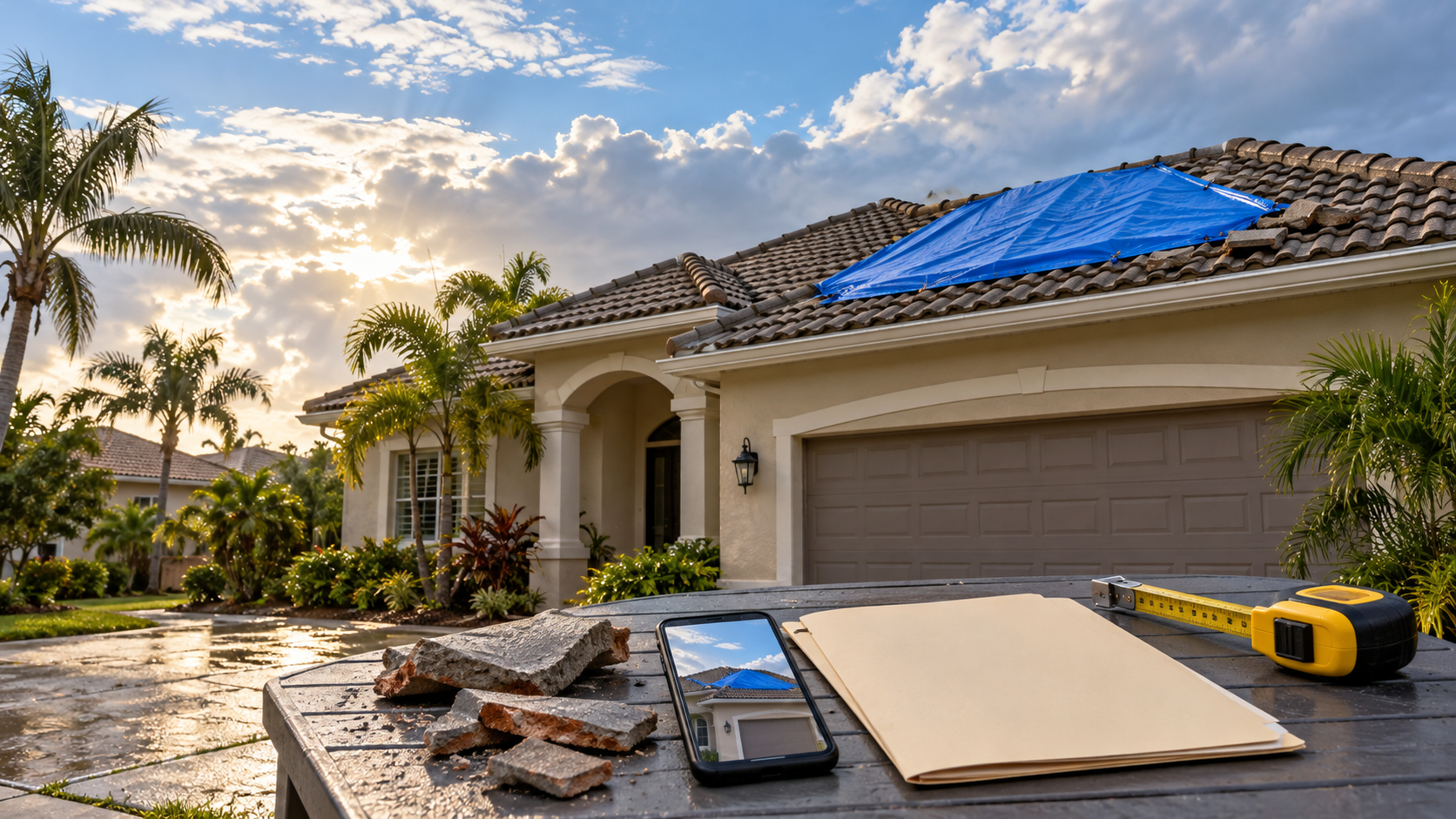
After hurricanes, this may involve placing temporary tarps over exposed roofing systems or boarding compromised openings. During plumbing or appliance losses, homeowners may need to shut off water sources, remove standing water, or begin emergency drying efforts before conditions worsen.
Water rarely remains confined to the immediately visible area. It can spread beneath flooring, behind walls, and into structural materials before exterior symptoms appear. In Florida claims, delayed mitigation is frequently a reason for disputes that involve secondary deterioration and repair responsibility.
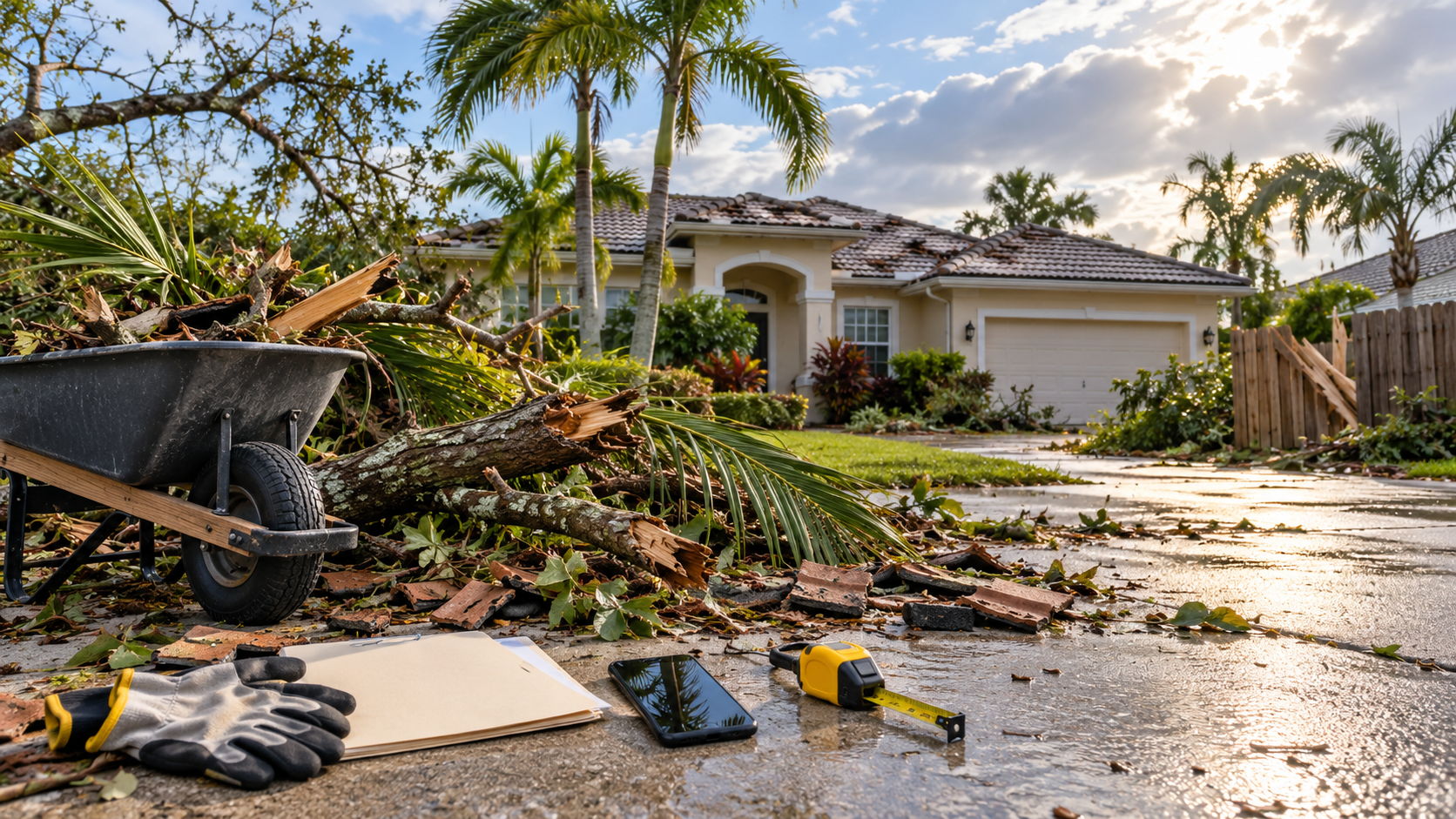
Documentation must begin immediately. Homeowners should thoroughly photograph and video all affected areas before cleanup alters the condition of the property. This includes structural damage, flooring conditions, roof materials, drywall, damaged contents, and standing water.
One of the most common mistakes when filing a claim is allowing evidence to disappear too early. Damaged materials are discarded, emergency repairs alter visible conditions, or reconstruction begins before the completion of the inspections. Once conditions change, establishing the original extent of the damage is way more difficult.
How to File a Home Insurance Claim in Florida
For homeowners who are wondering, “How do I file a home insurance claim?” the process begins by notifying the insurance company as soon as possible after the damage is discovered.
Nowadays, homeowners can file home insurance claim documentation online, through mobile applications, over the phone, or directly with an assigned representative or agent.
The initial report generally includes the date of the loss, the suspected cause of the damage, and a preliminary description of the affected areas of the property. At this stage, homeowners should focus on factual observations rather than estimating the full scope of repairs before inspections occur.
After the claim is opened, the insurer assigns a claim number and begins the investigation. Depending on the type of loss, the insurance company may request photos and videos, contractor estimates, mitigation invoices, plumbing evaluations, roofing assessments, or inventories of damaged personal property.
Before filing a home insurance claim, homeowners should also review the policy carefully. Many policyholders misunderstand what their homeowners’ insurance actually covers until after damage occurs. In Florida, specifically, distinctions that involve hurricane deductibles, flood exclusions, water damage limitations, roof depreciation provisions, and additional living expense coverage can become important during the claim review process.
Once the insurer schedules an inspection, homeowners should remain actively involved during the evaluation. Many policyholders believe that the adjuster’s estimate reflects the full extent of the damage. However, this is not always the case, as some forms of deterioration may not become obvious on a limited walkthrough inspection, particularly after hurricanes, plumbing failures, or water exposure.
Contractors and mitigation professionals often identify conditions that require additional review beyond the insurer’s preliminary estimate.
This distinction matters because the insurance company’s adjuster represents the carrier during the claims process. Meanwhile, it’s the owner’s responsibility to make sure the property is fully and accurately documented.
Why Insurance Claims Become More Complicated Than Expected
Many Florida homeowners assume their loss is relatively minor. However, property damage claims often evolve as additional conditions are discovered during mitigation and reconstruction. Structural deterioration, insulation damage, flooring separation, and concealed microbial growth often become apparent after demolition or further inspection begins.
This is one reason homeowners frequently underestimate smaller water-related losses.
While hurricane damage is obvious, many substantial insurance claims in Florida originate from plumbing failures, appliance leaks, drain backups, or roof moisture exposure that slowly but steadily expands throughout the property.
Complications also come up when repair estimates fail to reflect rebuilding costs, code requirements, labor shortages, or additional damage.
Incomplete documentation can create further problems later in the process. Inadequate photographs, discarded materials, missing invoices, or delayed reporting may weaken portions of the claim or create valuation disputes.
Therefore, understanding how to make a home insurance claim properly requires organized documentation, careful inspections, and a clear understanding of the impact that policy language can have on the evaluation of the loss.
The Role of a Public Adjuster During the Claims Process
For many homeowners, when filing a home insurance claim, the challenge lies in determining whether the insurer’s evaluation realistically reflects the condition of the property and the true cost of its restoration.
Public adjusters represent the policyholder, not the insurance company. Their role is to inspect the property, document damage, review policy provisions, and evaluate whether the proposed repairs reflect the conditions affecting the home.
Our South Florida Public Adjuster team conducts inspections directly at the property, rather than through remote file review itself.
This distinction matters because many forms of concealed deterioration require physical evaluation to be properly identified.
PICC Fla can handle a wide range of Florida property losses, including hurricane damage, plumbing failures, fire-related claims, AC leaks, roof leaks, water heater failures, and drain backups affecting residential and commercial properties in South Florida.
Many homeowners search for professional representation when they believe the insurer’s estimate is incomplete, when the claims process becomes hard to navigate independently, or when additional damage appears after the original inspection.
Compared to attorneys, whose work primarily focuses on litigation and legal disputes, public adjusters concentrate on property damage evaluation, documentation, and claim preparation.
In many situations, homeowners choose public adjusters because contingency fees are often substantially lower than attorney fee structures while still providing professional representation throughout the claims process.
Our public adjusting firm offers free inspections, free policy reviews, and no upfront fees. Representation is contingency-based, which means that there is no recovery fee unless you obtain compensation.
Final Thoughts
The claims process is more complex than simply reporting damage to the insurance company. Documentation, mitigation, inspections, policy interpretation, and repair evaluation all influence whether the final settlement accurately reflects the actual condition of the property.
PICC FlA represents homeowners across South Florida by evaluating damage directly at the property, documenting losses, and helping policyholders navigate demanding insurance claims cases with greater clarity and confidence.
With early evaluation and proper claim preparation, we aim to reduce delays, identify overlooked damage, and prevent insufficient settlements later in the process.