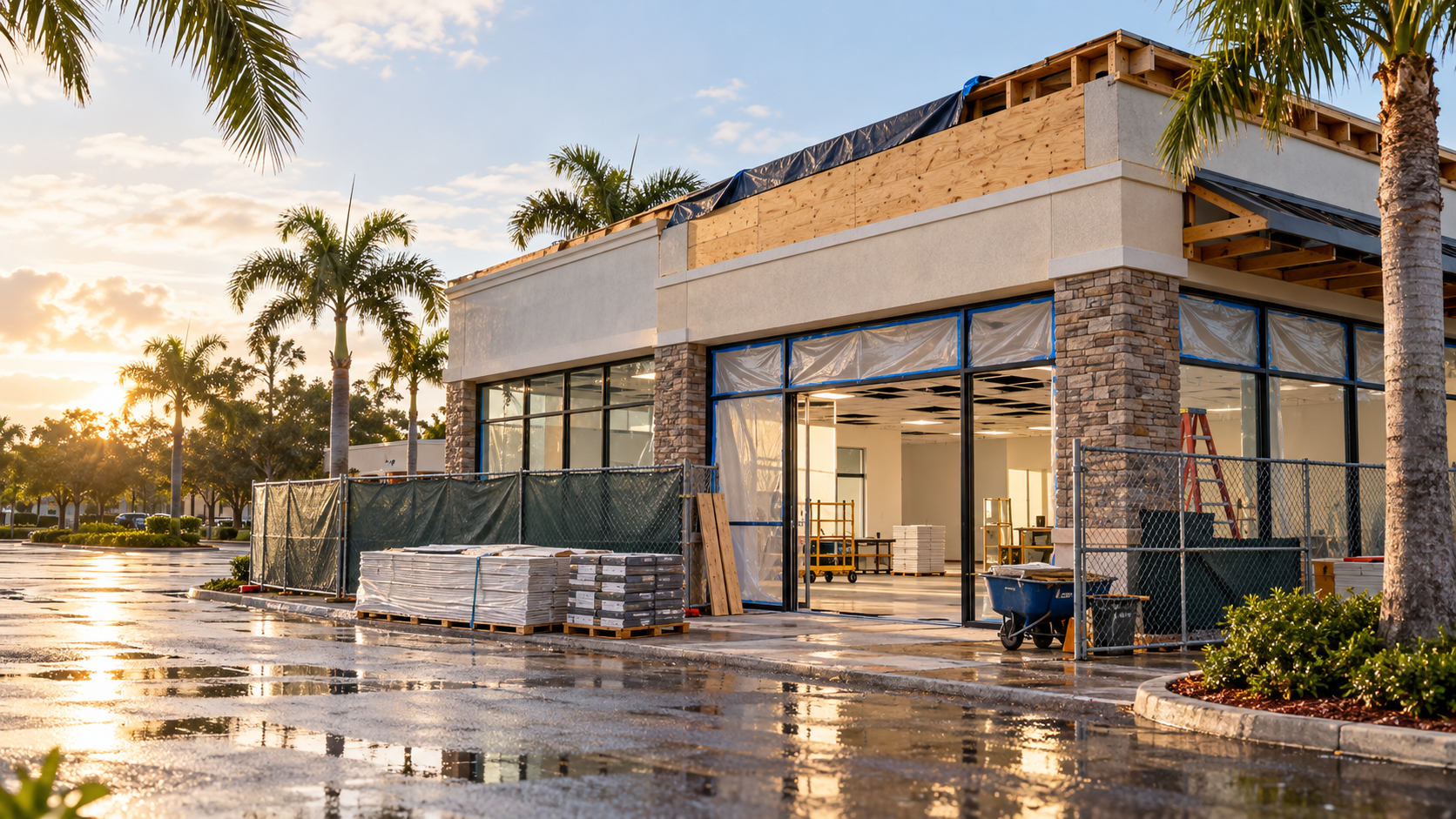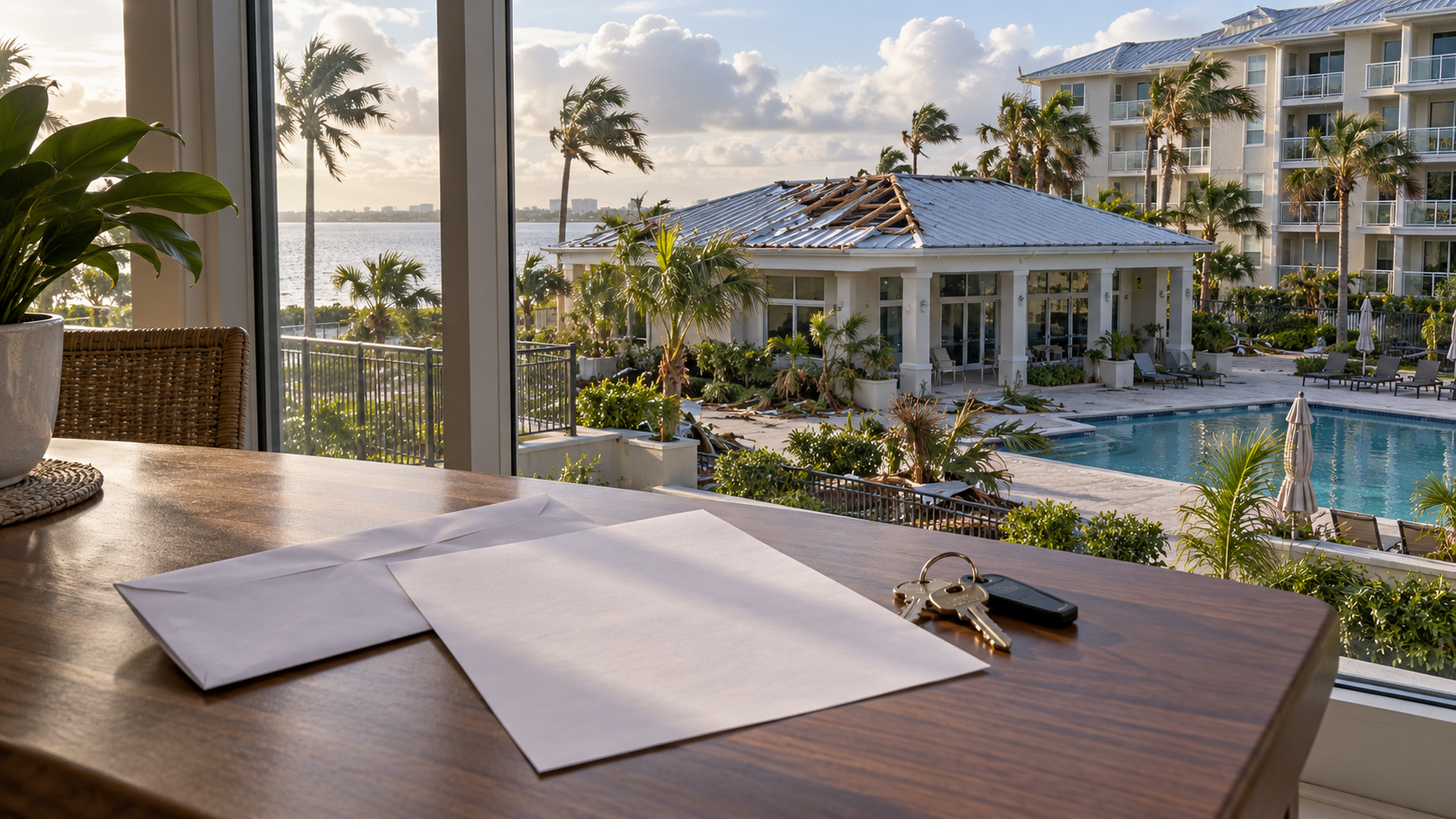
When property damage forces your business to close or reduce operations, lost income can become just as concerning as the cost of repairs. Even after your property is repaired, returning to normal operations may take time. This raises an important question: What is the period of restoration in business interruption insurance?
The period of restoration generally refers to the time reasonably needed to repair, rebuild, or replace property damaged by a covered event. It is an important part of determining how long qualifying business income losses may be covered under an insurance policy.
At PICC FLA, we help Florida business owners document and navigate business interruption claims involving covered commercial property damage. We review available policy information, assess the financial impact of interrupted operations, and prepare supporting documentation to help present claims accurately.
Understanding how the restoration period works can help you identify when coverage may begin, when it may end, and what financial records are needed to support your claim.
What Does the Period of Restoration Mean in Business Interruption Insurance?
The period of restoration is a defined timeframe used in business interruption insurance to determine when qualifying income losses may be covered following physical property damage.
Under many commercial property policies, this period generally ends at the earlier of:
- The date when the damaged property should reasonably be repaired, rebuilt, or replaced with reasonable speed and similar quality
- The date when business operations resume at a new permanent location
The starting date depends on the policy. Some business income forms begin the restoration period after a specified waiting period, while extra expense coverage may begin immediately following qualifying physical damage.
The important distinction is that the restoration period is based on the policy’s requirements, not simply the date when the business owner considers the recovery complete.
Our business interruption insurance claim services focus on documenting lost income, continuing expenses, and the financial effects of covered business disruptions.
Why Is the Business Income Period of Restoration Important?
The business income period of restoration directly affects the timeframe used to calculate qualifying financial losses.
A business may lose income while its commercial property is being repaired. However, business interruption insurance generally does not provide unlimited compensation for every financial difficulty following the incident.
The applicable restoration period helps establish which losses fall within the policy’s coverage timeframe.
For example, a fire may damage a commercial building and prevent normal operations for several weeks. During that time, the business may lose revenue while continuing to pay certain necessary expenses.
The business income claim may consider lost net income and qualifying continuing expenses during the covered period, subject to policy provisions.
We help business owners understand how the interruption relates to the physical damage and what documentation may support the reported financial loss.
When Does the Period of Restoration Begin?
The beginning of the restoration period depends on the insurance policy.
Many business income policies contain a waiting period following covered physical property damage. A commonly used waiting period is 72 hours, although some policies have different requirements.
This means the business may experience lost income immediately after the damage, but coverage for that income loss may not begin until the applicable waiting period has passed.
For example, if a covered event damages your commercial property, the insurer may evaluate business income losses beginning after the waiting period specified in your policy.
We recommend reviewing the actual policy language rather than assuming the same waiting period applies to every commercial insurance claim.
Our commercial property insurance claim services address policy review, property damage documentation, and applicable business income losses.
How Does the Business Interruption Waiting Period Work?
A business interruption waiting period is the amount of time that must pass after a qualifying event before certain business income coverage begins.
It functions differently from a monetary deductible because it is based on time rather than a fixed dollar amount.
Common considerations include:
- The event that triggers the waiting period
- Whether the policy specifies 24, 48, or 72 hours, or another timeframe
- Whether the waiting period applies to business income coverage
- Whether extra expense coverage has different starting conditions
- When the covered business interruption actually began
Some policies may handle waiting periods differently depending on the coverage purchased.
We recommend reviewing the business income provisions, endorsements, and declarations to determine the applicable requirements.
When Does the Period of Restoration End?
The restoration period does not necessarily end when every business activity returns to its previous level.
Under common policy definitions, the period ends when the damaged property should reasonably be repaired, rebuilt, or replaced, or when the business resumes operations at a new permanent location, whichever occurs first.
This distinction matters when actual repairs take longer than the time considered reasonable under the policy.
The insurer may examine repair estimates, reconstruction schedules, property conditions, and other supporting evidence to determine the appropriate timeframe.
At PICC FLA, we help document property damage and review supporting information related to the loss.
Our guide to the commercial property claims adjustment process explains how inspections, documentation, estimates, and claim evaluation fit together.
How Is a Reasonable Restoration Period Determined?
A reasonable restoration period depends on the nature of the damage and the work needed to return the affected property to its required condition.
For example, minor damage may require a shorter restoration period than extensive fire or storm damage involving structural repairs.
Several factors may be relevant:
- Severity and extent of the covered damage
- Type of repairs or reconstruction required
- Availability of necessary materials and labor
- Repair estimates and documented construction schedules
- Conditions affecting access to the damaged property
- Reasonable time needed to restore usable premises
However, not every delay automatically extends business interruption coverage.
Certain policies exclude additional time associated with specific building code requirements or other circumstances.
We recommend maintaining detailed records to explain the repair process and support the claimed timeline.
How Does the Period of Restoration Affect Lost Business Income?
The restoration period helps establish the dates over which qualifying lost income may be calculated.
Imagine a Florida business experiences covered property damage that prevents normal operations for five weeks.
If the policy provides business income coverage, the claim may involve comparing expected financial performance against actual results during the covered portion of that period.
The evaluation may consider:
- Historical business income
- Actual income earned during the interruption
- Qualifying continuing operating expenses
- Expenses that stopped during the shutdown
- Relevant seasonal business patterns
- The applicable waiting period
- The reasonable restoration period
A business that continues operating at reduced capacity may require a different calculation from one that closes completely.
At PICC FLA, we examine available financial documentation to help establish the reported business income loss.
The policy ultimately determines which financial losses qualify for payment.
What Is the Extended Period of Indemnity?
An extended period of indemnity is a coverage option that can provide additional time for qualifying business income losses after the ordinary restoration period ends.
This matters because repairing the property does not always mean the business immediately returns to its previous income level.
Customers may take time to return, scheduled operations may need to be rebuilt, and revenue may recover gradually.
Some business income policies include extended business income coverage, while an extended period of indemnity option or endorsement may increase the available duration.
Depending on the policy, this additional protection may cover a specified period after operations resume, subject to the applicable conditions and limits.
An extended period is not automatically available under every commercial property policy.
We recommend checking whether your policy includes this protection and how its duration is defined.
How Is an Extended Period of Indemnity Different From the Restoration Period?
The main difference concerns when the coverage applies.
The ordinary restoration period generally addresses qualifying income losses while covered property damage prevents normal operations.
Extended business income coverage addresses qualifying losses after the property has been restored and operations have resumed, when income has not yet recovered to the applicable level.
Consider this simplified comparison:
| Coverage period | What it generally addresses |
| Period of restoration | Qualifying income losses while damaged property is being restored |
| Extended business income | Qualifying income losses after operations resume |
| Extended period of indemnity option | Additional time for post-restoration business income coverage, when provided by the policy |
The exact starting point, ending point, and amount payable must be determined from the applicable policy.
Can Business Interruption Coverage Continue After Repairs Are Completed?
Potentially, yes, if the policy provides applicable extended business income coverage.
A business may reopen but continue experiencing financial losses because normal customer demand has not yet returned.
However, reopening alone does not guarantee that additional income losses will be covered.
The insurer may evaluate whether the continuing loss is connected to the covered interruption and whether it falls within the extended coverage provisions.
Business owners should maintain financial records after reopening when an extended income loss is being claimed.
These records may help establish the difference between expected income and actual performance during the applicable extended period.
What Documents Help Establish the Period of Restoration?
Strong documentation helps connect the physical property damage, restoration timeline, and resulting financial losses.
At PICC FLA, we recommend organizing relevant records as early as possible.
Important documents may include:
- Property damage photographs and videos
- Inspection reports
- Repair estimates
- Contractor schedules
- Repair invoices and receipts
- Records showing when business operations stopped
- Documentation of reopening dates
- Profit and loss statements
- Sales and revenue reports
- Payroll and continuing expense records
- Written communications concerning repair progress
These records can help explain why operations were interrupted and how long the affected property reasonably required restoration.
Our guide on how to file a claim with a public adjuster provides more information about our approach to policy review, damage assessment, documentation, and claim presentation.
What Happens If Repairs Take Longer Than Expected?
Unexpected delays can make a business interruption claim more complicated.
A repair project might take longer because additional damage is discovered, specialized materials are unavailable, or reconstruction requires work that was not identified during the initial inspection.
However, the actual date repairs finish does not always determine the end of the covered restoration period.
The insurer may evaluate how long the work should reasonably have required under the policy’s definition.
We recommend keeping written evidence explaining delays, including updated estimates, repair schedules, inspection findings, and relevant correspondence.
If newly discovered covered property damage affects the repair scope, additional documentation may also be necessary.
Our guide to supplemental insurance claims explains how additional damage or repair costs connected to an existing property loss may be presented for evaluation.
What If the Insurer Disagrees With the Restoration Timeline?
Differences can arise when the business owner and insurance company reach different conclusions about the reasonable time required to restore damaged property.
Potential disagreements may involve:
- The extent of physical damage
- Necessary repair operations
- The reasonable duration of reconstruction
- The date business operations could resume
- Documentation supporting the claimed interruption
- Whether an extended coverage provision applies
When evaluating a disagreement, the goal should be to identify what the policy requires and which records support the claimed period.
If the insurer’s evaluation appears incomplete, additional evidence may help clarify the circumstances.
Our guide on underpaid property damage insurance claims discusses how documentation can support further review when an insurance payment appears insufficient.
How Can PICC FLA Help With a Business Interruption Claim?
At PICC FLA, we represent Florida policyholders during commercial property insurance claims.
Our services include evaluating property damage, reviewing available policy information, gathering supporting financial records, documenting losses, preparing claim materials, and negotiating with insurance companies.
For business interruption claims, we help business owners examine the connection between covered property damage, interrupted operations, and documented financial losses.
We also review available information concerning repair timelines and continuing expenses to help present the claim accurately.
We do not assume that every interruption qualifies for compensation or that every repair delay extends coverage.
Our focus is to represent the policyholder and help ensure the claim is supported by relevant evidence and the applicable insurance policy.
If your Florida business has suffered property damage and lost income, contact PICC FLA for a claim review. We can help evaluate your circumstances and explain how our public adjusting services may assist.
Which Organizations Support This Business Interruption Insurance Guidance?
Florida Department of Financial Services. “Commercial Property Insurance Overview.” Division of Consumer Services, https://myfloridacfo.com/division/consumers/understanding-insurance/commercial-property-insurance. Accessed 2 Nov. 2026.
Florida Department of Financial Services. Protecting Your Business: Business Interruption Coverage. Office of the Insurance Consumer Advocate, https://myfloridacfo.com/docs-sf/insurance-consumer-advocate-libraries/ica-documents/business-interruption-coverage.pdf. Accessed 2 Nov. 2026.
National Association of Insurance Commissioners. “Business Interruption and Business Owner Policy.” Insurance Topics, 25 June 2026, https://content.naic.org/insurance-topics/business-interruption-and-business-owner-policy. Accessed 2 Nov. 2026.
International Risk Management Institute. “Extended Period of Indemnity Endorsement or Option.” Glossary of Insurance and Risk Management Terms, https://www.irmi.com/term/insurance-definitions/extended-period-of-indemnity-endorsement-or-option. Accessed 2 Nov. 2026.