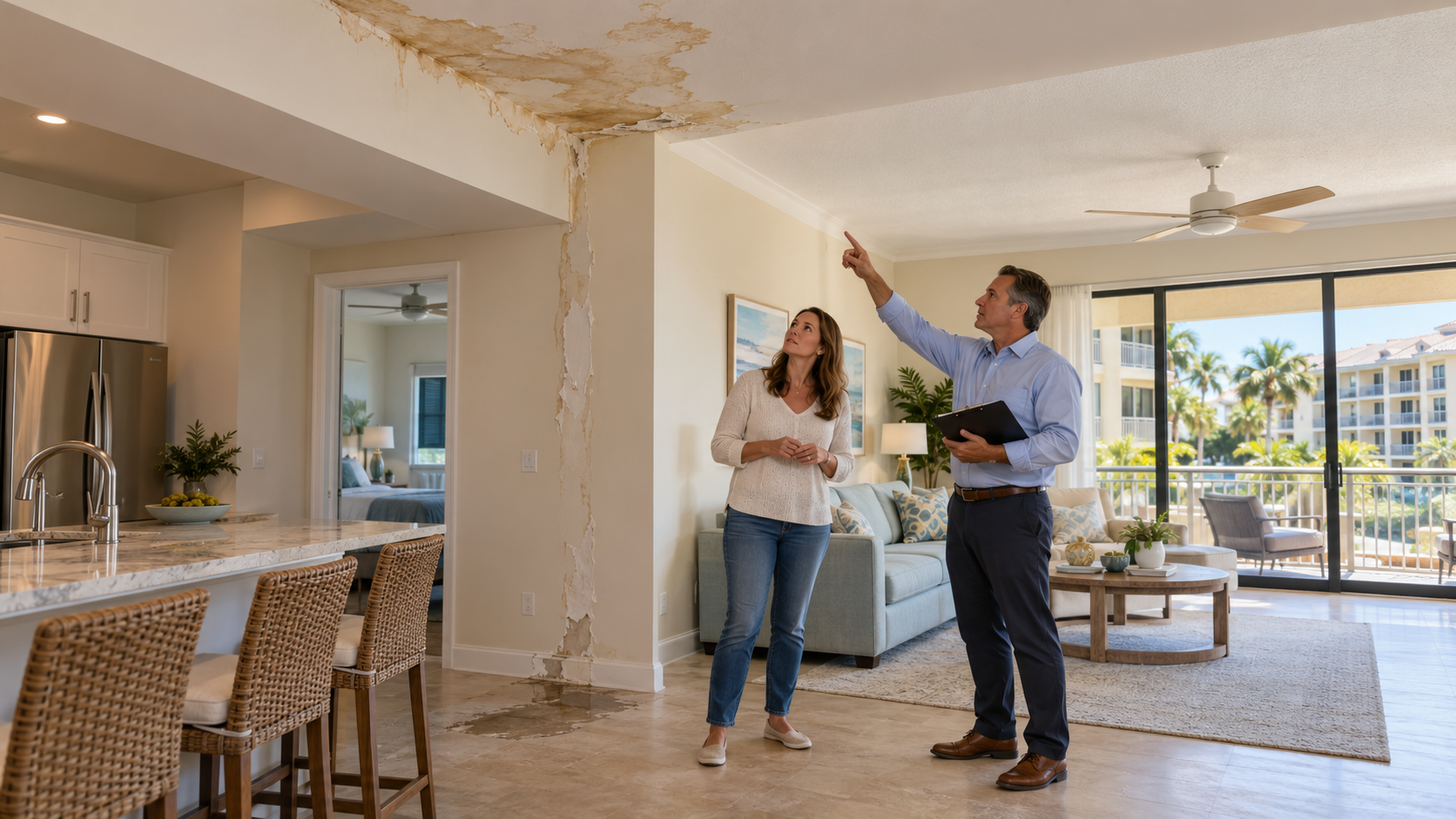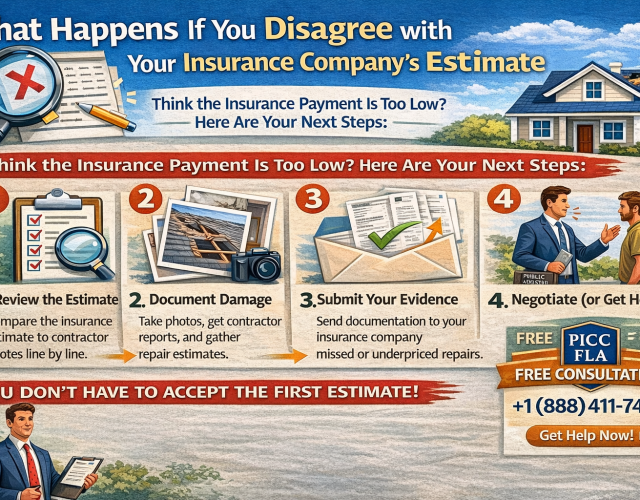
Property damage rarely ends when an inspection is completed. Many homeowners feel relief after an insurance adjuster visits the property, assuming the hardest part of the insurance claim process is behind them. The frustration often begins later, when the insurance estimate arrives, and the numbers do not reflect the real cost to repair the damage.
This situation is common. When an insurance estimate is lower than contractor pricing, property owners are unsure how repairs will move forward. Disagreements over valuation follow naturally. Understanding why they happen and what steps you can take protect your claim and prevent costly decisions made under pressure.
Why Insurance Estimates and Contractor Estimates Often Differ
An insurance company evaluates a loss differently from a contractor preparing repair estimates. Contractors focus on restoring the damaged property to working condition, while insurance adjusters calculate payment according to policy language, approved pricing systems, and internal claim guidelines.
These approaches create a gap. Insurers often rely on standardized estimating software built on regional averages, while contractors price work based on current labor availability, material shortages, permit requirements, and real construction conditions. That difference frequently explains why an insurance estimate appears lower than expected.
Insurance companies also separate covered damage from maintenance issues or prior wear. Items viewed as aging or pre-existing conditions may be removed from the scope, reducing the amount included in the initial estimate.
In many cases, the disagreement is not about whether damage exists. The dispute centers on how much work is required, how it is priced, and how coverage is interpreted under the policy.
Why Insurance Companies Sometimes Issue Lower Initial Estimates
Insurance companies assess risk and payment exposure throughout the claims process. Several factors can lead to a lower estimate.
- Adjusters may miss hidden damage during a limited inspection, especially when interior moisture, structural movement, or secondary issues only become visible after repairs begin.
- Insurers also rely on pricing software that may not reflect current labor demand or material costs in local construction markets.
- Coverage limits written into the insurance policy can further restrict what the insurer agrees to pay.
- In addition, negotiation plays a role, as many insurers treat the first offer as a starting point rather than a final settlement.
This pattern explains why estimate disputes occur so frequently. Reporting from the Florida Office of Insurance Regulation shows that Florida accounts for roughly 9.7% of nationwide homeowners’ claims but more than 70% of related lawsuits, highlighting how often claim valuation becomes contested after an estimate is issued.
How Insurance Companies Actually Build an Estimate
An insurance estimate is a financial evaluation created within a structured adjustment process. Insurance companies begin with policy language, since coverage determines what can legally be paid before pricing is considered. Adjusters then apply estimating software built on standardized regional averages, which creates consistent results. These pricing systems deliver consistency across thousands of claims, which means they may not immediately reflect the unique conditions of an individual property or rapidly changing local construction costs.
The estimate reflects what the insurer believes is owed under the insurance policy, not necessarily what a contractor must charge to complete repairs. Items categorized as maintenance, pre-existing wear, or upgrades may be removed from the scope, while labor pricing may rely on historical averages rather than current construction demand.
Once the estimate is issued, the claim typically moves into negotiation. Additional payments often occur only after new documentation changes how the insurer evaluates the scope or cost.
Understanding this sequence explains why many homeowners receive a low insurance estimate even when the damage itself is not in dispute.
What If the Insurance Estimate Is Too Low?
Receiving an estimate that does not reflect the actual cost of repairs does not mean the process is finished. An insurance claim remains open until the parties reach an agreement or the dispute process concludes.
Take the time to review the estimate line by line. Compare quantities, materials, and labor pricing against contractor repair estimates. Missing items or underpriced work often explain the difference.
Documentation becomes essential at this stage. Photographs, contractor reports, and updated repair estimates demonstrate the true scope of property damage.
Many homeowners assume they must accept the initial estimate immediately. Unfortunately, that assumption often leads to underpaid claims.
What If the Insurance Check Is Less Than the Repairs?
Insurance adjusters evaluate claims on behalf of the insurance company and must apply policy language, internal guidelines, and standardized pricing methods when they prepare a detailed estimate. Their role is not to determine what a contractor needs to complete repairs, but to calculate what the insurer believes is owed under the insurance policy.
This difference in responsibility creates a predictable gap. Adjusters work within company procedures designed to maintain consistency across many claims, while homeowners focus on restoring their property. As a result, important details, particularly hidden damage or evolving repair costs, may not appear in the initial evaluation.
An independent review becomes important when an estimate does not reflect the full scope of damage or realistic repair pricing. Additional documentation allows the claim to be reconsidered within the same adjustment process.
For general consumer information about how insurance claims are evaluated, homeowners can consult resources published by the National Association of Insurance Commissioners.
Steps to Take If You Disagree with an Insurance Estimate
Disagreement does not automatically mean conflict. Many estimate differences are resolved through clarification and additional documentation (i.e., photos). Several practical steps often help move the claim forward.
- Review the insurance policy carefully to understand applicable coverage limits and valuation terms.
- Ask the insurance company to explain how the estimate was calculated, including pricing assumptions and scope decisions.
- Submit contractor repair estimates along with a detailed explanation identifying missing or underpriced items.
When discussions no longer progress, Florida homeowners may request mediation through the Florida Department of Financial Services mediation program, a state process that resolves claim disputes before litigation becomes necessary.
When a Public Adjuster Becomes Relevant
Some claims reach a point where additional analysis is needed beyond what a homeowner can reasonably manage alone. This often occurs when an insurance estimate remains significantly lower than contractor pricing, when important damage is missing from the scope, or when negotiations no longer progress despite submitted documentation.
At this stage, the focus shifts from discussion to structured evaluation. A public adjuster reviews the loss from the policyholder’s perspective by comparing the insurer’s estimate with inspection findings, repair requirements, and policy provisions to determine where valuation differences originate.
PICC FLA conducts this review through documented analysis rather than confrontation. Overlooked damage, underestimated quantities, or pricing assumptions that do not reflect actual repair conditions are organized into clear supporting evidence. This allows the claim to move forward within the existing adjustment process and allows the insurer to reassess the loss based on complete information.
In many cases, once the scope and documentation are clarified, stalled negotiations resume, and underpaid claims can be reconsidered without escalating the dispute.
PICC FLA assists Florida property owners with many types of insurance claims, including business interruption (loss of income), fire damage, flood damage, hail damage, hurricane and storm damage, plumbing and water damage, lightning damage, mold damage, roof damage, sinkhole damage, smoke damage, tornado damage, vandalism and theft damage, wind damage, and other property-related losses.
Understanding Your Options Moving Forward
Disagreements over insurance estimates are common, especially when repair costs and valuation methods differ. A lower estimate or payment does not always represent the outcome of a claim.
Because insurance evaluations rely on technical pricing and policy interpretation, resolving valuation gaps often requires detailed analysis. In many situations, professional legal advice or hiring a public adjuster can help you organize documentation, reassess the scope, and guide the claim toward a result that reflects the true extent of the loss.
Frequently Asked Questions
Why is my insurance adjuster’s estimate lower than I expected?
Insurance adjusters base their estimates on the information available to them, such as damage valuation, repair costs, and policy coverage limits. Sometimes, the initial estimate may not fully account for all necessary repairs or may differ from your expectations.
Should I accept the insurance adjuster’s estimate right away?
It’s not always necessary to accept the first estimate. Review it carefully and compare it with other estimates before deciding. If you’re not sure, consult with a public adjuster or attorney for guidance.
Can a second opinion help me increase my insurance payout?
Yes, getting a second opinion from another expert, such as a contractor, a law expert, or a public adjuster, can help you challenge the estimate. An independent evaluation may reveal damages or costs that the insurance adjuster overlooked.
How do I find a public adjuster to help with a low estimate?
A public adjuster is a licensed professional who can negotiate with your insurance company on your behalf. Contact PICC FLA for additional information. We offer a free consultation, and our team can guide you through the entire process.
Final Takeaway
- Disagreeing with an insurance estimate is a normal part of many property claims, and a lower payment does not mean the claim is finished.
- An insurance estimate represents only one evaluation within a larger claims process.
- Documentation, negotiation, and structured claim review can significantly change the outcome of a claim.
- If your insurance estimate is lower than contractor pricing, or your insurance check is less than the repairs that are required, professional guidance can clarify all available options.
- Delaying review of a low insurance estimate can make it harder to recover additional payments later in the claims process.
- PICC FLA offers a free consultation for homeowners who seek clarity and a fair resolution.