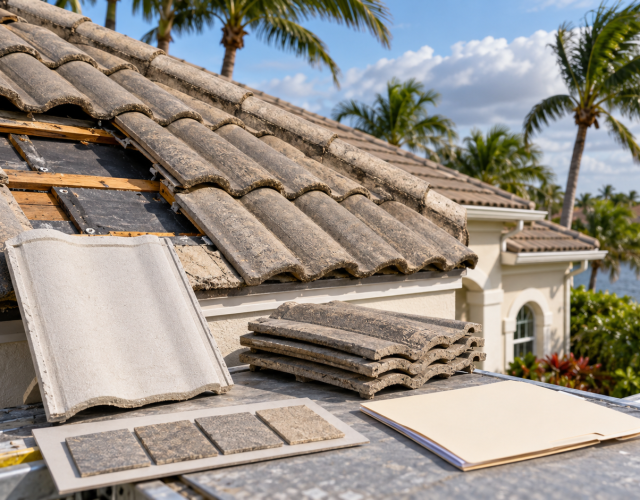
After property damage, homeowners often expect their insurance company to pay for repairs that restore their home to its previous condition. But what happens when new flooring, roofing materials, cabinets, or wall finishes no longer match the existing materials?
This is where Florida’s matching rule for property insurance repairs becomes important.
Under Florida Statutes Section 626.9744, insurers may be required to make reasonable repairs or replacements in adjoining areas when replacement items do not match existing items in quality, color, or size. However, the rule does not automatically guarantee replacement of an entire room, floor, or roof.
At PICC FLA, we help Florida homeowners understand their property insurance claims, document damage, review repair estimates, and address disagreements involving repair costs and the scope of work.
We believe homeowners should understand how matching requirements may affect their claims before accepting an insurance estimate. Our property insurance claim process explains how inspections, documentation, estimates, and negotiations fit into a property damage claim.
What Is Florida’s Matching Rule for Property Insurance?
Florida’s matching rule is commonly used to describe the requirements established under Florida Statutes Section 626.9744, particularly subsection (2).
The law addresses situations where an insured property loss requires replacement of damaged items, but the replacement materials do not match the existing materials in quality, color, or size.
When the statutory requirements apply, the insurer must make reasonable repairs or replacements of items in adjoining areas.
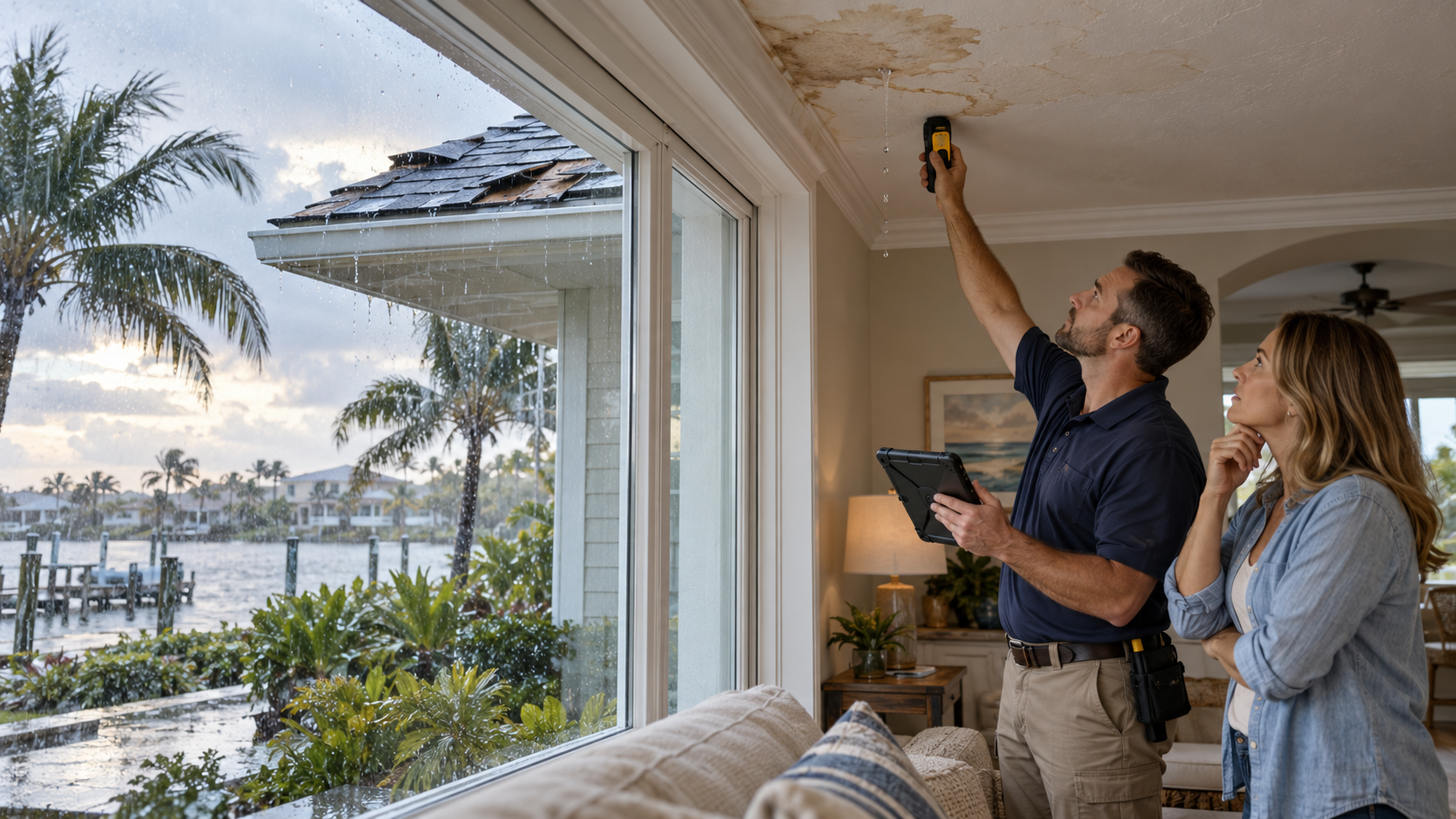
For example, imagine a covered water leak damages part of your living room flooring. The original flooring is no longer available, and the replacement material has a noticeably different color.
In that situation, matching requirements may become relevant when determining the appropriate repair scope.
However, the law begins with an important qualification: its requirements apply unless the insurance policy provides otherwise, and they concern qualifying homeowners policies that settle first-party losses on a repair or replacement cost basis.
This means homeowners must evaluate both the statute and their actual insurance policy.
How Does Florida Statute 626.9744 Affect Property Repairs?
Florida Statutes Section 626.9744 establishes several requirements concerning property insurance claim settlement practices.
Subsection (2) specifically addresses replacement materials that do not match existing materials.
When evaluating the extent of repairs or replacements in adjoining areas, an insurer may consider:
- The cost of repairing or replacing undamaged portions of the property
- The degree of uniformity achievable without additional replacement
- The remaining useful life of undamaged materials
- Other relevant circumstances affecting the repair
These factors matter because the law calls for reasonable repairs or replacement, not automatic replacement of every undamaged surface.
At PICC FLA, we focus on comparing the documented property damage with the repair scope included in the insurance company’s estimate.
Our guide on how to read an insurance claim estimate explains why quantities, material descriptions, repair operations, and omitted areas deserve careful attention.
What Types of Property Repairs May Involve Florida’s Matching Rule?
Matching questions may arise when a covered loss requires replacing materials that connect visually or physically with undamaged portions of the home.
Can Florida’s Matching Rule Apply to Flooring?
Yes, flooring can present matching concerns.
Imagine a covered plumbing failure damages laminate flooring in a kitchen that continues into a hallway.
The original flooring material may have been discontinued, or the available replacement may differ noticeably in color, size, or quality.
In that situation, it may be appropriate to evaluate whether reasonable repairs or replacement in adjoining areas are necessary.
Important considerations include the floor’s layout, material availability, existing condition, and the feasibility of achieving a reasonably uniform appearance.
Water damage can also extend beneath visible surfaces. Our guide on proving hidden water damage in an insurance claim explains why documenting concealed damage can be important when determining the necessary repair scope.
Does Florida’s Matching Rule Apply to Roof Repairs?
Matching issues may also arise in roof damage claims, depending on the policy and circumstances.
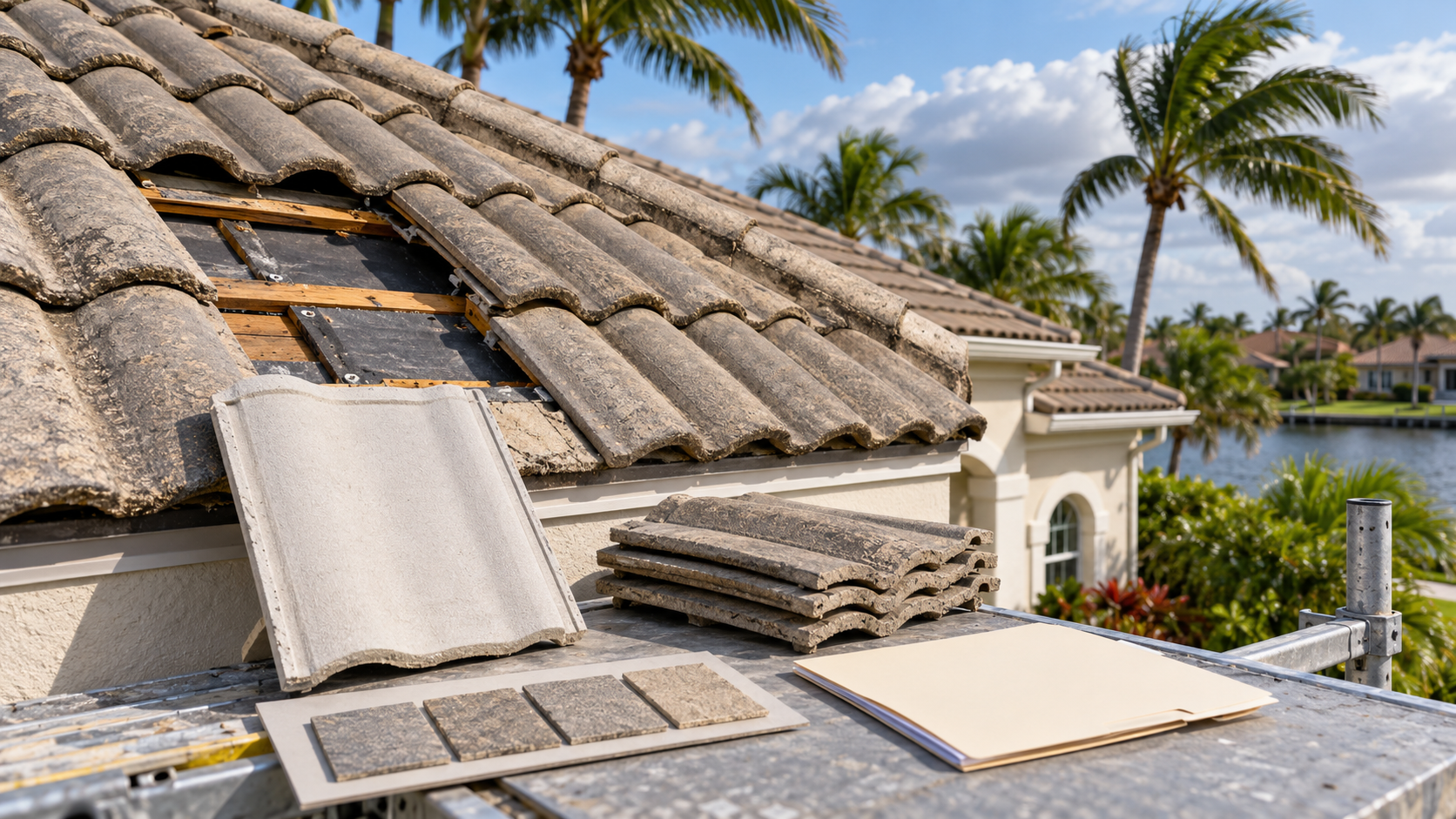
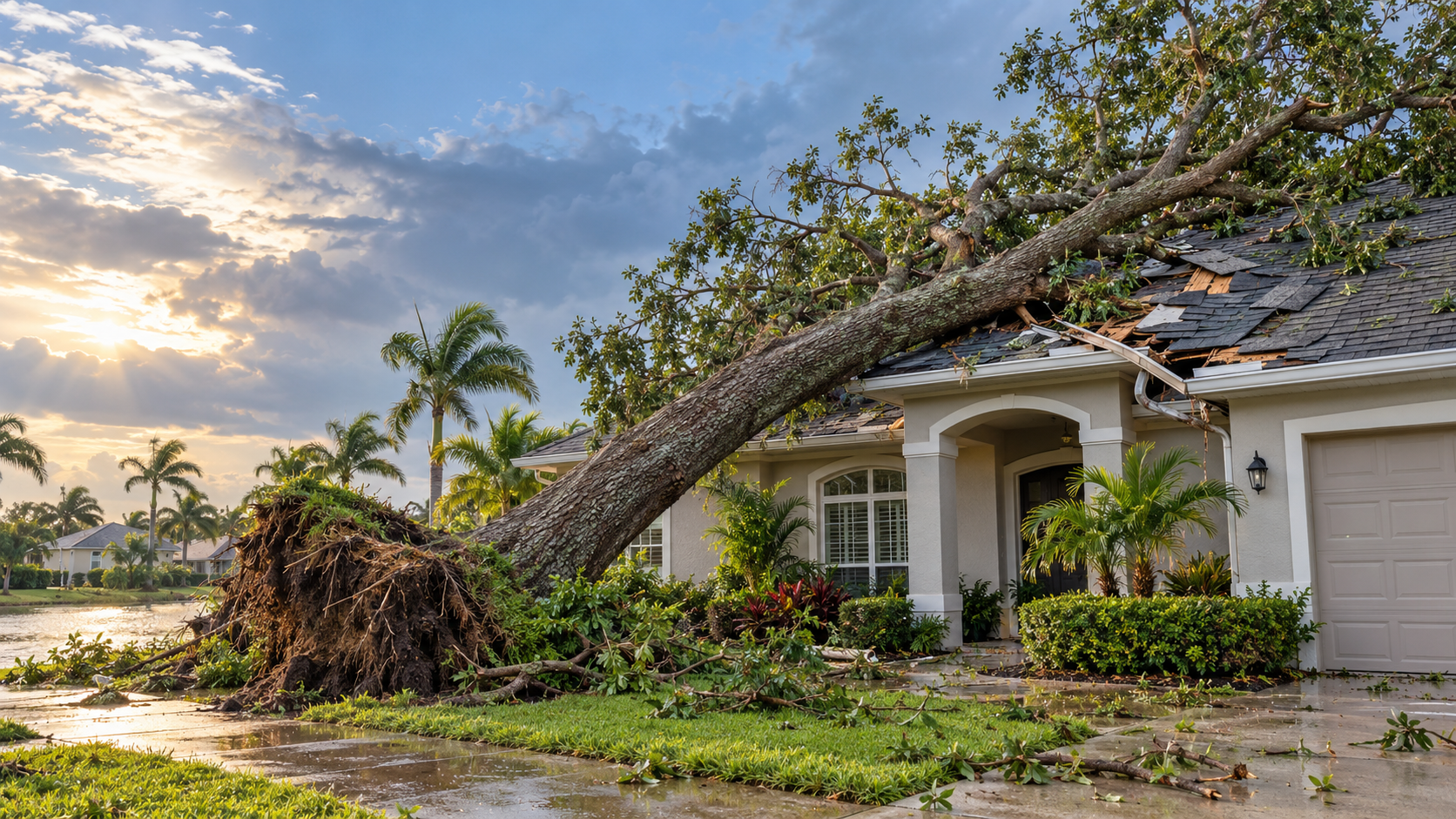
For example, a storm might damage a section of roofing materials that cannot be replaced with matching materials.
However, homeowners should not assume that mismatched roofing automatically requires full roof replacement.
Roof claims can involve separate policy terms, valuation provisions, exclusions, repair requirements, and other applicable rules.
At PICC FLA, we assist homeowners with documenting storm-related roofing losses and reviewing the repair work included in their claims.
Our roof damage insurance claim services explain how we help property owners with roofing damage assessments, claim documentation, and insurance negotiations.
Can Matching Requirements Affect Cabinets, Walls, and Interior Finishes?
Potentially.
A covered property loss may damage kitchen cabinets, wall finishes, baseboards, or other materials that connect with adjoining areas.
For example, water damage might require replacement of several cabinets while the remaining cabinets have a finish that is no longer available.
The question is whether the proposed replacement creates a material difference in quality, color, or size, and whether reasonable additional work in adjoining areas is appropriate.
Not every visible difference establishes a requirement for additional replacement. The actual condition, layout, policy language, and statutory factors must be considered.
Does Florida’s Matching Rule Require Insurance Companies to Replace Everything?
No. This is one of the most important misunderstandings surrounding Florida property insurance matching requirements.
Section 626.9744 does not establish an unconditional right to replace an entire floor, roof, room, or building simply because replacement materials look different.
The extent of additional work depends on the circumstances, including the statute’s reasonableness factors.
For instance, replacing flooring in an adjoining area might be reasonable in one claim but unnecessary in another.
Likewise, a difference in material appearance does not automatically mean the insurer must replace every remaining surface throughout the home.
We recommend approaching these claims through documentation rather than assumptions.
The goal is to determine which repairs are reasonably supported by the covered loss, applicable insurance policy, and Florida law.
What Factors Can Affect Matching Coverage in Florida?
The insurance policy is essential.
A homeowner may have replacement cost coverage, actual cash value provisions, special roof settlement terms, deductibles, or other limitations affecting how the loss is evaluated.
Additionally, the cause of the damage must be considered.
A matching concern does not independently establish coverage for damage that the policy excludes.
For example, ordinary wear, deterioration, or maintenance issues cannot automatically become covered losses merely because old materials no longer match newly available products.
We recommend reviewing the policy, the insurer’s coverage determination, and the actual repair requirements together.
If you are preparing a new claim, our guide on how to file a homeowners insurance claim explains the importance of documenting damage, preserving evidence, and understanding policy requirements.
How Can Homeowners Document a Property Insurance Matching Issue?
Strong documentation can help establish whether an insurance estimate adequately addresses the required repairs.
Homeowners should preserve evidence showing both the damaged materials and the condition of adjoining areas.
Useful documentation includes:
- Photographs showing damaged and undamaged materials together
- Close-up images of differences in color, size, or quality
- Original material specifications when available
- Information about replacement material availability
- Measurements of affected and adjoining areas
- Contractor estimates describing proposed repairs
- Inspection reports and repair findings
- Insurance estimates and claim correspondence
Documentation should establish why additional work may be necessary, rather than simply asserting that the homeowner wants everything replaced.
At PICC FLA, we use property inspections, estimates, supporting records, and claim information to help policyholders present their documented losses.
What Should You Do If Your Insurance Estimate Does Not Address Matching?
Start by reviewing the insurance company’s estimate carefully.
Determine which damaged materials were included, what replacement materials were proposed, and whether adjoining areas were evaluated.
If the proposed repair creates a matching concern, request clarification about how the insurer determined the scope of work.
The difference may involve material availability, quantities, repair methods, or policy limitations.
An estimate disagreement does not automatically mean the claim was underpaid. However, a documented difference may justify additional review.
Our guide on underpaid property damage insurance claims explains how property owners can identify and present concerns involving insufficient repair estimates.
Can You Challenge an Insurance Company’s Matching Decision?
Depending on the circumstances, yes.
If you believe the insurer omitted reasonable repairs to adjoining areas, you can request an explanation and present supporting documentation.
First, determine whether the disagreement concerns coverage or the amount and scope of repairs.
A disagreement about repair quantities is different from a decision denying coverage for a particular portion of the property.
If the insurer accepts some repairs but denies others, our explanation of partial denial of an insurance claim can help you understand how to review that decision.
Additional repair information may also become available after work begins.
When additional covered damage or qualifying repair costs arise from the original loss, a supplemental claim may be appropriate, subject to policy requirements and applicable deadlines.
Our guide to supplemental insurance claims in Florida explains when additional documentation may be presented for further evaluation.
How Can PICC FLA Help With Property Insurance Matching Concerns?
At PICC FLA, we represent policyholders during the property insurance claims process.
Our work includes reviewing claim information, inspecting property damage, documenting losses, preparing estimates when appropriate, and communicating or negotiating with insurance companies on behalf of property owners.
When matching concerns arise, we can review the existing estimate, inspect the affected areas, and identify whether additional documentation or repair evaluation may be appropriate.
We do not assume every mismatch requires additional payment. We focus on the actual damage, relevant policy provisions, and evidence supporting the proposed repair scope.
If you believe your property insurance estimate does not adequately address your documented damage, contact PICC FLA for a claim review.
Why Should Florida Homeowners Understand the Matching Rule Before Accepting Repairs?
Florida’s matching rule can be important when covered property damage requires replacement materials that differ from adjoining undamaged materials.
However, the law does not promise complete replacement simply because a visible difference exists.
Understanding your policy, documenting the actual damage, and evaluating the proposed repairs can help you determine whether the insurance estimate deserves further review.
At PICC FLA, we help Florida homeowners navigate property insurance claims using inspections, documentation, detailed estimates, and policyholder representation.
If your claim involves mismatched flooring, roofing, cabinets, or other property materials, we can help you review the documented loss and understand the next steps in the claims process.
Which Official Organization Provides Florida’s Matching Rule Requirements?
Florida Legislature. “Claim Settlement Practices Relating to Property Insurance.” The 2026 Florida Statutes, sec. 626.9744, 2026, www.leg.state.fl.us/statutes/index.cfm?App_mode=Display_Statute&URL=0600-0699/0626/Sections/0626.9744.html. Accessed 12 Oct. 2026.