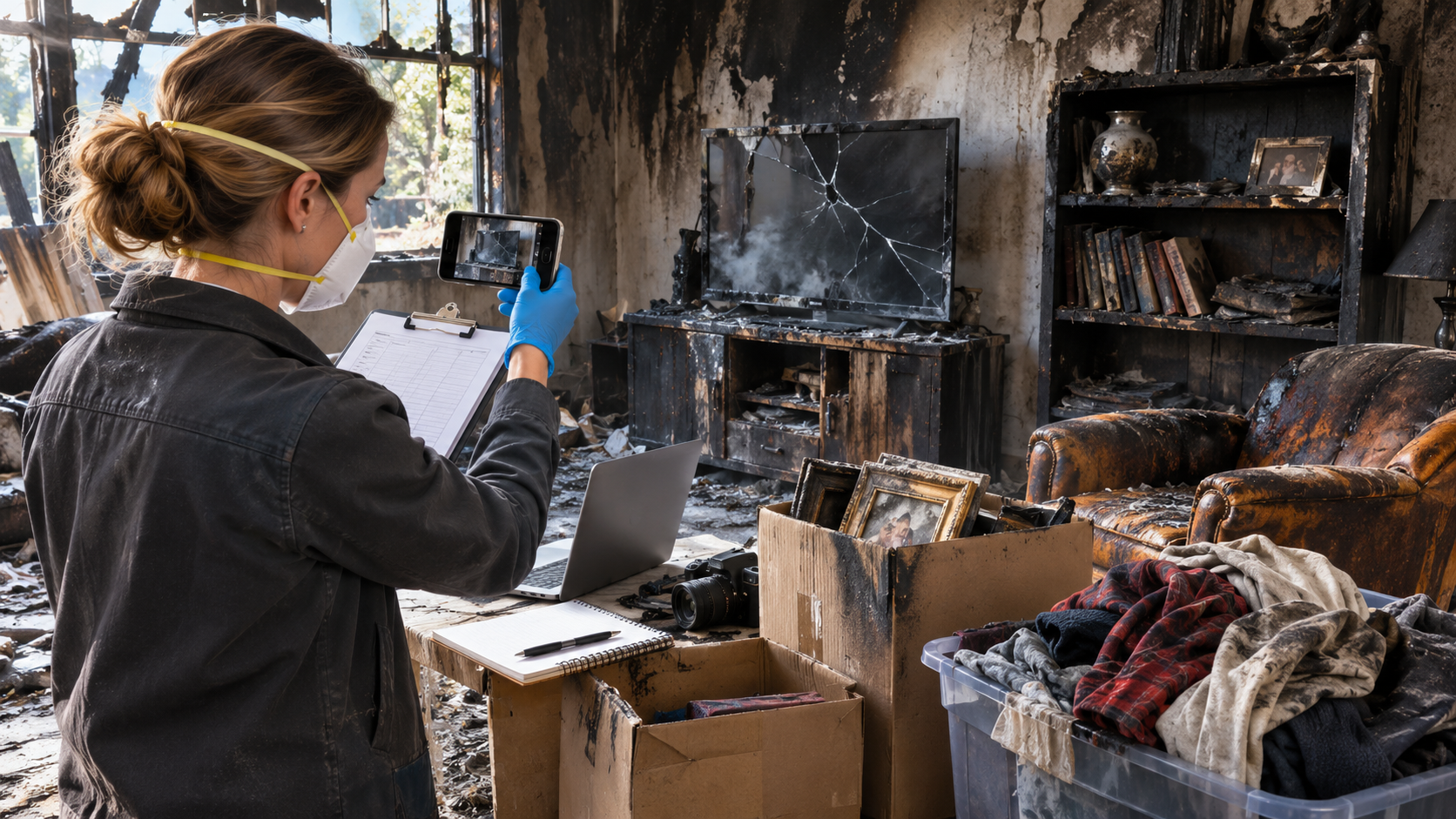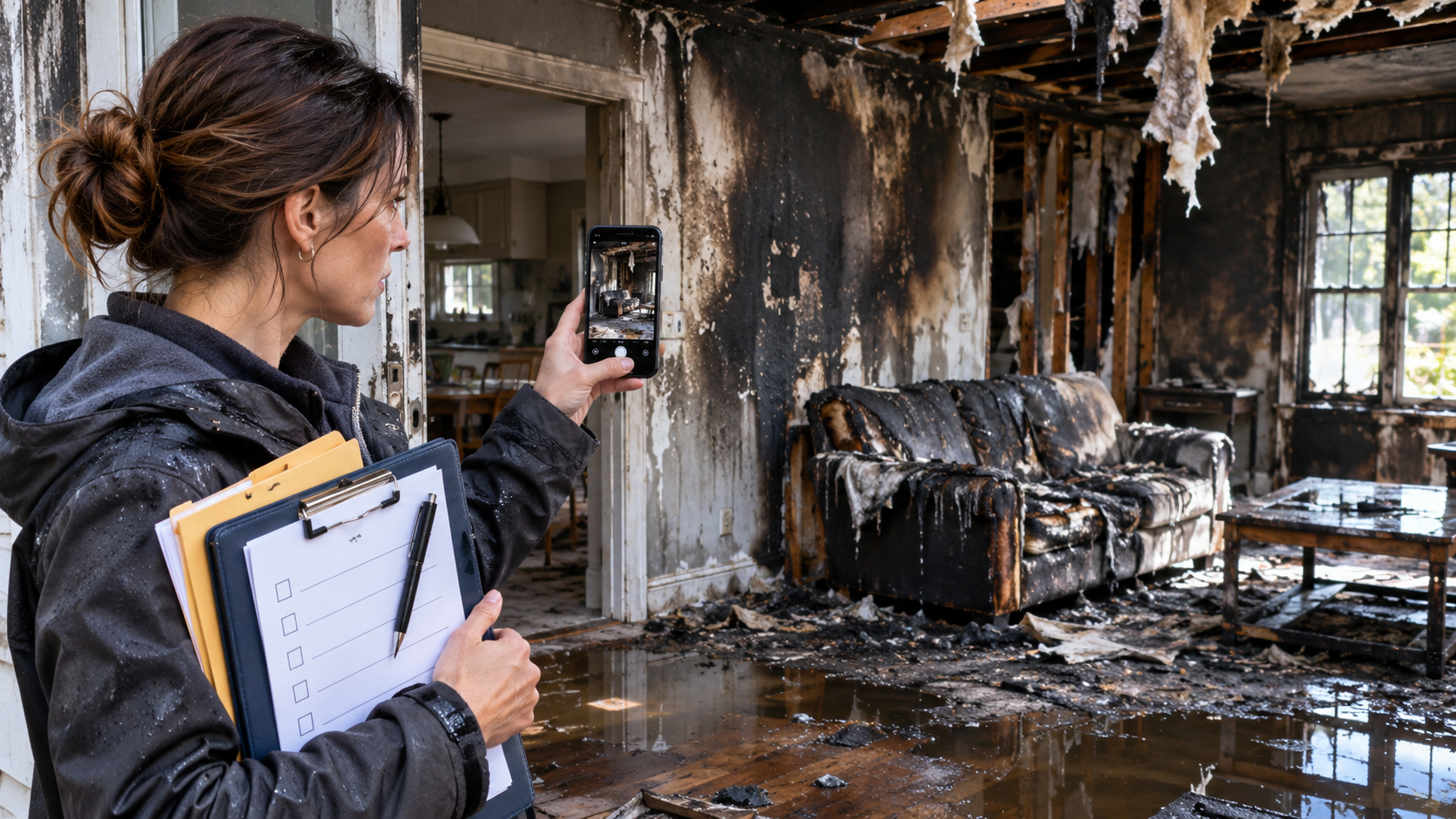
After a house fire, one of the most difficult tasks is figuring out everything you lost. Furniture, electronics, clothing, appliances, and everyday belongings may be damaged by flames, smoke, soot, or water used to extinguish the fire. When filing an insurance claim, you need a reliable record of those losses. So, how do you create a contents inventory after a fire?
Start by listing your damaged or destroyed belongings room by room. Record each item’s description, quantity, approximate purchase date, original cost, and estimated replacement cost. Support the list with photographs, receipts, and other available records.
At PICC FLA, we help Florida homeowners document property losses and navigate fire damage insurance claims. We understand that a contents inventory can feel overwhelming, especially when belongings are destroyed or difficult to identify.
A detailed inventory helps organize the loss, establish ownership and value, and provide supporting information for the insurance company’s review.
What Is a Contents Inventory for a Fire Insurance Claim?
A contents inventory is an itemized record of personal belongings damaged or destroyed during a fire.
Homeowners insurance generally includes personal property coverage, subject to the policy’s terms, limits, exclusions, and applicable deductibles. This coverage may apply to qualifying losses involving furniture, clothing, electronics, appliances, and other household possessions.
However, reporting that your belongings were destroyed is not the same as documenting their value.
An insurance company may request an itemized list showing what was damaged, how much the items originally cost, and what comparable replacements would cost.
At PICC FLA, our fire damage public adjuster services focus on identifying and documenting property losses, reviewing claim information, and representing homeowners throughout the adjustment process.
What Should You Do Before Creating a Fire Damage Contents Inventory?
Safety must come first.
Never enter a fire-damaged property until the appropriate authorities confirm that it is safe. Structural instability, damaged electrical systems, hazardous debris, and remaining fire-related conditions can make the property dangerous.
Once entry is permitted, begin documenting the affected areas.
We recommend taking photographs and videos before cleanup changes the condition of the property, whenever it is safe and practical.
Start with wide photographs of each room. Then capture closer images showing damaged furniture, appliances, clothing, electronics, and other identifiable belongings.
Do not immediately discard damaged items. The insurance company may need an opportunity to inspect them. If an item must be removed for safety reasons, document its condition and follow applicable disposal instructions.
Our guide on what to do after a house fire explains additional steps homeowners can take to protect their property insurance claims.
How Do You Make a Personal Property Fire Claim List?
Creating a personal property fire claim list becomes easier when you divide the work into smaller sections.
Instead of trying to remember everything in your home at once, start with one room and work through each area.
We recommend the following process.
How Should You Organize Your Inventory Room by Room?
Begin with the living room, then continue through bedrooms, the kitchen, bathrooms, closets, and other affected areas.
Include belongings stored in garages, storage rooms, and other spaces covered under the applicable policy.
For each room, identify:
- Furniture and decorative items
- Electronics and household appliances
- Clothing, shoes, and accessories
- Kitchen equipment and utensils
- Bedding and linens
- Tools and household supplies
- Other damaged personal belongings
Keep separate entries for identifiable items rather than placing everything under one general description.
For example, listing a television, sofa, dining table, and refrigerator individually provides more useful information than writing “damaged household furniture and appliances.”
What Information Should You Include for Every Item?
A useful fire contents inventory should include enough information to identify and evaluate each item.
| Inventory field | Information to record |
| Room | Location before the fire |
| Item description | Type, size, material, and other details |
| Quantity | Number of affected items |
| Purchase date | Actual or approximate date |
| Original cost | Amount originally paid |
| Replacement cost | Estimated current cost of a comparable item |
| Damage condition | Burned, smoke-damaged, water-damaged, or destroyed |
| Supporting evidence | Receipts, photographs, purchase records, or other proof |
Include serial numbers or other identifying details when available.
If you cannot remember an exact purchase date or original price, clearly identify the information as an estimate rather than presenting it as certain.
How Should You Document Fire-Damaged Contents That Are Not Completely Destroyed?
Not every affected belonging is reduced to ashes.
Fire damage may involve heat exposure, smoke residue, soot contamination, and water damage from firefighting activities.
Furniture may appear intact but have smoke contamination. Clothing may be affected by soot or odor. Electronics may require professional evaluation before their condition can be determined.
At PICC FLA, we recognize that fire-related property damage can extend beyond visible burning.
Our smoke damage insurance claim services address damage involving smoke, soot, odors, and affected household belongings.
When preparing your inventory, describe the actual condition of each item. Avoid automatically classifying everything as a total loss.
Whether an item requires cleaning, repair, or replacement depends on its condition, applicable assessments, and the insurance policy.
How Do You Prepare a Total Loss Inventory List After a House Fire?
A severe fire may destroy most or all of a home’s contents, leaving little physical evidence of individual belongings.
Preparing a total loss inventory list can be challenging, but you can begin reconstructing the information using available records.
Start by reviewing photographs and videos taken before the fire. Family photographs, room photographs, and other existing images may reveal furniture, decorations, electronics, and household items that were present.
You can also review:
- Previous purchase receipts
- Email purchase confirmations
- Bank or payment records
- Product manuals and warranty documents
- Existing household inventory records
- Photographs showing belongings before the fire
Work through the home room by room, including closets, cabinets, drawers, and storage areas.
Avoid guessing quantities or creating unsupported entries simply to complete the list.
If you cannot establish an item’s exact details, identify what you reasonably know and explain any uncertainty.
A total loss does not eliminate the need to support the claimed value of damaged belongings.
How Can You Prove Ownership Without Original Receipts?
Losing receipts during a fire does not automatically mean you cannot document a personal property claim.
Other evidence may help establish that an item belonged to you and was present in the home.
For example, pre-fire photographs may show a television in the living room. A bank statement may help establish a related purchase. An email confirmation may provide product details and the original price.
We recommend organizing available evidence alongside the corresponding inventory entries.
If a specific receipt is unavailable, identify other reliable records that support the item’s description, ownership, and estimated value.
The sufficiency of that evidence depends on the insurer’s reasonable documentation requests and the applicable policy requirements.
Our residential insurance claim services emphasize documenting property damage, examining claim information, and supporting the policyholder during the claims process.
How Is Fire-Damaged Personal Property Valued by Insurance?
Insurance policies may use actual cash value or replacement cost to determine how covered personal property losses are settled.
Understanding the difference can help you prepare a more accurate inventory.
What Does Actual Cash Value Mean?
Actual cash value generally reflects the item’s value after accounting for depreciation.
Depreciation considers factors such as the item’s age, condition, and wear.
For example, an older television may have a lower actual cash value than the current cost of purchasing a comparable new television.
The exact calculation depends on the policy and applicable valuation requirements.
What Does Replacement Cost Mean?
Replacement cost generally refers to the amount needed to replace damaged property with an item of similar kind and quality, without a depreciation deduction in the final covered replacement-cost valuation.
However, some replacement cost policies initially pay an actual cash value amount and release additional recoverable depreciation only after qualifying replacement requirements are satisfied.
Coverage limits, special item limits, deductibles, and policy conditions may also affect payment.
Our guide on how to read an insurance claim estimate explains why depreciation, deductibles, and documented repair or replacement costs deserve careful review.
What Mistakes Should You Avoid When Creating a Fire Contents Inventory?
An incomplete or inaccurate inventory can make it harder to evaluate the personal property portion of an insurance claim.
Common mistakes include:
- Listing expensive items without supporting details
- Forgetting belongings stored in closets or cabinets
- Combining unrelated belongings into one vague entry
- Using replacement prices without identifying comparable items
- Failing to document smoke or water damage
- Discarding belongings before documenting their condition
- Confusing original purchase prices with current replacement costs
- Reporting uncertain information as established fact
We recommend reviewing each room carefully before considering the inventory complete.
Our property insurance claim process emphasizes inspection, damage documentation, and presenting accurate information during the adjustment process.
How Should You Submit Your Contents Inventory to the Insurance Company?
Once your inventory is organized, review it for completeness and consistency.
Make sure each entry identifies the affected item, its condition, and the supporting information available.
Keep copies of the entire inventory and supporting documents.
Your insurer may request specific forms, inspection access, photographs, receipts, or additional information.
Some claims also require a formal proof of loss, which may include the personal property inventory and the amount being claimed.
The deadline for submitting a proof of loss is not necessarily the same as the deadline for reporting the original property damage claim.
Our article on proof of loss requirements and deadlines explains why policyholders should carefully review the applicable instructions and deadlines.
Submit accurate information and maintain records of when documents were provided.
What Happens If You Discover Missing Items After Submitting Your Inventory?
Sometimes homeowners remember additional belongings after submitting their initial list.
This can happen when reviewing photographs, searching old purchase records, or identifying items that were stored in less frequently used areas.
If you discover omitted property, document the items promptly and notify the appropriate claim representative.
Depending on the claim status, policy conditions, and applicable deadlines, additional information may be considered as part of the existing claim or a supplemental request.
Our guide on supplemental insurance claims explains how additional documented losses may be evaluated after an initial adjustment.
The discovery of additional items does not automatically establish coverage or additional payment. Each claimed item must still be supported and evaluated under the policy.
How Can PICC FLA Help With a Fire Damage Contents Claim?
At PICC FLA, we represent Florida property owners during residential and commercial property insurance claims.
Our fire damage claim services focus on identifying affected property, inspecting and documenting losses, reviewing policy information, preparing supporting claim materials, and negotiating with insurance companies on behalf of policyholders.
When fire damage affects personal belongings, accurate documentation helps explain what was lost and supports the evaluation of the contents portion of the claim.
We can review available claim records, help evaluate documented damage, and assist with presenting the loss through our public adjusting services.
If your home has experienced fire, smoke, or related property damage, contact PICC FLA for a claim review.
We help homeowners understand the claims process and work to ensure documented losses receive appropriate consideration under the applicable policy.
What Should You Remember When Preparing a Contents Inventory After a Fire?
A contents inventory is more than a list of damaged belongings. It is an important record that helps explain the personal property losses associated with a fire insurance claim.
Start with safety, work room by room, describe each item accurately, and preserve supporting evidence whenever available.
Keep your records organized, review your policy, and respond carefully to documentation requests.
At PICC FLA, we help Florida homeowners navigate fire damage claims with a focus on property inspection, accurate documentation, and policyholder representation.
Which Organizations Support This Fire Contents Inventory Guidance?
Which References Were Used?
Florida Department of Financial Services. “Homeowners Insurance Overview.” Division of Consumer Services, www.myfloridacfo.com/division/consumers/understanding-insurance/homeownersinsuranceoverview. Accessed 12 Nov. 2026.
National Association of Insurance Commissioners. “What’s the Difference Between Actual Cash Value Coverage and Replacement Cost Coverage?” NAIC, 2 Jan. 2025, content.naic.org/article/whats-difference-between-actual-cash-value-coverage-and-replacement-cost-coverage. Accessed 12 Nov. 2026.