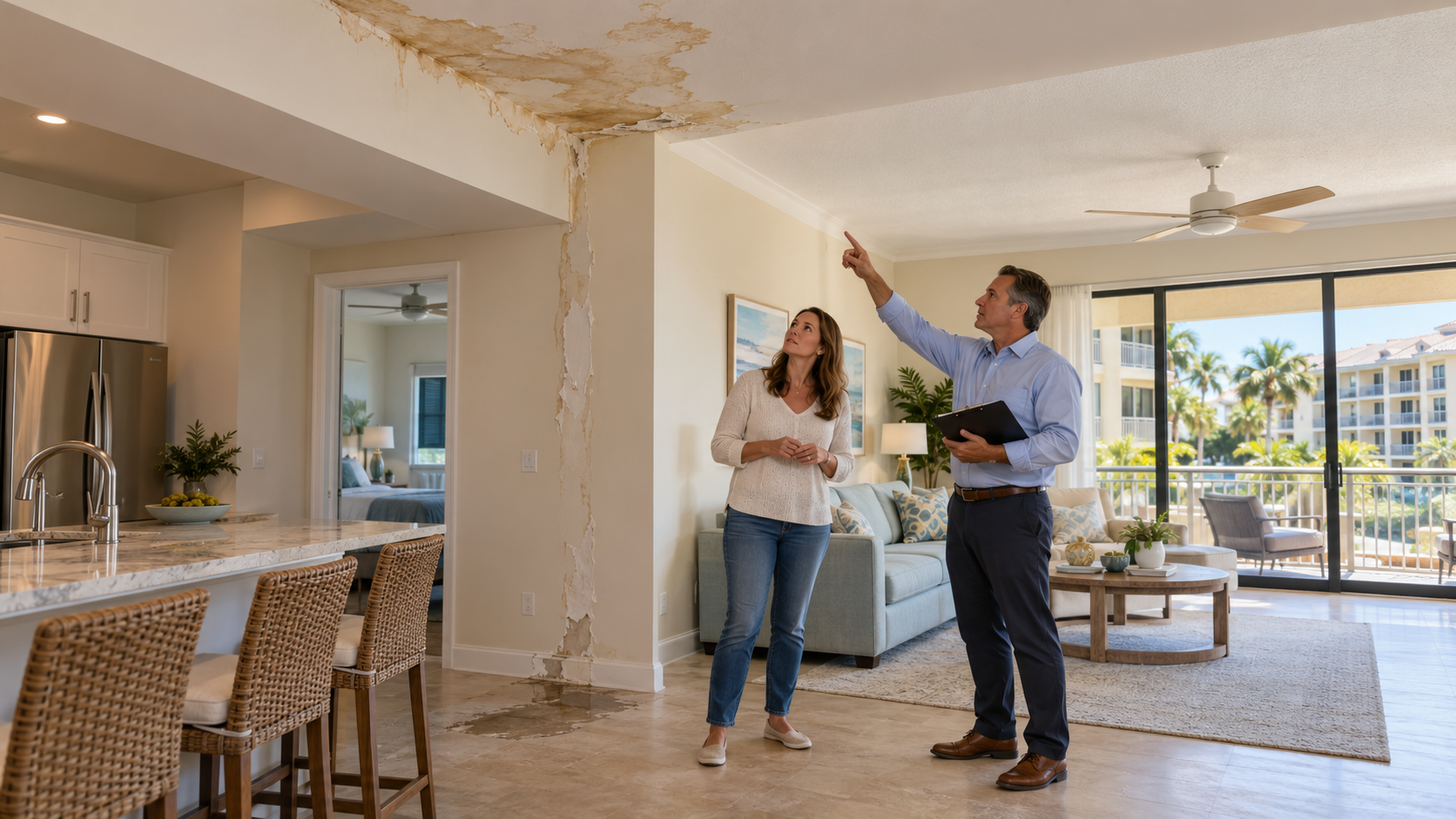
Receiving an insurance denial letter can be confusing, especially when your home is already damaged and you are trying to understand what happens next. The letter may contain policy language, exclusions, descriptions of the damage, and conclusions that are difficult to connect to what actually happened at your property.
At piccfla.com, we encourage homeowners not to look at a denial as a single sentence saying yes or no. A denial should be read alongside your policy, photographs, inspection findings, estimates, correspondence, and the actual condition of the property.
Florida law requires insurers to provide a reasonable written explanation of the policy basis, facts, or applicable law supporting a payment, denial, or partial denial of a property insurance claim. That written explanation gives you a starting point for understanding what the insurer decided and why.
If you have already received a denial, our guide on what to do when a homeowners insurance claim is denied in Florida explains how we approach denied property claims.
What Is a Home Insurance Claim Denial Letter Really Telling You?
A homeowners insurance denial letter explains the insurer’s decision concerning your reported loss. The most important part is not simply the word “denied.” You need to understand the reasoning behind that decision.
We recommend identifying four basic things:
- What part of the claim is being denied?
- What reason does the insurer give?
- What policy language does the insurer rely on?
- What facts about your property does the insurer use to support its conclusion?
These points matter because a denial can involve disagreements about the cause of damage, policy exclusions, the timing of the loss, the extent of the damage, documentation, or other claim conditions.
Understanding where the disagreement begins allows you to determine what information needs closer review.
Our property insurance claim process guide can also help you understand where a denial fits within the larger claim process.
What Should You Read First in an Insurance Denial Letter?
Start with the section that clearly states the insurer’s decision.
Do not begin by trying to interpret several pages of policy language. First determine what the insurer says happened.
Write down:
- The claim number
- The reported date of loss
- The type of damage being discussed
- Whether the claim is completely or partially denied
- The insurer’s stated reason
- Any policy sections referenced
- Any facts the insurer says support its decision
Then compare those statements with what actually happened at your home.
For example, if the letter says the observed condition resulted from long-term deterioration, but your claim was reported after a specific event, the important question becomes how the insurer reached its causation conclusion and what property evidence supports or contradicts it.
This is one reason our residential insurance claims services focus heavily on inspecting and documenting the physical loss rather than reviewing paperwork alone.
What Are Common Reasons Insurance Claims Are Denied?
There is no single explanation covering all of the reasons insurance claims are denied. Every property claim depends on the policy, cause of loss, evidence, property conditions, and claim documentation.
However, our work with denied property claims commonly requires us to examine issues such as disputed causation, exclusions, maintenance allegations, pre-existing conditions, incomplete documentation, reporting requirements, and damage that may not have been fully identified during the original inspection.
Is the Cause of the Property Damage Being Disputed?
Coverage often depends heavily on what caused the damage.
An insurer may acknowledge that damage exists while disagreeing about what produced it. For example, the disagreement may involve whether the condition resulted from a sudden event or developed gradually.
When we review this type of denial, we look at the actual property conditions, photographs, inspection findings, available reports, and other documentation related to the loss.
Is the Letter Citing Wear, Deterioration, or a Policy Exclusion?
A denial letter may cite an exclusion or limitation contained in the policy.
Do not stop after reading the name of the exclusion. Read the section the insurer references and compare it with the facts described in the denial letter.
The key question is whether the cited language actually matches the circumstances and documented damage involved in your loss.
Is the Denial Related to Documentation or Claim Requirements?
Claim documentation can also become part of a dispute.
Property owners may be asked for photographs, estimates, invoices, proof-of-loss information, recorded statements, or other supporting materials depending on the circumstances and policy requirements.
If you are dealing with additional information requests, our guides on recorded statements in property insurance claims and examinations under oath explain why consistency and accurate documentation matter during the investigation.
How Should You Read the Policy Language Cited in the Denial?
A denial letter may quote or reference portions of your insurance policy. Read those provisions in context rather than focusing only on a short quoted sentence.
We recommend comparing three things:
- What the policy provision actually says.
- How the denial letter interprets that provision.
- What the physical evidence says happened at the property.
This comparison is important because the dispute may involve more than policy wording. The insurer may also be making factual conclusions about the cause, timing, extent, or condition of the damage.
Our role at piccfla.com includes reviewing available policy and claim information, inspecting property damage, documenting the loss, preparing supporting claim materials when appropriate, and presenting the property claim from the policyholder’s perspective.
What Does a Partial Denial Mean?
Not every denial rejects the entire claim.
A partial denial of an insurance claim occurs when some portion of the reported property loss is accepted while another portion is denied.
You might receive a payment while also receiving language stating that specific damage, repairs, materials, rooms, or causes of loss were not accepted.
That is why receiving money does not automatically tell you that every part of the claim has been resolved.
Compare the written decision with the insurer’s estimate and the documented damage. Our guide explaining how to read an insurance claim estimate can help you understand repair line items, quantities, depreciation, deductibles, and differences in repair scope.
What Do Property Claim Denial Codes Mean?
Homeowners sometimes search for property claim denial codes expecting every denial letter to contain a standardized code that explains why their claim was rejected.
We do not recommend interpreting an ordinary homeowners claim solely through a code, abbreviation, or internal shorthand.
The important information is the written reason for the decision, the policy provisions cited, the facts relied upon, and how those statements compare with the documented property loss.
If your insurance denial letter includes a code you do not understand, determine what the letter says that code represents. Do not assume that a code by itself establishes whether damage is covered or excluded.
For Florida property claims, the written explanation of the policy basis and facts supporting the denial or partial denial is especially important.
What Documents Should You Compare With the Denial Letter?
Reading the denial letter alone gives you only one part of the claim file.
We recommend gathering the documents connected with the loss, including:
- The insurance denial letter
- Your policy and applicable endorsements
- The insurer’s estimate
- Photographs and videos
- Inspection information
- Repair estimates or invoices
- Mitigation records
- Emails and written correspondence
- Documentation submitted during the claim
- Records concerning additional damage discovered later
Look for inconsistencies.
Does the denial describe all of the damaged areas? Does the estimate include the repairs you documented? Does the letter rely on property conditions that match what photographs and inspections show?
If additional damage or repair requirements related to the same loss are discovered, our guide to a supplemental insurance claim explains how additional information may become relevant to an existing property claim.
What Should You Do After Reading the Denial Letter?
Do not discard the letter or separate it from the rest of your claim documents.
Keep the denial, policy, estimates, photographs, emails, inspection information, receipts, and other records together. PICCFLA specifically recommends preserving correspondence relating to a denied property claim because those documents can help when the claim is reviewed.
Next, identify exactly where you disagree with the decision.
Avoid reducing the disagreement to “I think the claim should be paid.” Instead, identify specific issues, such as:
- Damage that appears missing from the evaluation
- A cause-of-loss conclusion that does not appear consistent with the documented property condition
- Repair requirements that were not included
- A policy provision you do not understand
- Additional damage discovered after the original inspection
- Information you submitted that does not appear to have been considered
If communication about the claim has also become difficult, our guide on what to do when an insurance company is not responding explains how organized documentation becomes increasingly important.
How Can We Help You Review a Denied Property Claim?
At piccfla.com, we represent policyholders during the property insurance claim process.
When reviewing a denied or disputed property claim, our services can include inspecting the damaged property, reviewing existing claim information, examining available policy information, documenting the extent of the loss, preparing supporting estimates when appropriate, organizing claim documentation, communicating regarding the claim, and negotiating based on the documented loss.
Our goal is to understand what the denial says and compare it with what the property evidence actually shows.
A denial does not automatically mean additional payment will be available. The policy, cause of loss, evidence, deadlines, and facts of each claim still matter.
However, you do not have to accept a confusing denial letter without understanding how the decision was reached. If your claim has been denied, partially denied, or appears underpaid, we can review the available information and determine how we may be able to assist.
You can also review our guide to undisputed insurance claim payments if your insurer paid one portion of the loss while other damage remains disputed.
What Organizations Support This Guidance?
Florida Department of Financial Services. “Homeowners Insurance.” Office of the Insurance Consumer Advocate, Florida Department of Financial Services, www.myfloridacfo.com/division/ica/fullcoverage/homeowners. Accessed 14 Sept. 2026.
Florida Department of Financial Services. “Homeowners Insurance Overview.” Division of Consumer Services, Florida Department of Financial Services, www.myfloridacfo.com/division/consumers/understanding-insurance/homeownersinsuranceoverview. Accessed 14 Sept. 2026.
Florida Legislature. “Florida Statutes, Section 627.70131: Insurer’s Duty to Acknowledge Communications Regarding Claims; Investigation.” The 2026 Florida Statutes, Florida Legislature, www.leg.state.fl.us/statutes/. Accessed 14 Sept. 2026.