When a hurricane damages your Florida home, one of the first numbers you may see on your insurance paperwork is your hurricane deductible. It can have a significant effect on how much of a covered loss you are responsible for before insurance benefits become payable under the terms of your policy.
At PICC FLA, we help Florida property owners understand their policies and navigate the property insurance claim process after hurricanes and other covered losses. One of the most important things we encourage policyholders to review is the declarations page of their insurance policy. This is where important information such as coverage limits and deductible amounts can be found.
A hurricane deductible in Florida is different from the deductible that may apply to other covered property losses. It can be expressed as a percentage of your dwelling limit, and Florida law contains specific rules governing how hurricane deductibles work.
Understanding that deductible before a storm can make it easier to understand your financial responsibility if you later need to file a hurricane damage claim.
What Is a Hurricane Deductible in Florida?
A hurricane deductible is the portion of a covered hurricane loss that the policyholder is responsible for before insurance benefits are calculated under the policy.
Florida law defines a hurricane deductible as the deductible applicable to loss caused by a hurricane.
This matters because a hurricane deductible may be different from the standard deductible shown elsewhere in your policy. For example, a policy could have one deductible for certain everyday covered losses and a separate hurricane deductible for qualifying hurricane losses.
Florida law also requires a personal residential property insurance policy containing a separate hurricane deductible to prominently display the actual dollar value of that deductible on the declarations page at issuance and, for renewals, on the renewal declarations page or premium renewal notice.
That is why we recommend checking your declarations page rather than assuming you know what your deductible will be.
If you need help understanding your policy before or after property damage, our property insurance claim process explains how we help policyholders review their coverage and document a loss.
How Is a Hurricane Deductible Percentage Calculated?
A hurricane deductible percentage is generally calculated using the dwelling limit stated in the policy rather than the amount of damage caused by the storm.
For a simple example, imagine your policy has a dwelling limit of $400,000.
If the applicable hurricane deductible is:
- 2%, the deductible would be $8,000.
- 5%, the deductible would be $20,000.
- 10%, the deductible would be $40,000.
The important distinction is that the percentage is applied to the applicable policy limit, not simply to the repair estimate.
Florida law generally requires insurers issuing personal lines residential property policies to offer specified hurricane deductible alternatives, subject to statutory exceptions. Those alternatives include $500, 2%, 5%, and 10% of the policy dwelling limits. Different rules apply depending on the value of the insured risk, so not every homeowner will necessarily receive every option.
Your actual policy controls your coverage, so we recommend reviewing the deductible shown on your declarations page rather than relying on a general percentage.
When Does a Hurricane Deductible Apply in Florida?
If you are asking, “When does a hurricane deductible apply?”, Florida law provides an important definition.
For purposes of residential hurricane coverage, a hurricane is a storm system declared to be a hurricane by the National Hurricane Center of the National Weather Service.
Under the current Florida statutory definition, the hurricane period in Florida begins when a hurricane warning is issued for any part of Florida and ends 72 hours after the termination of the last hurricane watch or hurricane warning issued for any part of the state.
The statute defines hurricane coverage as coverage for loss or damage caused by windstorm during a hurricane. It can also include certain ensuing interior damage caused by rain, snow, sleet, hail, sand, or dust when the direct force of the windstorm first damages the building and creates an opening through which those elements enter.
The exact cause of the property damage matters.
For example, wind-related damage may raise different coverage questions from flooding. At PICC FLA, we handle wind damage claims as well as hurricane and storm claims, and we review the policy and documented cause of loss as part of evaluating a claim.
Does the Florida Hurricane Insurance Deductible Apply to Every Storm?
No. A Florida hurricane insurance deductible is specifically associated with covered hurricane losses as defined by Florida law and the applicable policy.
Not every severe storm is automatically treated as a hurricane loss.
Florida experiences thunderstorms, tropical systems, tornadoes, hail, and other severe weather events. Which deductible applies depends on the circumstances of the loss, the storm’s status, the cause of damage, and the language of the insurance policy.
This distinction can become especially important when a property suffers several forms of damage.
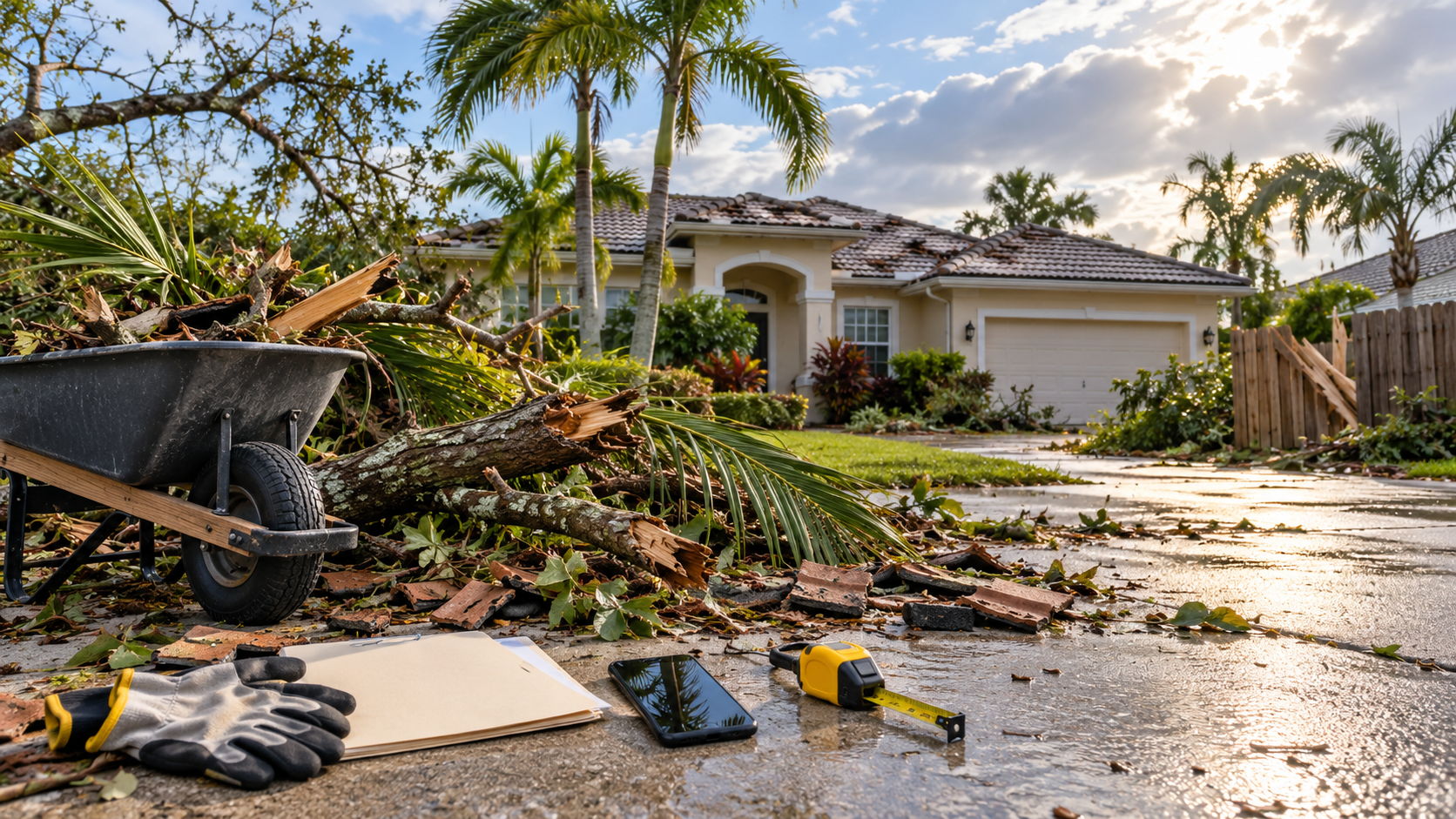
A hurricane, for example, could result in:
- Missing or damaged roofing materials
- Wind-driven debris damage
- Broken windows or doors
- Water intrusion following wind-created openings
- Damage to exterior components
- Interior water damage
- Structural damage
If your roof has been affected, our roof damage claims information explains how we inspect and document visible and potentially hidden property damage.
Does a Hurricane Deductible Apply Once or to Every Hurricane?
For personal lines residential property insurance in Florida, the hurricane deductible generally applies on an annual basis to covered hurricane losses occurring during the calendar year when the losses are covered under one or more policies issued by the same insurer or insurer group.
This can become particularly important during a busy hurricane season.
Suppose you experience a covered hurricane loss earlier in the calendar year and another hurricane damages your property later that same year. Florida law provides rules addressing the remaining hurricane deductible and the deductible applicable to subsequent hurricane losses.
For a subsequent hurricane, an insurer may apply a deductible that is the greater of:
- The remaining amount of the hurricane deductible, or
- The deductible applicable to perils other than a hurricane.
Insurers may also require policyholders to report hurricane losses below the deductible or maintain receipts and other records of those losses for them to count toward subsequent hurricane claims.
This is one reason we encourage homeowners to document hurricane damage even when the initial repair estimate appears relatively small.
Why Should You Document Damage That Is Below Your Hurricane Deductible?
A common mistake is assuming there is no reason to document damage because the estimated loss appears lower than the deductible.
During a calendar year with multiple hurricanes, documentation from an earlier covered hurricane loss may become important when determining the remaining hurricane deductible for a later covered loss.
After a storm, consider preserving:
- Photographs and videos of damaged areas
- The date you discovered the damage
- Temporary repair receipts
- Contractor or repair estimates
- Invoices
- Records of damaged personal property
- Communications regarding the insurance claim
You should also take reasonable steps to prevent additional damage.
Our claim process guide discusses steps such as using tarps where appropriate, protecting broken openings, and addressing sources of additional damage.
Keep copies of everything you submit.
How Does the Deductible Affect a Hurricane Insurance Claim?
A deductible does not determine whether damage is covered. Instead, it determines the portion of a covered loss that falls within the policyholder’s deductible responsibility.
Coverage is a separate question.
When we review a property claim, we look at the policy and the full extent of the documented damage. The declarations, insuring agreement, conditions, exclusions, endorsements, and other applicable policy language can all matter.
The deductible is therefore only one part of the claim calculation.
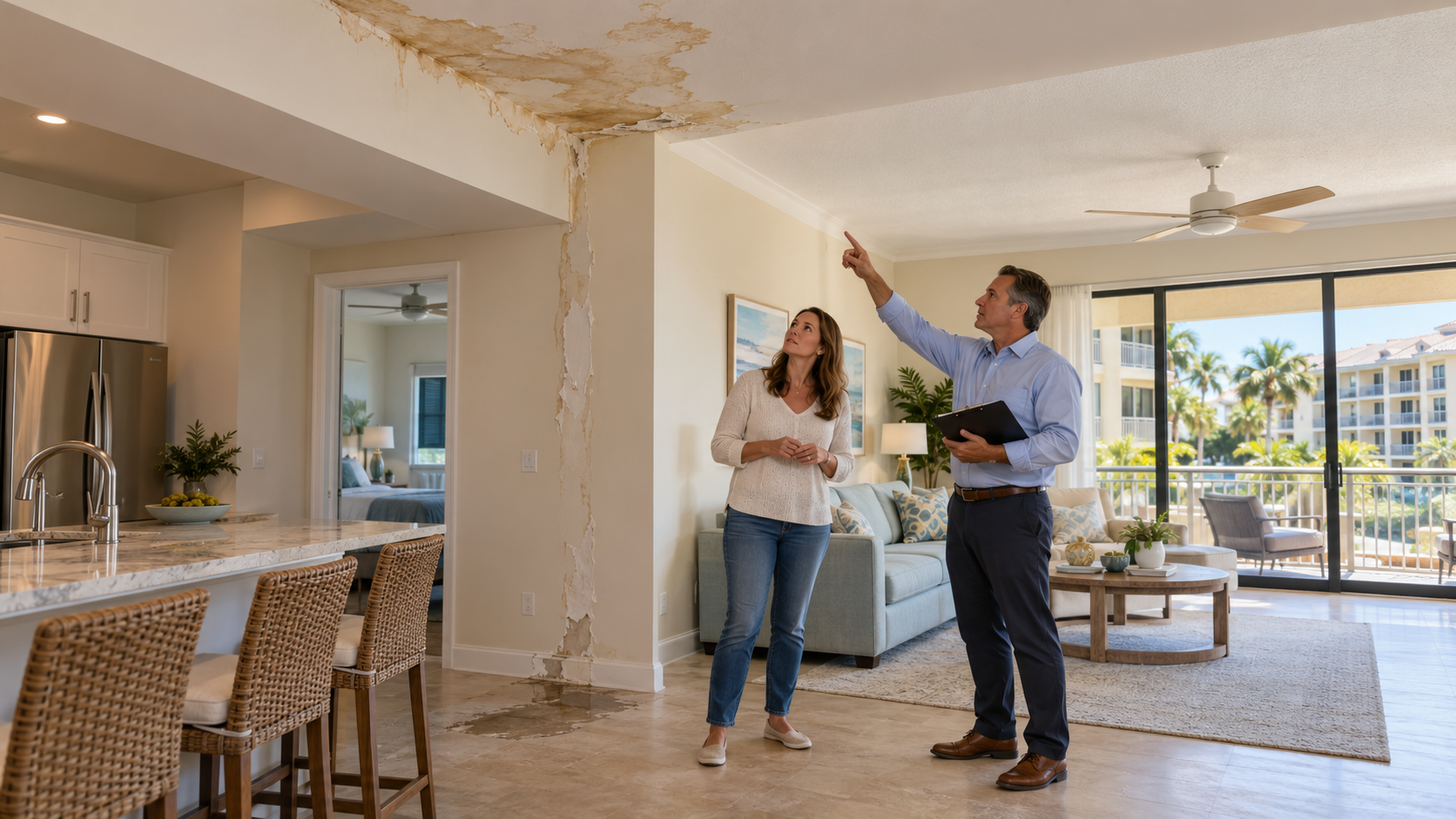
This is especially important when hurricane damage affects multiple areas of a property. What initially looks like a roof problem, for example, may involve additional interior or water damage.
Our water damage claims service explains how we assist with documenting property losses involving water damage.
What Should You Check on Your Policy Before Hurricane Season?
Before hurricane season, take a few minutes to review your policy rather than waiting until after a loss.
We recommend checking:
- Your dwelling coverage limit
- The hurricane deductible percentage
- The actual dollar amount of the hurricane deductible
- Other applicable deductibles
- Policy exclusions
- Coverage limits
- Relevant endorsements
- Your responsibilities after a loss
We also recommend maintaining photographs or video of your property’s condition and belongings.
At PICC FLA, we offer a free policy review for Florida property owners. Understanding your policy before damage occurs can make the claims process much easier to navigate later.
You can contact PICC FLA if you want us to review your policy or evaluate property damage.
How Can We Help After Hurricane Damage?
When hurricane damage occurs, determining the deductible is only one part of the insurance claim.
The property still needs to be inspected, the damage documented, the policy reviewed, repair costs evaluated, and the claim presented according to the applicable policy requirements.
At PICC FLA, we represent policyholders rather than the insurance company. Our public adjusters assist with the property insurance claim process, including inspection, documentation, claim preparation, and negotiation.
Our website confirms that we handle residential and commercial property losses involving hurricane and storm damage, roof damage, wind damage, water damage, fire, mold, and other property losses.
For business properties, you can also learn more about our commercial property claims services.
If you have already experienced hurricane damage or are unsure how your deductible affects your claim, call us at (888) 411-7422 or request a free claim assessment and policy review through PICC FLA.
What Organizations Were Consulted for This Article?
Florida Legislature. The 2026 Florida Statutes, Section 627.701: Liability of Insureds; Coinsurance; Deductibles. Florida Legislature, 2026.
Florida Legislature. The 2026 Florida Statutes, Section 627.4025: Residential Coverage and Hurricane Coverage Defined. Florida Legislature, 2026.
National Hurricane Center, National Weather Service. Hurricane classifications, watches, warnings, and official storm designations referenced by Florida’s statutory definition of hurricane coverage.
This article provides general educational information about Florida property insurance claims. Coverage, deductibles, exclusions, and claim obligations depend on the language of the individual insurance policy and the circumstances of the loss.