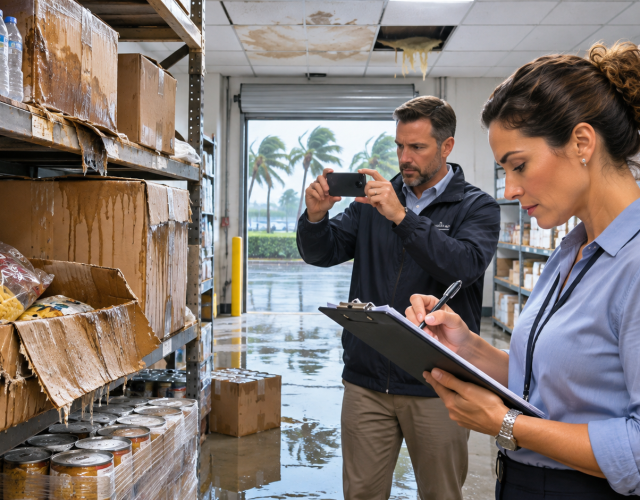
When a Florida business suffers property damage, the financial impact can extend far beyond the building itself. Inventory stored in stockrooms, warehouses, offices, and retail spaces may be damaged by fire, water, storms, or other unexpected events. For business owners, documenting these losses accurately is an important part of the commercial property insurance claim process.
At PICC FLA, we understand that damaged inventory represents more than physical merchandise. It may involve goods purchased for resale, materials needed for daily operations, and products that can no longer be used or sold.
To document damaged commercial inventory for an insurance claim in Florida, businesses should prepare an itemized inventory, photograph the damage, gather purchase and stock records, establish supported values, and review their policy requirements before submitting the claim.
Our commercial property insurance claim services focus on helping Florida businesses document property losses, evaluate available coverage, prepare supporting claim materials, and negotiate with insurance companies.
In this guide, we explain how to organize damaged inventory documentation and avoid common mistakes that can complicate the claim process.
Why Is Proper Documentation Important for Damaged Commercial Inventory?
Accurate documentation helps establish what inventory existed before the incident, what was damaged, and the financial value associated with the loss.
Without sufficient records, an insurance company may request additional information before determining the amount payable under the policy.
Commercial damaged inventory insurance claim documentation in Florida should establish three essential facts:
- Ownership: Evidence showing that the business owned or otherwise had an insurable interest in the affected inventory.
- Damage: Photographs, inspection findings, and records showing the condition of the inventory after the incident.
- Value: Purchase records, inventory reports, and other documentation supporting the claimed financial loss.
These details help connect the inventory loss to the reported property damage.
At PICC FLA, our insurance claim documentation process includes preparing detailed inventory and contents schedules with supporting valuation records.
Our goal is to help business owners present a clear, accurate, and properly supported claim rather than relying on estimates without sufficient evidence.
What Should Florida Businesses Do Immediately After Discovering Damaged Inventory?
The first priority after discovering damaged inventory is safety. Business owners should avoid entering unsafe areas or handling materials that may present hazards.
Once the location is safe, the next steps should focus on protecting the property and preserving evidence.
We recommend the following actions:
- Document the incident. Record when the damage occurred or was discovered, the affected location, and the apparent cause.
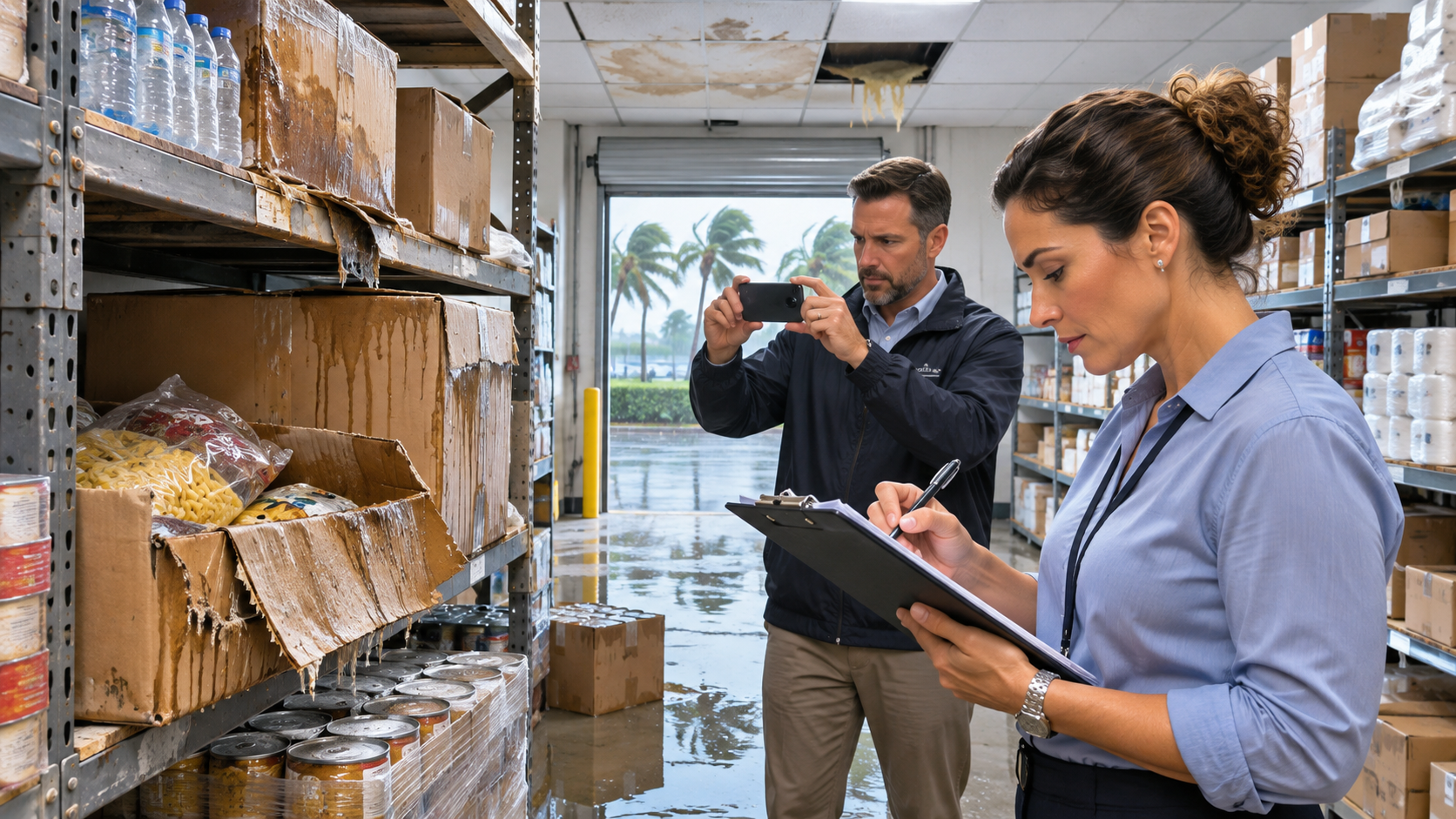
- Photograph the inventory. Capture the damaged products, packaging, shelves, storage areas, and surrounding conditions.
- Prevent additional damage. Take reasonable protective measures when safe and appropriate.
- Separate affected inventory. Identify damaged and unaffected stock without unnecessarily disturbing evidence.
- Notify the insurance company. Report the loss promptly and follow the notification requirements in the policy.
- Preserve records. Keep purchase invoices, inventory reports, photographs, and communications connected to the incident.
Damaged merchandise should generally be preserved when practical until the insurer has had an appropriate opportunity to inspect it or has provided disposal instructions.
When inventory is hazardous, contaminated, or perishable, immediate safety or disposal requirements may take priority. Document the condition and quantity as thoroughly as possible, retain disposal records, and communicate with the insurer.
Our fire damage insurance claim services also emphasize documenting affected property and preserving damaged items when appropriate.
How Should Businesses Prepare a Detailed Damaged Inventory List?
An itemized inventory is one of the most useful documents in a commercial property damage claim.
Rather than reporting a single estimated amount for all damaged merchandise, businesses should identify individual products or clearly defined groups of identical items.
What Information Should Be Included in Damaged Stock Claim Records?
A practical inventory schedule should include:
- Product name and description
- Stock-keeping unit or identifying number, if available
- Quantity affected
- Storage location
- Original purchase or acquisition date, if known
- Unit purchase cost
- Total documented cost
- Nature and extent of the damage
- Estimated loss amount and valuation basis
- Reference to supporting photographs or invoices
For example, a business may discover that several boxes of merchandise were damaged after water entered a storage room.
Instead of recording only “damaged merchandise,” the business should identify the affected products, quantities, purchase costs, and observed damage.
This makes the claim easier to review and helps distinguish affected inventory from products that remain usable.
What If Some Inventory Records Are Missing?
Businesses do not always have complete records after a fire, hurricane, or major property loss.
When original documents are unavailable, we recommend reviewing other existing information, including:
- Previous inventory reports
- Purchase invoices and order confirmations
- Accounting and payment records
- Sales and receiving records
- Previous stock photographs
- Available shipping documentation
These records may help reconstruct the inventory that existed before the damage.
Any reconstructed quantity or estimated value should be clearly identified as an estimate rather than presented as a verified fact.
How Can Businesses Collect Reliable Property Loss Evidence?
Photographs and videos help establish the physical condition of damaged inventory.
However, visual evidence is most useful when it can be connected to specific items in the inventory schedule.
Businesses should photograph:
- The overall affected storage or retail area
- Individual damaged products
- Damaged packaging, containers, and labels
- Watermarks, smoke residue, or visible physical deterioration
- Product identification numbers where available
- Conditions surrounding the damaged stock
Photographs should be retained in their original form when possible, together with relevant dates and descriptions.
For extensive losses, business owners may organize photographs by room, shelf, product category, or inventory reference number.
At PICC FLA, we also recognize that different types of property damage may require different supporting information.
For example, our water damage insurance claim services address property losses involving plumbing failures and other water-related incidents.
A complete record helps explain both the condition of the merchandise and the circumstances under which it was damaged.
How Is Damaged Business Inventory Valuation Determined?
Business inventory valuation is an important part of documenting a commercial property insurance claim.
A business may know the amount originally paid for its merchandise, but that amount does not automatically establish what the insurance company will pay.
The applicable policy determines how covered inventory losses are valued.
Depending on the policy, relevant considerations may include acquisition cost, replacement cost, actual cash value, applicable selling-price provisions, and other valuation conditions.
Businesses should therefore avoid assuming that every damaged product can be claimed at its retail selling price.
We recommend gathering:
- Original purchase invoices
- Supplier cost information
- Historical inventory values
- Available replacement cost information
- Records identifying the quantity of affected goods
- Documentation of any remaining salvage value, where applicable
These records help explain the proposed valuation and provide supporting evidence for the amount claimed.
Why Should Purchase Cost and Selling Price Be Distinguished?
The amount a business pays to acquire inventory may differ substantially from the price at which it intends to sell that inventory.
For example, merchandise purchased for $2,000 might have an anticipated selling value of $3,000.
That difference does not establish a $3,000 insured inventory loss.
The appropriate valuation depends on the applicable policy provisions and the documented circumstances.
At PICC FLA, we review available policy information and supporting records to help evaluate the documented loss.
Accurate valuation is about establishing a supportable claim amount, not automatically selecting the highest possible price.
Does the Cause of Damage Affect Inventory Insurance Coverage?
Yes. The cause of inventory damage can determine whether the loss falls within the applicable commercial property coverage.
Florida commercial policies may address fire, wind, theft, and other insured causes of loss. However, exclusions, endorsements, coverage limits, and policy conditions vary.
For example:
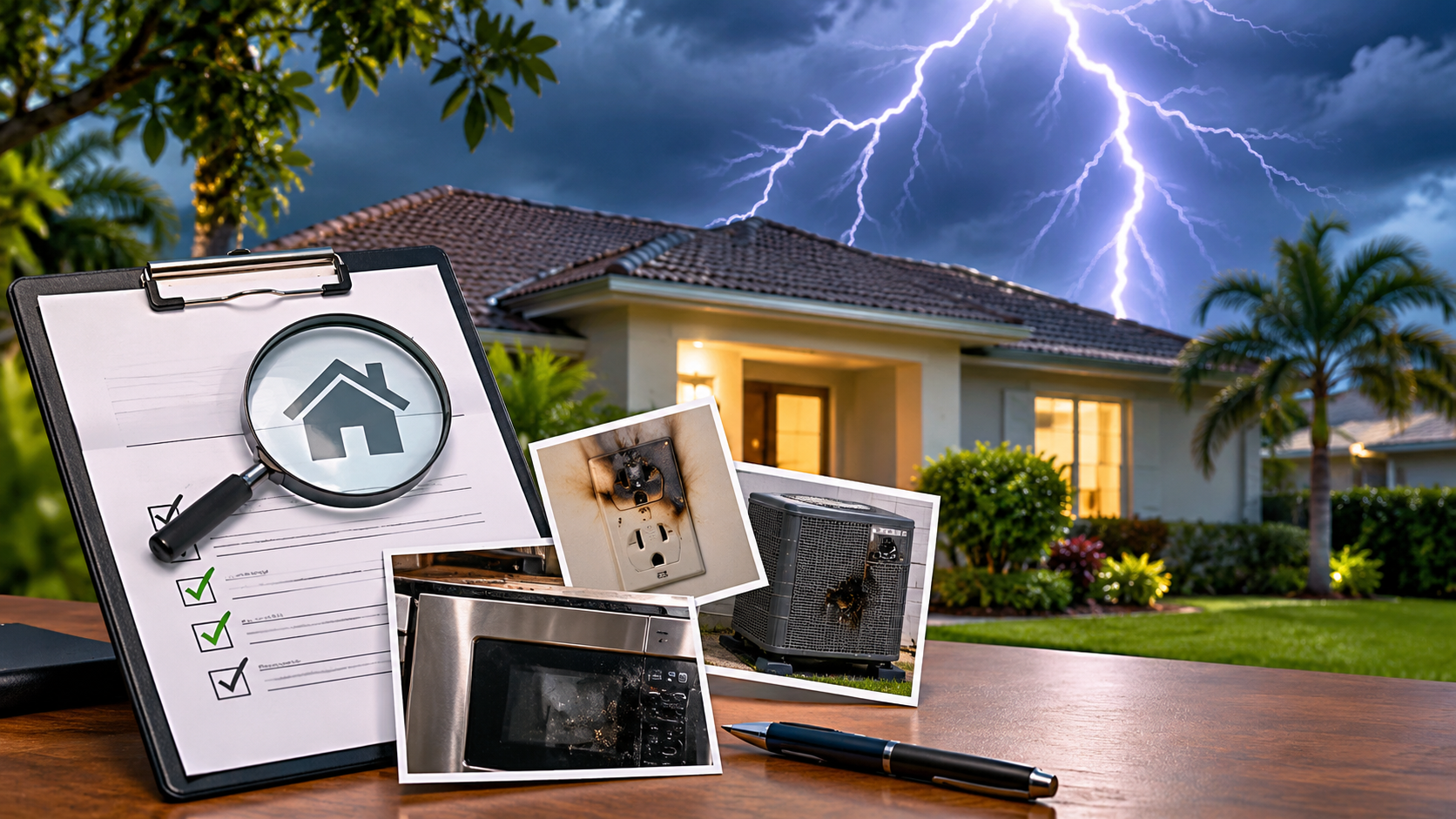
- Fire damage: Merchandise affected by flames, smoke, or related damage may require detailed inspection and documentation.
- Water damage: Inventory affected by a plumbing failure may be evaluated differently from inventory damaged by flooding.
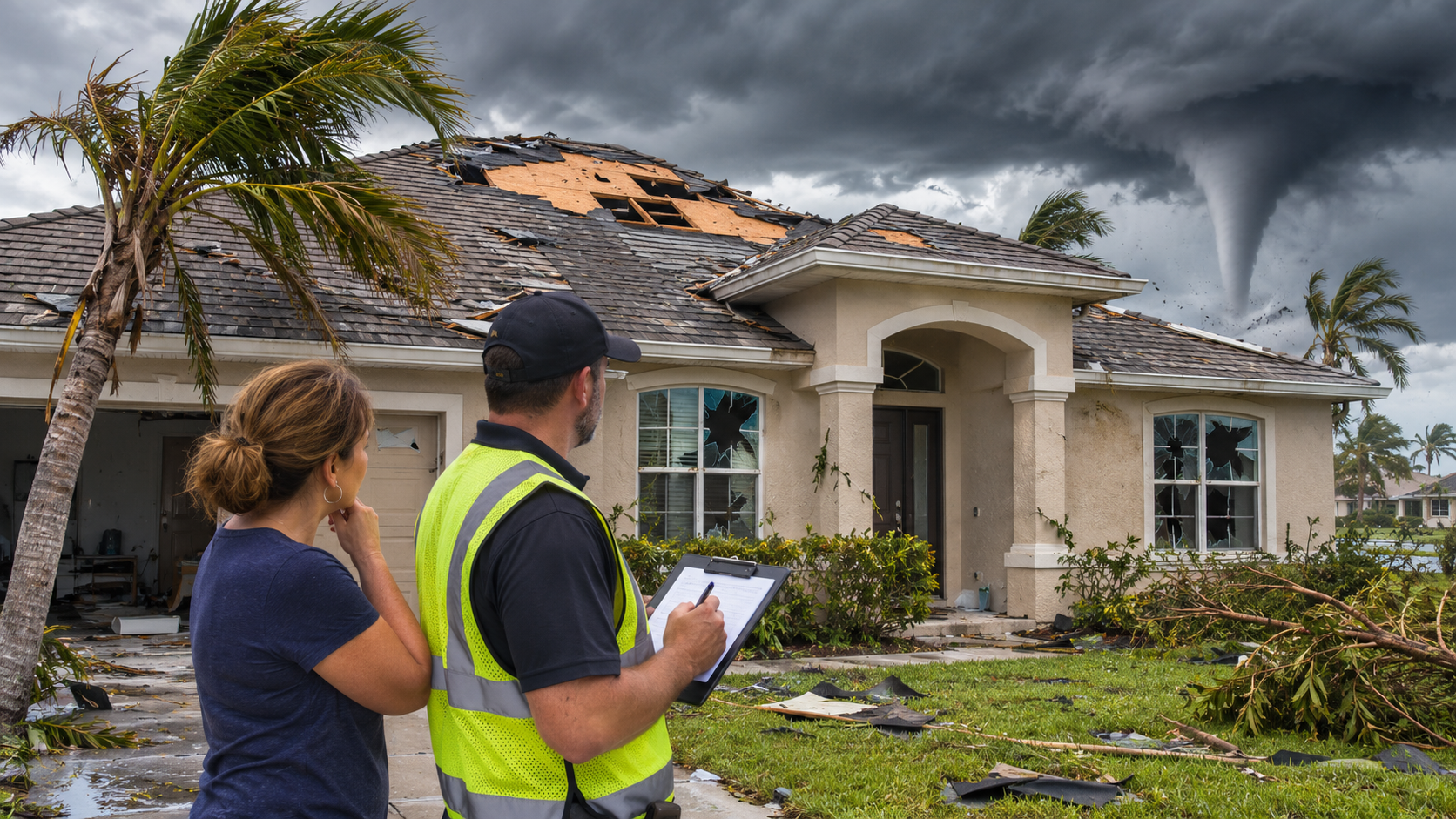
- Hurricane damage: Wind-related inventory damage must be evaluated under the applicable policy provisions.
- Spoilage: Certain losses involving refrigeration or power interruption may require specific spoilage coverage.
Businesses should not assume that every form of storm or water damage is automatically covered.
Our hurricane and storm damage claim services address property damage claims involving these events.
We help policyholders review their insurance information and organize the evidence relevant to the reported loss.
Can Damaged Inventory Also Affect a Business Interruption Claim?
Damaged inventory can sometimes disrupt a business beyond the immediate physical loss.
A retail operation may be unable to sell affected merchandise, while another business may experience delays because essential materials are unavailable.
However, inventory damage and business interruption are different categories of loss.
Commercial property coverage may address qualifying physical inventory damage, while business interruption coverage may address eligible income losses resulting from covered property damage.
Business interruption coverage is not automatically included in every commercial policy.
If business operations are affected, owners should separately preserve relevant financial information, such as:
- Sales records before and after the incident
- Profit and loss statements
- Records of interrupted operations
- Continuing operating expenses
- Documents showing how the physical damage affected business activity
Our business interruption insurance claim services help Florida businesses review and document qualifying financial losses.
Separating these records from the inventory claim also helps prevent unsupported or duplicated loss calculations.
How Should Businesses Organize Documentation Before Submitting a Claim?
Once the damaged inventory has been identified and evaluated, the next step is to organize the supporting materials.
A complete claim file should allow the relevant information to be located and reviewed without unnecessary confusion.
We recommend maintaining separate sections for:
- Policy information: The relevant insurance policy, declarations, and applicable endorsements.
- Incident documentation: Reports, photographs, and descriptions of the damage.
- Inventory schedules: Itemized records of the affected merchandise.
- Valuation evidence: Purchase invoices, stock reports, and supporting calculations.
- Related expenses: Records of reasonable protective or loss-related expenses.
- Claim correspondence: Communications, inspection requests, and submitted documentation.
Businesses should retain copies of their submissions and record when claim information was provided.
They should also review policy-specific deadlines, including any applicable proof of loss requirement.
If additional inventory damage is discovered after an initial claim submission, it should be documented promptly.
Our guide to supplemental insurance claims in Florida explains how additional losses connected to an existing claim may be evaluated, subject to applicable requirements.
How Can PICC FLA Help Businesses Document Damaged Inventory?
At PICC FLA, we represent Florida business owners and commercial property policyholders during the property insurance claim process.
We understand that documenting damaged inventory can become challenging when business operations are already disrupted.
Our public adjusting services focus on:
- Reviewing available commercial insurance policy information
- Inspecting and documenting property damage
- Preparing detailed inventory and contents schedules
- Evaluating supporting valuation records
- Organizing claim documentation
- Presenting the claim to the insurance company
- Communicating and negotiating with the insurer on behalf of the policyholder
We work to help businesses present losses accurately and pursue the compensation available under their policies.
Every claim is different, and the final outcome depends on the policy, evidence, circumstances, and insurer’s evaluation.
If your Florida business has experienced inventory or commercial property damage, contact PICC FLA to request a free claim review and discuss how our public adjusting services may help.
What Should Florida Businesses Remember About Damaged Inventory Documentation?
Documenting commercial inventory damage requires more than identifying products that can no longer be sold or used.
A well-supported claim connects the incident, affected merchandise, physical damage, and documented financial value.
Business owners should prioritize safety, preserve evidence, prepare accurate inventory records, and review the requirements of their insurance policies.
Keeping clear records throughout the process can also make it easier to answer questions, address valuation differences, and identify information that may be missing.
At PICC FLA, our goal is to help Florida businesses navigate commercial property claims through careful documentation, policy review, and professional representation.
We believe accurate records and a properly supported claim presentation provide a stronger foundation for evaluating inventory losses.
Which Organizations Support This Guidance in the Works Cited?
Florida Department of Financial Services. “Commercial Property Insurance Overview.” Division of Consumer Services, https://myfloridacfo.com/division/consumers/understanding-insurance/commercial-property-insurance. Accessed 23 Nov. 2026.
Florida Department of Financial Services. “Hurricane Ready.” Division of Consumer Services, https://myfloridacfo.com/Division/Consumers/Storm/. Accessed 23 Nov. 2026.
Florida Department of Financial Services. “Understanding Assignment of Benefits (AOB).” Division of Consumer Services, https://myfloridacfo.com/division/consumers/consumerprotections/assignmentofbenefits. Accessed 23 Nov. 2026.