When property damage happens, waiting for an insurance inspection can feel risky. A roof opening can let in more rain, a broken window can expose the interior, and an active plumbing leak can continue spreading water. That is why property owners often ask whether they can make temporary repairs before the insurance inspection.
In many situations, yes. Reasonable temporary repairs that help prevent additional damage can be appropriate before the insurance adjuster arrives. The key is to protect the property without destroying evidence or starting permanent restoration too soon. At PICC, we recommend documenting the original damage, keeping receipts, preserving damaged materials when practical, and reviewing the policy before making major repair decisions.
What Is the Short Answer About Temporary Repairs Before an Insurance Inspection?
You usually do not have to leave your property exposed just because the inspection has not happened yet. Temporary measures that are reasonably necessary to prevent more damage can be taken, but they should be limited to what is needed to stabilize and protect the property.
For a temporary repairs insurance claim, think in terms of preservation rather than full restoration. Your goal is to stop the situation from getting worse while keeping enough evidence available for the insurance company and your public adjuster to understand what happened.
That may mean covering an opening, shutting off water, extracting standing water, or moving belongings away from an active leak. It usually does not mean replacing an entire roof, rebuilding walls, or completing reconstruction before the loss has been inspected and documented.
You can review our property insurance claim process to understand how we approach these early steps after a property loss.
Why Can Waiting for the Insurance Adjuster Make the Damage Worse?
Property damage can spread after the initial event. A roof opening can lead to ceiling and wall damage if rain continues. Water from a broken pipe can reach flooring, cabinets, drywall, insulation, and nearby rooms.
Our property insurance claim process explains that damage control may include tarping roof leaks, boarding broken windows, stopping an active pipe leak, or removing accumulated water and moisture.
The question of emergency repairs before an insurance adjuster arrives should therefore focus on preventing additional loss, not erasing the condition that needs to be evaluated.
What Does the Duty to Mitigate an Insurance Claim Mean?
Your duty to mitigate an insurance claim generally means taking reasonable steps to prevent avoidable additional damage after a loss. The exact duties can depend on your insurance policy, so the policy language should always be reviewed.
If water is entering through a storm-damaged roof and it is safe to cover the opening, a tarp may help prevent more interior damage. If a supply line is still releasing water, shutting it off can limit the loss. If a window is broken, temporarily covering the opening can help keep rain and debris outside. Florida consumer guidance specifically advises policyholders to make and document necessary emergency repairs that prevent further damage.
What Types of Temporary Repairs Can Help Protect the Property?
Depending on the loss and what can be done safely, temporary repairs may include:
- Placing a tarp over a damaged roof area
- Boarding or covering a broken window
- Shutting off a leaking water supply
- Arranging water extraction or moisture removal
- Moving undamaged belongings away from an affected area
- Securing damaged doors, locks, or exterior openings
These measures should be reasonable, necessary, and documented. If the property is structurally unsafe, do not enter simply to take photographs or attempt repairs.
Can You Tarp a Roof Before the Adjuster Arrives?
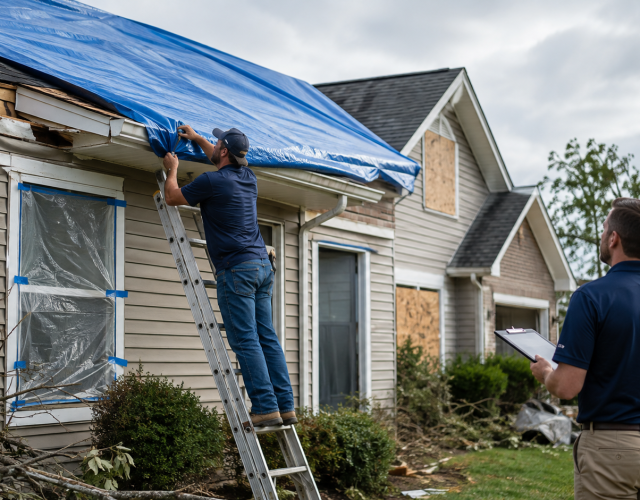
Yes. A temporary roof tarp can be a sensible protective step when roof damage is allowing water into the property and the work can be performed safely. Our own claim process specifically identifies tarps as one way to stop roof leaks after property damage.
If you need to tarp the roof before the adjuster arrives, document the condition first from safe locations. Take wide photographs showing the affected section and closer photographs of visible damage. If a professional performs the temporary work, keep the invoice, description of the work, and any photographs provided.
A tarp is a temporary protective measure. If the roof requires substantial repair or replacement, the damage should be inspected and documented before permanent work begins whenever reasonably possible.
Property owners dealing specifically with storm-related roofing problems can also review our roof damage claim services.
Can You Stop an Active Water Leak Before the Insurance Inspection?
Yes. You should not allow water to continue flowing simply to preserve the scene for an inspection. If you can safely stop the source, such as shutting off a valve or arranging a necessary plumbing repair, doing so may prevent significant additional damage. PICC’s claim process specifically identifies stopping an active pipe leak and removing accumulated water or moisture as examples of damage control.
For water losses, photograph the affected rooms, visible water, damaged materials, the suspected source if known, and affected belongings before cleanup or emergency work begins.
Keep invoices and receipts. If damaged materials must be removed for safety or necessary drying, photograph them before removal and preserve evidence when reasonably possible.
Our water damage claims resource explains more about the types of water losses we assist property owners with.
How Should You Document Temporary Repairs for the Insurance Claim?
Good documentation helps establish what the property looked like before emergency work changed the scene.
Before temporary repairs:
- Take clear photographs and video.
- Capture wide views and close details.
- Note affected rooms, materials, and belongings.
- Record the apparent source of damage if it can be identified safely.
- Preserve damaged property when practical.
During and after temporary repairs:
- Photograph the work performed.
- Keep receipts for materials, labor, extraction, tarps, boards, or other emergency expenses.
- Save service invoices and descriptions of the work.
- Keep damaged property when feasible until it can be inspected.
- Save claim numbers, estimates, emails, and other communications.
Florida consumer guidance similarly recommends photographing damage before and after emergency repairs, keeping receipts, and retaining damaged property when feasible.
Our guide explaining how to file a home insurance claim in Florida also discusses the importance of preserving evidence and understanding the extent of the loss before repair work advances.
What Should You Avoid Repairing Before the Insurance Inspection?
The safer approach is to avoid permanent repairs that could prevent the loss from being properly inspected, unless safety or another urgent condition requires immediate action.
Be cautious about:
- Replacing the entire damaged roof
- Rebuilding walls or ceilings
- Installing permanent flooring
- Discarding damaged materials without documentation
- Removing damaged personal property that could reasonably be preserved
- Signing major repair contracts without reviewing policy requirements
Florida consumer guidance advises making necessary emergency repairs while generally preserving the damaged property for inspection and avoiding permanent repairs before the insurance inspection.
There can be situations where safety, sanitation, structural stability, or active water intrusion requires immediate work. When that happens, document as much as safely possible before, during, and after the work.
How Can Temporary Repairs Affect the Insurance Claim?
Temporary repairs do not automatically reduce the value of an insurance claim. Properly documented emergency work can demonstrate that reasonable steps were taken to protect the property.
Problems can arise when evidence disappears, receipts are lost, substantial permanent repairs begin before inspection, or the complete extent of the damage is never documented.
This is why photographs, video, invoices, damaged materials, repair descriptions, and communications can be important throughout the claim.
If additional damage becomes visible later during repair work and relates to the same loss, a supplemental insurance claim may sometimes become relevant, depending on the policy, timing, coverage, and circumstances.
How Can PICC Help Before the Insurance Inspection?
At PICC, we help Florida property owners manage the insurance claim process from the policyholder’s side. Our website explains that our public adjusters inspect property damage, evaluate repair costs, assist with claim preparation and documentation, and represent policyholders during the adjustment process.
Contacting us early can help you understand what should be preserved, what documentation may be useful, and how temporary repair work fits into the larger property claim.
We assist with residential insurance claims as well as the property-loss categories described throughout our website.
For weather-related damage, you can also review our hurricane damage claims information and wind damage claims information.
If you want to understand how public adjusting works before moving forward, our public adjuster FAQs provide additional information.
What Steps Should You Follow After Property Damage?
A simple sequence can help protect both the property and the insurance claim:
- Put safety first and avoid unsafe areas.
- Stop active damage when it can be done safely.
- Photograph and video the original condition before emergency work.
- Report the loss promptly according to your policy.
- Keep receipts and invoices for temporary repairs.
- Preserve damaged materials and belongings when feasible.
- Avoid unnecessary permanent restoration before the insurer has had an opportunity to inspect.
- Review your policy before signing major repair agreements.
- Contact PICC if you want help documenting, preparing, or managing your property claim.
Taking these steps gives you a clearer record of what happened, what was damaged, and what temporary work was necessary to prevent the loss from becoming worse.
Which Organizations Support This Guidance?
Works Cited
Florida Department of Financial Services. “General Insurance Coverage FAQs.” Division of Consumer Services. Accessed 24 Aug. 2026. General Insurance Coverage FAQs
Florida Department of Financial Services. “Be Your Own Advocate.” Insurance Consumer Advocate. Accessed 24 Aug. 2026. Be Your Own Advocate
Florida Legislature. “Homeowner Claims Bill of Rights, Florida Statutes Section 627.7142.” The 2025 Florida Statutes. Accessed 24 Aug. 2026. Florida Statutes Section 627.7142