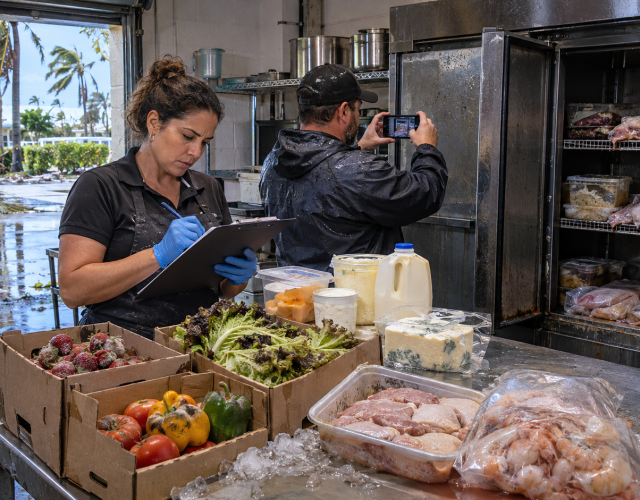
When a hurricane strikes Florida, business owners often prepare for wind damage, flooding, and structural repairs. However, one of the most expensive consequences can happen inside refrigerators, freezers, and temperature-controlled storage areas when electricity is interrupted.
Restaurants, grocery stores, food distributors, and other businesses handling perishable merchandise may lose valuable inventory during an extended power outage.
At PICC FLA, we understand how damaging these losses can be, especially when businesses are already dealing with property repairs and interrupted operations.
Can a Florida business claim spoiled inventory after a hurricane power outage? Yes, potentially, but coverage depends on the commercial insurance policy, the cause of the outage, and whether applicable spoilage or utility-service coverage was purchased.
Standard commercial property insurance does not automatically cover food spoilage caused by power interruptions.
Our commercial property insurance claim services help Florida business owners review policy information, document inventory losses, prepare claim materials, and negotiate with insurance companies.
Understanding the available coverage and required evidence is the first step toward presenting a properly supported claim.
Does Commercial Insurance Cover Spoiled Inventory After a Hurricane?
Commercial property insurance may cover damaged business property resulting from specified insured events. However, spoiled inventory caused by a power outage is not necessarily treated the same as merchandise physically damaged by wind or rain.
A business might lose refrigeration because:
- Hurricane winds damage electrical equipment at the property.
- A power interruption originates outside the insured premises.
- Refrigeration equipment sustains a covered mechanical or electrical breakdown.
- Storm-related property damage interrupts normal operations.
Each situation may involve different insurance provisions.
For example, an outage caused by damaged equipment at the insured location may require a different coverage review from an outage originating at an off-site electrical facility.
The fact that a hurricane caused the interruption does not automatically establish coverage for spoiled merchandise.
At PICC FLA, our hurricane damage insurance claim services focus on evaluating storm-related property losses, reviewing applicable insurance provisions, and preparing supporting claim documentation.
We encourage business owners to establish exactly what happened before making assumptions about reimbursement.
What Is a Food Spoilage Insurance Endorsement?
A food spoilage insurance endorsement is an additional commercial insurance provision that may cover qualifying losses involving perishable merchandise.
Depending on the policy, spoilage coverage may address inventory affected by power interruptions, refrigeration equipment breakdowns, or certain contamination events.
Businesses that rely on temperature-controlled inventory may find this coverage particularly relevant.
What Types of Inventory May Qualify for Spoilage Coverage?
Depending on the policy’s definition of covered property, potentially eligible merchandise may include:
- Refrigerated meat and seafood
- Frozen food products
- Dairy products
- Fresh produce
- Prepared and packaged foods
- Other temperature-sensitive commercial stock
The merchandise must satisfy the policy’s requirements, including any applicable conditions concerning the cause of spoilage.
Not every damaged product qualifies simply because refrigeration was interrupted.
What Coverage Conditions Should Businesses Review?
We recommend checking:
- Whether spoilage coverage is included.
- The maximum amount available for spoiled stock.
- Applicable deductibles or waiting periods.
- Whether off-premises power interruptions are included.
- Which causes of equipment failure are covered.
- Any exclusions or protective-device requirements.
A business should also confirm whether its inventory is insured under the location and property descriptions listed in the policy.
These details help establish whether the loss falls within the purchased coverage.
Can an Off-Premises Power Outage Qualify for an Insurance Claim?
An off-premises outage occurs when electricity is interrupted because of a problem outside the insured business location.
During a hurricane, electrical infrastructure may be damaged even when the business building remains intact.
Some commercial insurance policies exclude certain losses resulting from utility interruptions that originate away from the premises.
However, a utility services endorsement may extend coverage to qualifying interruptions.
Depending on its wording, the endorsement may address direct physical loss, business income loss, or specified additional expenses.
These protections should not be assumed to be interchangeable.
For example, coverage for lost business income from a utility interruption does not necessarily mean the same policy covers the replacement value of spoiled food.
We recommend documenting where the power interruption originated, its reported cause, and how long the interruption affected the business.
Our commercial insurance claims process guide explains the importance of reviewing policy terms and collecting evidence when presenting business property losses.
What Should Florida Businesses Do Immediately After Inventory Spoils?
After a hurricane, business owners may need to address several problems at once.
While preventing additional losses is important, so is documenting the original damage.
We recommend the following steps:
- Prioritize safety. Do not handle contaminated or unsafe products unnecessarily.
- Record the interruption. Document when electricity was lost and restored, using the best available records.
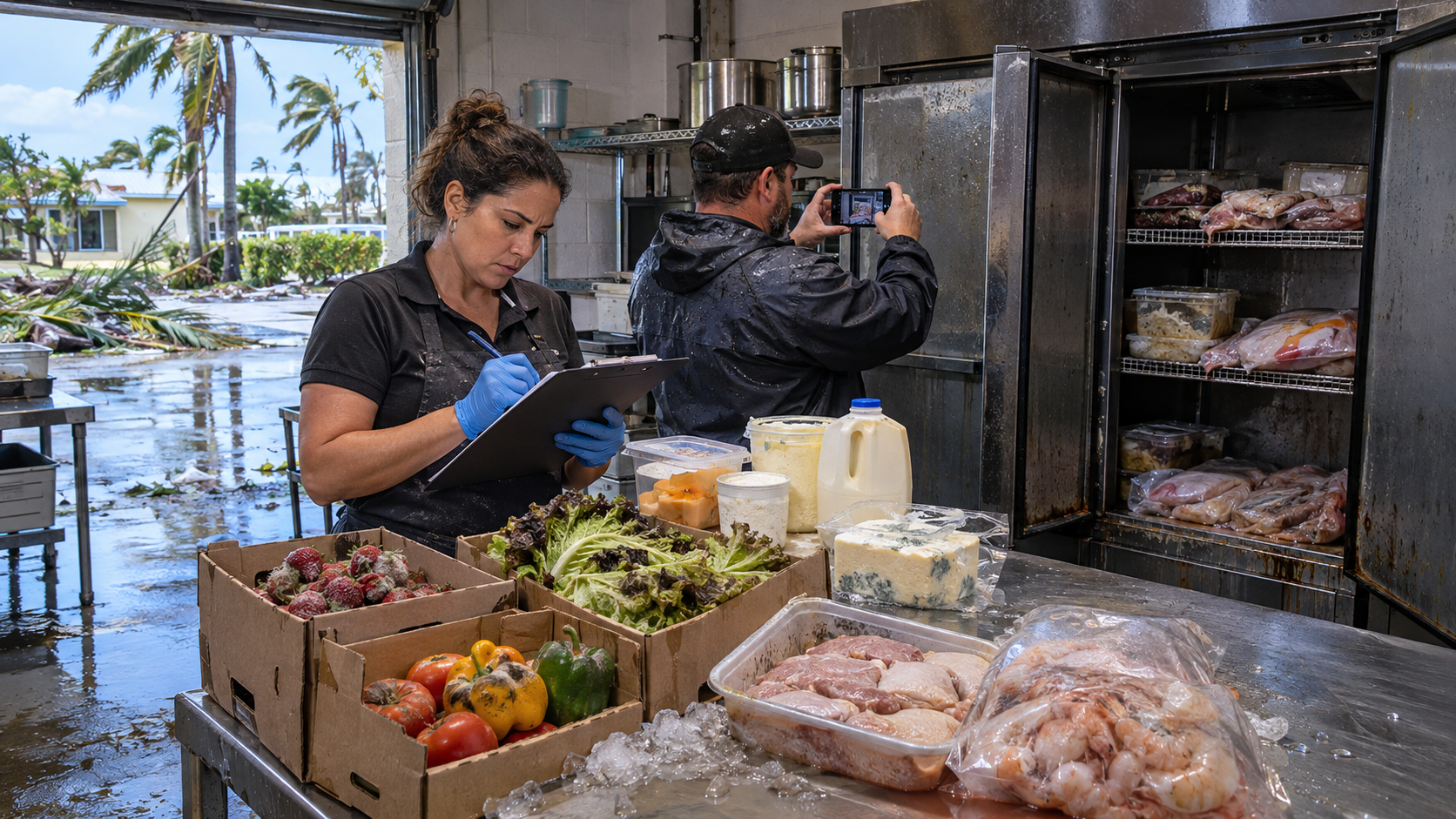
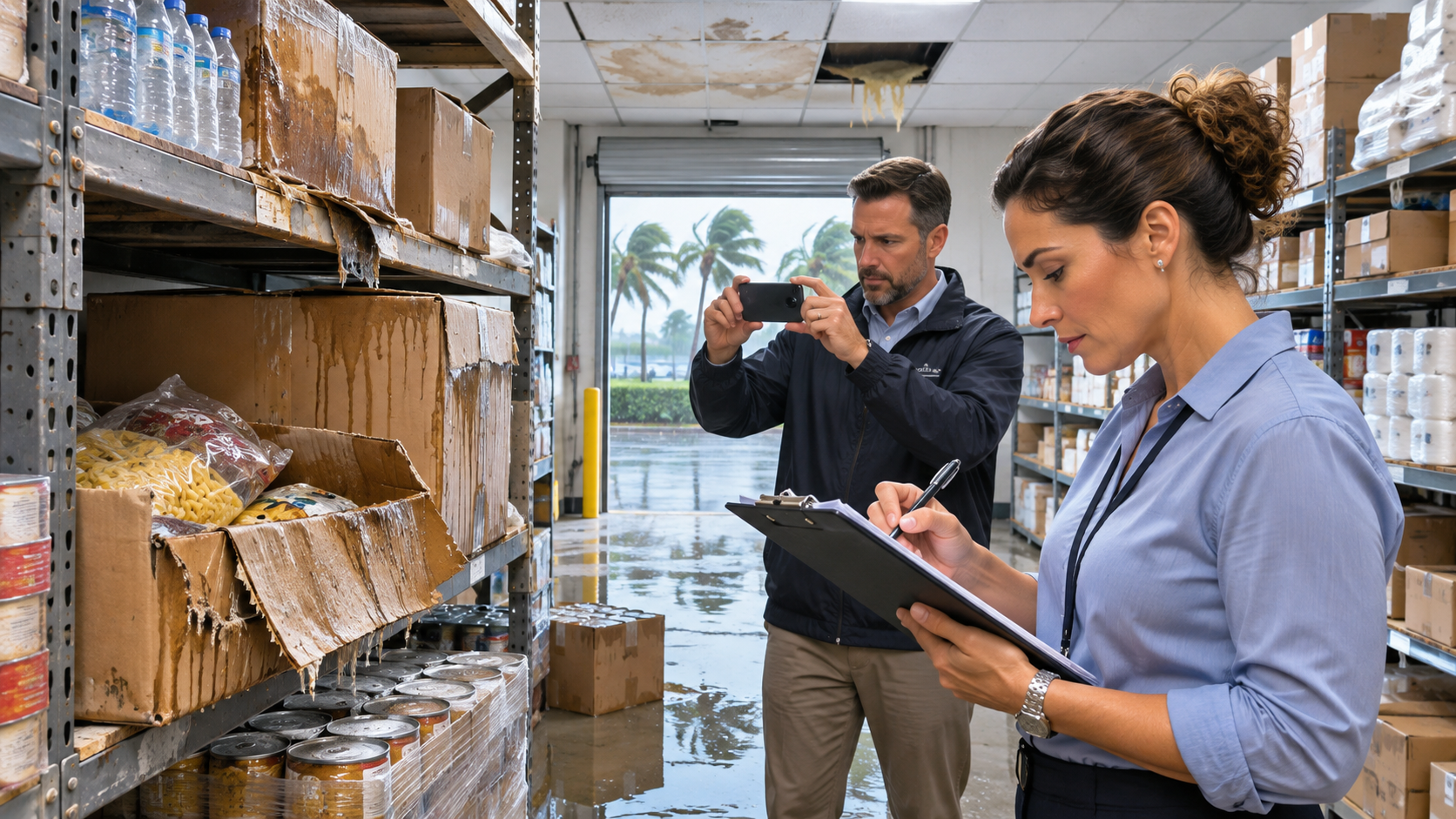
- Photograph affected stock. Capture damaged merchandise, containers, labels, and storage conditions when safe.
- Identify inventory quantities. Prepare a list of affected products and their locations.
- Preserve supporting records. Keep purchase invoices, inventory reports, and refrigeration records.
- Notify the insurer promptly. Follow applicable claim reporting requirements.
- Document disposal. Retain photographs, inventory details, and disposal records when unsafe products must be discarded.
Spoiled food should not be retained or sold when doing so would create a health risk. Businesses must follow applicable food safety and disposal requirements.
When immediate disposal is necessary, preserve evidence as thoroughly as safety allows and communicate with the insurer.
Our property damage claim filing guide explains how organized inventories and supporting records contribute to claim preparation.
How Should Businesses Document Spoiled Inventory for an Insurance Claim?
Accurate inventory documentation helps establish what merchandise existed before the outage, which products were affected, and the financial value of the reported loss.
For a hurricane-related spoilage claim, we recommend preparing an itemized inventory rather than submitting a single estimated amount.
What Should Perishable Stock Records Include?
A detailed inventory schedule should identify:
- Product name and description
- Stock identification number, if available
- Quantity affected
- Storage or refrigeration location
- Original purchase cost
- Relevant purchase dates
- Estimated financial loss
- Evidence showing the inventory was present before the outage
- Photographs or records supporting the reported damage
Businesses should distinguish inventory that was discarded from stock that remained safe and usable.
If original purchase records are unavailable, accounting information, previous inventory reports, and other reliable documents may help reconstruct the loss.
For additional guidance, our article on documenting damaged commercial inventory explains how ownership, damage evidence, and valuation records support business property claims.
Why Are Temperature and Power Records Important?
Refrigeration temperature information may help establish how the outage affected perishable merchandise.
Useful supporting evidence may include temperature monitoring records, equipment logs, outage notices, and records of refrigeration problems.
These documents may help demonstrate the relationship between the reported power interruption and the resulting inventory damage.
However, a record of elevated temperatures does not independently establish insurance coverage.
The claimed loss must still satisfy the applicable policy provisions.
How Is the Value of Spoiled Commercial Inventory Calculated?
The value of spoiled inventory should be supported by reliable financial records.
A business may have purchased merchandise at wholesale cost with the intention of selling it at a higher retail price.
However, the expected selling price does not automatically determine the amount payable under the insurance policy.
Depending on the applicable provisions, business inventory valuation may involve:
- Original acquisition costs
- Documented replacement costs
- Applicable stock valuation conditions
- The quantity of merchandise lost
- Remaining salvage value, if any
- Coverage limitations or deductibles
At PICC FLA, we encourage businesses to distinguish verified purchase costs from estimated future sales revenue.
This distinction is important because property damage and lost income are separate categories of financial loss.
A properly supported inventory claim should explain how the proposed value was determined and identify the evidence supporting that calculation.
Can Businesses Claim Lost Income Along With Spoiled Inventory?
Spoiled inventory can disrupt operations beyond the value of the merchandise itself.
A restaurant may temporarily close because essential products are unavailable. A retail business may lose sales while waiting for replacement stock.
However, these operational losses are not automatically covered by the same insurance provision that may address spoiled merchandise.
Business interruption coverage generally concerns qualifying income losses and continuing operating expenses resulting from an insured interruption.
Depending on the policy, a business income claim may require covered physical damage or a qualifying coverage extension.
Our business interruption insurance claim services help Florida businesses document financial losses related to covered property damage.
We recommend preserving:
- Historical sales reports
- Profit and loss statements
- Records of business closures
- Payroll and continuing expense documentation
- Evidence connecting the interruption to the reported incident
Businesses should avoid including the same financial loss under multiple claim categories without an appropriate basis.
Can Additional Operating Expenses Also Be Claimed?
Some businesses incur extra costs to reduce an interruption, such as renting temporary refrigeration equipment or relocating qualifying inventory.
Depending on the policy, certain expenses may qualify for extra expense coverage.
However, coverage is not automatic.
Our guide explaining extra expense insurance coverage discusses how additional operating expenses may be evaluated during a commercial property claim.
How Can Hurricane Damage Complicate a Spoiled Inventory Claim?
A hurricane may produce several different types of damage during the same event.
For example, one business may experience wind damage to its roof, water intrusion, and a prolonged electrical interruption.
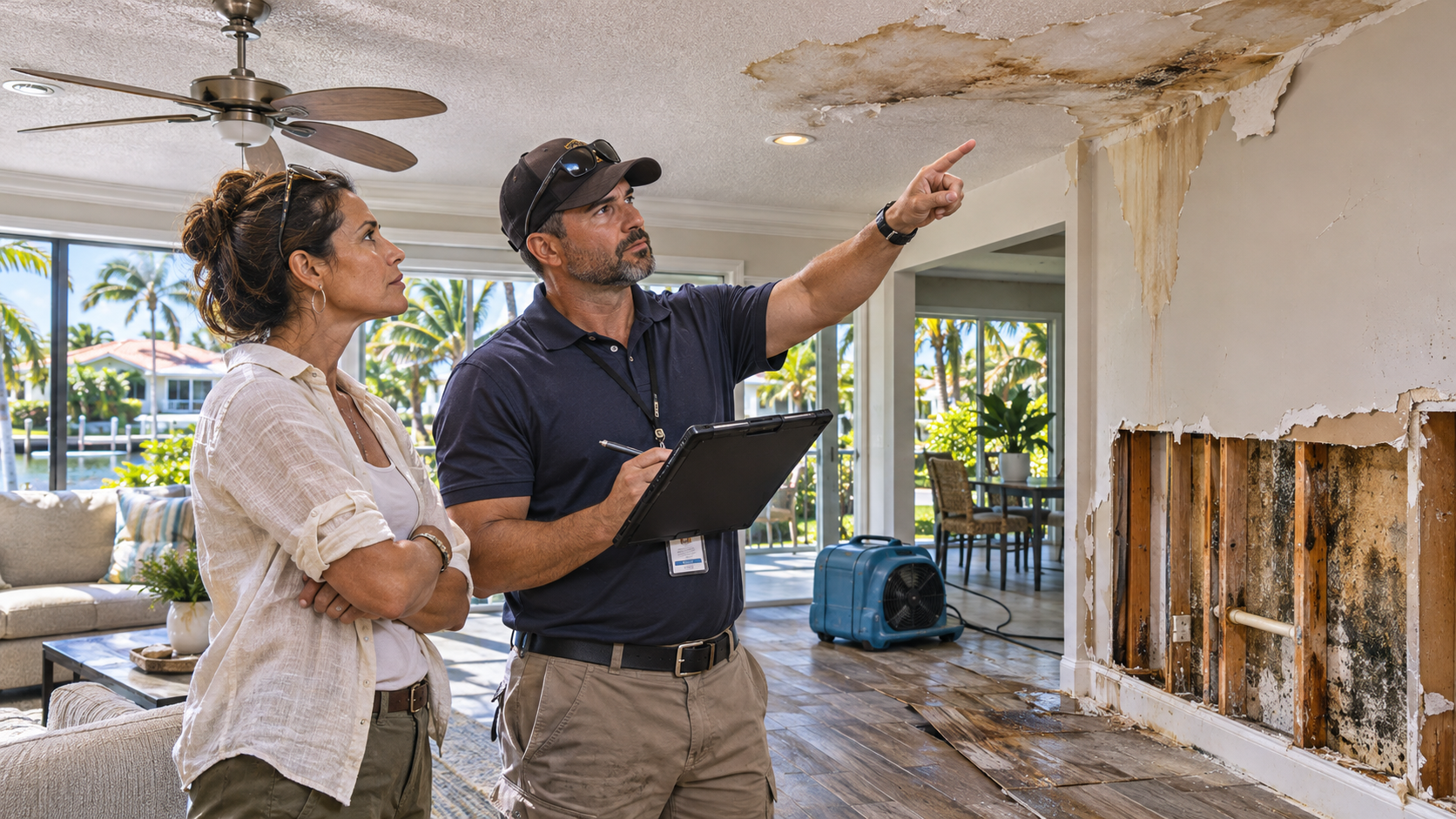
Each loss should be documented according to its actual cause.
Inventory damaged directly by floodwater may involve different insurance provisions from food spoiled because refrigeration stopped working.
This distinction matters because commercial insurance policies may apply different limits, deductibles, or exclusions to different causes of loss.
Our article on distinguishing hurricane wind and flood damage explains why identifying the source of property damage matters during insurance claim preparation.
We recommend documenting the sequence of events rather than treating every loss as automatically covered under hurricane insurance.
What Happens If a Spoiled Inventory Claim Is Denied or Underpaid?
An insurance company may deny or limit a spoilage claim because the applicable coverage was not purchased, the cause of the outage is excluded, or the supporting evidence is insufficient.
If a claim is denied or underpaid, business owners should carefully review the insurer’s explanation.
We recommend comparing the decision against:
- The policy’s spoilage and utility-service provisions
- The documented cause of the interruption
- Inventory and valuation records
- Applicable deductibles and coverage limits
- Any missing or disputed information
An unfavorable decision does not necessarily mean additional payment is available.
However, identifying the basis of the decision can help determine whether additional documentation or review is appropriate.
Our supplemental insurance claim guide explains how additional information may be evaluated when qualifying losses were omitted or insufficiently documented.
How Can PICC FLA Help With a Hurricane-Related Inventory Loss?
At PICC FLA, we represent Florida commercial property policyholders throughout the insurance claim process.
Our public adjusting services include reviewing available policy information, inspecting and documenting property losses, evaluating supporting records, preparing claim materials, and negotiating with insurance companies.
When spoiled inventory is involved, we can help review the reported circumstances and organize the documentation relevant to the claim.
We do not assume every power outage or spoilage event is covered. The outcome depends on the specific insurance contract and evidence.
If your business suffered inventory damage after a hurricane, contact PICC FLA for a free claim review.
Our goal is to help business owners understand their available coverage and present accurate, properly supported commercial property claims.
What Should Florida Businesses Remember About Hurricane-Related Inventory Spoilage?
A hurricane power outage can create significant financial losses for businesses that depend on refrigeration and temperature-controlled storage.
However, the existence of spoiled merchandise does not automatically establish a covered insurance claim.
Business owners should review their coverage, determine the cause of the outage, document affected inventory, and preserve financial records.
At PICC FLA, we believe a careful review of the policy and properly organized evidence provides a stronger foundation for evaluating commercial inventory losses.
Which Organizations Support This Guidance in the Works Cited?
Florida Department of Financial Services. “Commercial Property Insurance Overview.” Division of Consumer Services, https://www.myfloridacfo.com/division/consumers/understanding-insurance/commercial-property-insurance. Accessed 26 Nov. 2026.
Florida Department of Financial Services. “Commercial Insurance Coverage Disaster FAQs.” Division of Consumer Services, https://myfloridacfo.com/division/consumers/storm/commercial-disaster-faqs. Accessed 26 Nov. 2026.
Florida Department of Financial Services. “Hurricane Ready.” Division of Consumer Services, https://www.myfloridacfo.com/division/consumers/storm/. Accessed 26 Nov. 2026.