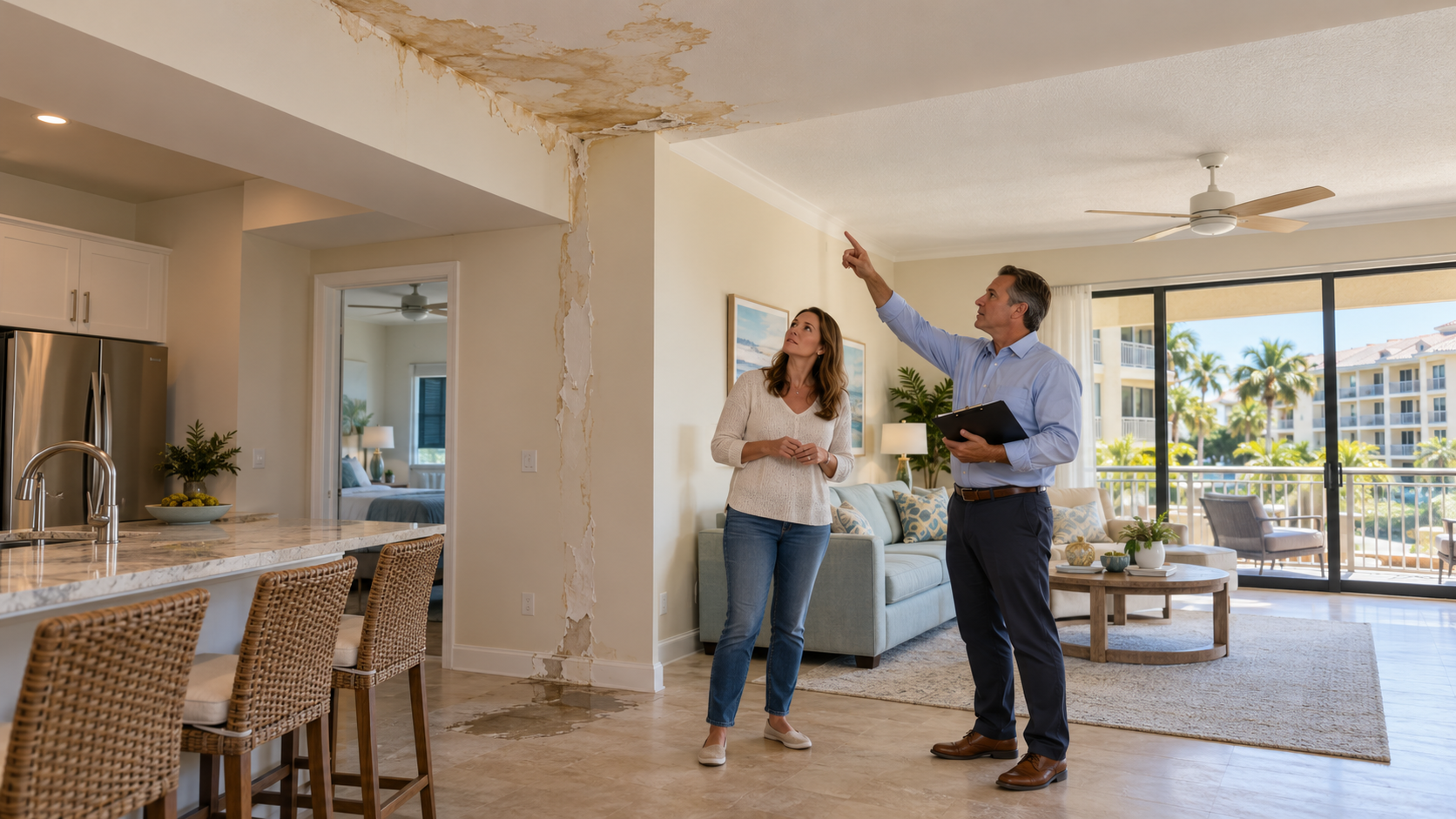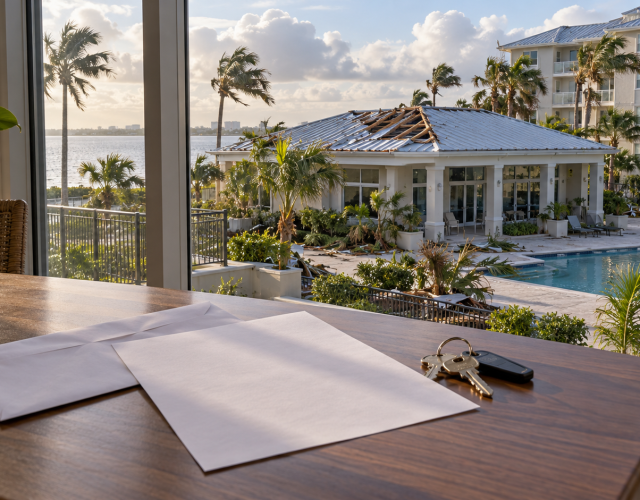
A hurricane damages your condominium building, and several weeks later, your association sends you a bill for thousands of dollars. You already pay monthly association fees, so why are you being charged again? More importantly, can condo insurance cover a special assessment after property damage?
The answer is yes, in certain situations. Condo insurance may help cover a special assessment when it results from a qualifying covered property loss. However, not every assessment is eligible for insurance coverage.
At PICC FLA, we help Florida condominium owners navigate property insurance claims involving hurricane damage, water damage, fire, wind, and other covered losses. We understand how confusing property claims can become when the association’s insurance and your individual condominium policy are both involved.
Knowing how condo special assessment insurance works can help you understand your coverage, gather supporting documentation, and avoid assumptions about an unexpected assessment.
What Is a Special Assessment in Condo Insurance?
A special assessment is an additional charge imposed by a condominium association on unit owners to cover expenses that are not fully funded through regular association fees or available funds.
These expenses may involve property repairs, maintenance, improvements, or unexpected damage.
For example, imagine a hurricane damages the roof and common areas of your condominium building. The association’s insurance may cover part of the damage, but certain expenses could remain unpaid.
The association may then charge unit owners to help cover those costs.
Special assessments can arise from several situations:
- Hurricane or wind damage to common property
- Fire damage affecting shared building components
- Property repairs exceeding available association funds
- Insurance deductibles
- Building maintenance or improvements
- Reserve funding requirements
However, receiving a special assessment does not automatically mean your condo insurance will cover it.
The reason for the assessment matters.
How Does Condo Special Assessment Insurance Work?
Condo special assessment insurance generally refers to loss assessment coverage included in an individual condominium unit owner’s insurance policy.
This coverage may help pay your share of certain property losses affecting collectively owned condominium property.
Florida condominium insurance generally involves two different policies.
The association’s master policy insures property for which the association is responsible, while your individual condominium policy protects specified personal and property interests.
If covered damage occurs and the association assesses owners for qualifying unpaid property-loss expenses, your individual loss assessment coverage may become relevant.
However, coverage depends on:
- The cause of the property damage
- The reason for the assessment
- Your individual insurance policy
- Applicable limits and deductibles
- Policy exclusions and conditions
- Supporting documentation
We explain these responsibilities further in our guide on condo insurance vs. HOA insurance.
What Types of Property Damage May Qualify for Loss Assessment Coverage?
Special assessment insurance coverage may apply when an assessment arises from a direct property loss of a type covered by the condominium unit owner’s policy.
Examples may include qualifying damage caused by:
- Hurricanes: Covered wind damage affecting shared roofs or building components.
- Fire: A covered fire damaging condominium common property.
- Windstorms: Storm-related damage to insured exterior structures.
- Water damage: Certain sudden water losses affecting collectively owned property, depending on the policy.
For example, suppose hurricane winds damage a condominium building’s roof. The association submits a property insurance claim, but a portion of the eligible loss remains its responsibility.
If the association assesses unit owners for qualifying expenses, their individual loss assessment coverage may help, subject to applicable policy terms.
Our article on condo loss assessment coverage explains this protection in greater detail.
Can an HOA Assessment After a Hurricane Be Covered?
An HOA assessment after hurricane damage may involve an insurance claim, but the type of association and underlying loss must be considered.
For this discussion, we are focusing on Florida condominium associations, which are governed by different insurance requirements than homeowners associations for detached homes.
A condominium association may assess owners after a hurricane because of damage to roofs, exterior walls, or other shared property.
However, insurance coverage is not guaranteed simply because the assessment followed a hurricane.
For instance, if an assessment relates to wind damage covered under the unit owner’s policy, loss assessment coverage may apply.
If the assessment relates to excluded flooding or unrelated maintenance, the outcome may be different.
We help Florida property owners evaluate the underlying damage through our hurricane and storm damage claim services.
Which Special Assessments Are Usually Not Covered?
Not every association expense qualifies as an insured property loss.
Special assessments for ordinary building maintenance, anticipated repairs, or improvements generally do not qualify for property loss assessment coverage merely because owners are required to pay them.
Examples may include:
- Routine exterior painting
- Scheduled building maintenance
- General reserve contributions
- Planned building upgrades
- Ordinary operating expenses
- Repairs arising solely from long-term deterioration
Consider a condominium association that issues an assessment to repaint the building and replenish its maintenance reserves.
Even if the assessment is expensive, it does not automatically represent a covered direct property loss.
We recommend requesting a written explanation showing exactly why the assessment was issued and what expenses it includes.
How Much Loss Assessment Coverage Does Florida Condo Insurance Provide?
Florida Statutes section 627.714 requires residential condominium unit owner policies issued or renewed on or after July 1, 2010, to include at least $2,000 in qualifying property loss assessment coverage.
The law also establishes certain deductible requirements.
For qualifying assessments:
- The deductible cannot exceed $250 per direct property loss.
- If a deductible was or will be applied to another property loss sustained by the unit owner from the same direct loss, an additional loss assessment deductible does not apply.
- Multiple assessments arising from the same direct loss remain subject to the applicable coverage limit.
Your policy may have a higher limit, depending on the coverage purchased.
Importantly, Florida law uses the coverage limit in effect one day before the event that caused the loss. Increasing the limit after the event does not increase coverage for that earlier loss.
Review your policy declarations and loss assessment provisions to determine your actual protection.
Why Does the Condo Association’s Master Insurance Policy Matter?
The association’s master policy can play an important role in determining how property damage expenses are allocated.
It generally covers specified shared property and structural building components, subject to policy limitations.
Your individual condominium policy addresses different insured interests.
An assessment may arise because the master policy includes a deductible, has applicable limits, or does not cover certain expenses.
However, an unpaid expense under the master policy does not automatically become covered under your individual policy.
This distinction matters when reviewing association repair estimates and insurance payments.
Our guide on how to read an insurance claim estimate explains how repair quantities, materials, depreciation, and deductibles can affect property damage calculations.
What Documents Do You Need for a Loss Assessment Claim?
A properly documented loss assessment claim should explain why the assessment exists and how it relates to the underlying property damage.
We recommend collecting:
- Assessment notice: The official statement showing the amount charged and the reason for the assessment.
- Association records: Relevant meeting minutes, resolutions, or other documents authorizing the assessment.
- Insurance documents: Your condominium policy and relevant master policy information, when available.
- Damage evidence: Photographs, inspection findings, and repair estimates associated with the loss.
- Claim correspondence: Available communications concerning the association’s insurance claim.
- Cost calculations: Records showing how your individual share was determined.
These records help establish the relationship between the underlying property damage and the amount being assessed.
Our property insurance claim process explains why organized documentation is important when presenting an insurance claim.
How Soon Should You File a Special Assessment Insurance Claim?
We recommend notifying your insurer promptly when you receive an assessment involving potential insured property damage.
Florida Statutes section 627.70132(4) establishes special notice requirements for qualifying loss assessment claims.
The statute requires notice within the later of one year after the underlying loss or 90 days after the condominium association or governing board votes to levy the assessment, subject to an overall three-year limit after the date of loss.
The date of the underlying property damage therefore matters, even if the assessment arrives much later.
Because policy requirements and the facts of each claim may differ, homeowners should not assume that receiving an assessment starts an entirely new unrestricted filing period.
Preserve the date of the storm or other loss, the assessment vote date, and all related notices.
What Happens If Your Special Assessment Insurance Claim Is Denied?
A denied claim does not necessarily mean every part of the assessment was evaluated incorrectly.
Start by reading the insurer’s written explanation.
Check whether the decision addresses:
- The cause of the underlying property damage
- The applicable insurance coverage
- The assessment’s purpose
- Policy exclusions
- Coverage limits
- Deductibles
- Missing supporting documentation
An association may also combine covered and uncovered expenses into a single assessment.
In such cases, separating the different expenses may help clarify the claim.
Our guide on partial denial of an insurance claim explains how policyholders can review decisions accepting some portions of a loss while denying others.
How Can PICC FLA Help With Condo Property Insurance Claims?
At PICC FLA, we represent policyholders during property insurance claims involving condominium damage.
Our services include inspecting property damage, reviewing available insurance information, documenting losses, preparing repair estimates, and communicating and negotiating with insurers on behalf of policyholders.
When a special assessment involves damaged condominium property, we can help review relevant underlying damage and supporting claim information within our public adjusting services.
Whether an assessment qualifies for payment still depends on the actual policy, the type of loss, and applicable law.
Explore our Florida condominium insurance claim services or learn how to file a claim with a public adjuster.
What Should Condo Owners Remember About Special Assessment Insurance?
A special assessment after property damage can create an unexpected financial obligation for condominium owners.
Fortunately, loss assessment coverage may help when the assessment results from a qualifying covered property loss.
However, coverage is not automatic. Understanding your policy, identifying the underlying cause of damage, and maintaining accurate documentation are essential.
At PICC FLA, we help Florida condominium owners navigate property insurance claims with careful damage documentation, claim review, and policyholder representation.
Which Organizations Support This Condo Special Assessment Insurance Guidance?
What Sources Are Included in the MLA Works Cited?
Florida Legislature. “Residential Condominium Unit Owner Coverage; Loss Assessment Coverage Required.” 2026 Florida Statutes, sec. 627.714, 2026. https://www.flsenate.gov/Laws/Statutes/2026/627.714.
Florida Legislature. “The Association.” 2026 Florida Statutes, sec. 718.111, 2026. https://www.flsenate.gov/Laws/Statutes/2026/718.111.
Florida Legislature. “Notice of Property Insurance Claim.” 2026 Florida Statutes, sec. 627.70132, 2026. https://www.flsenate.gov/Laws/Statutes/2026/627.70132.