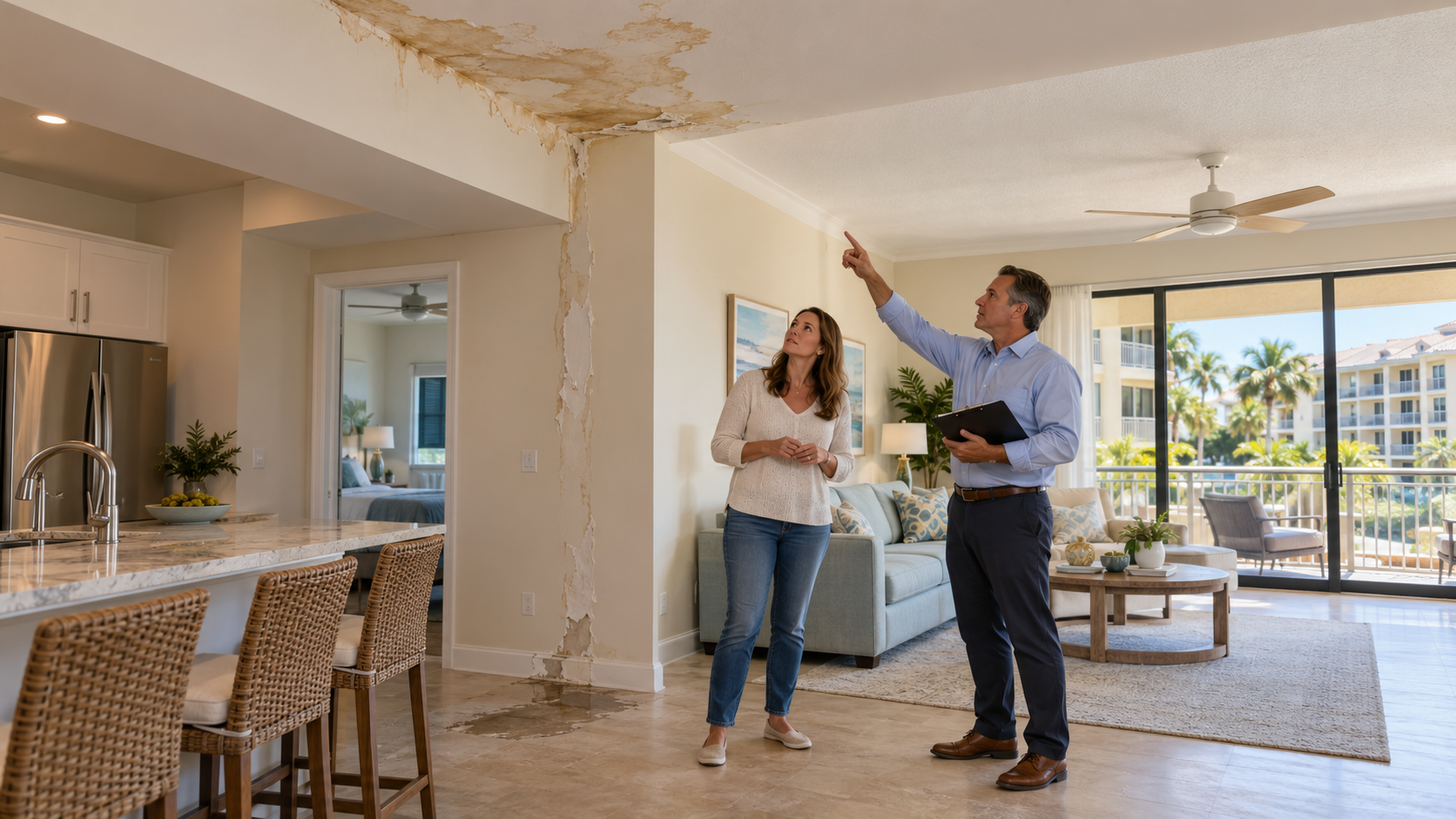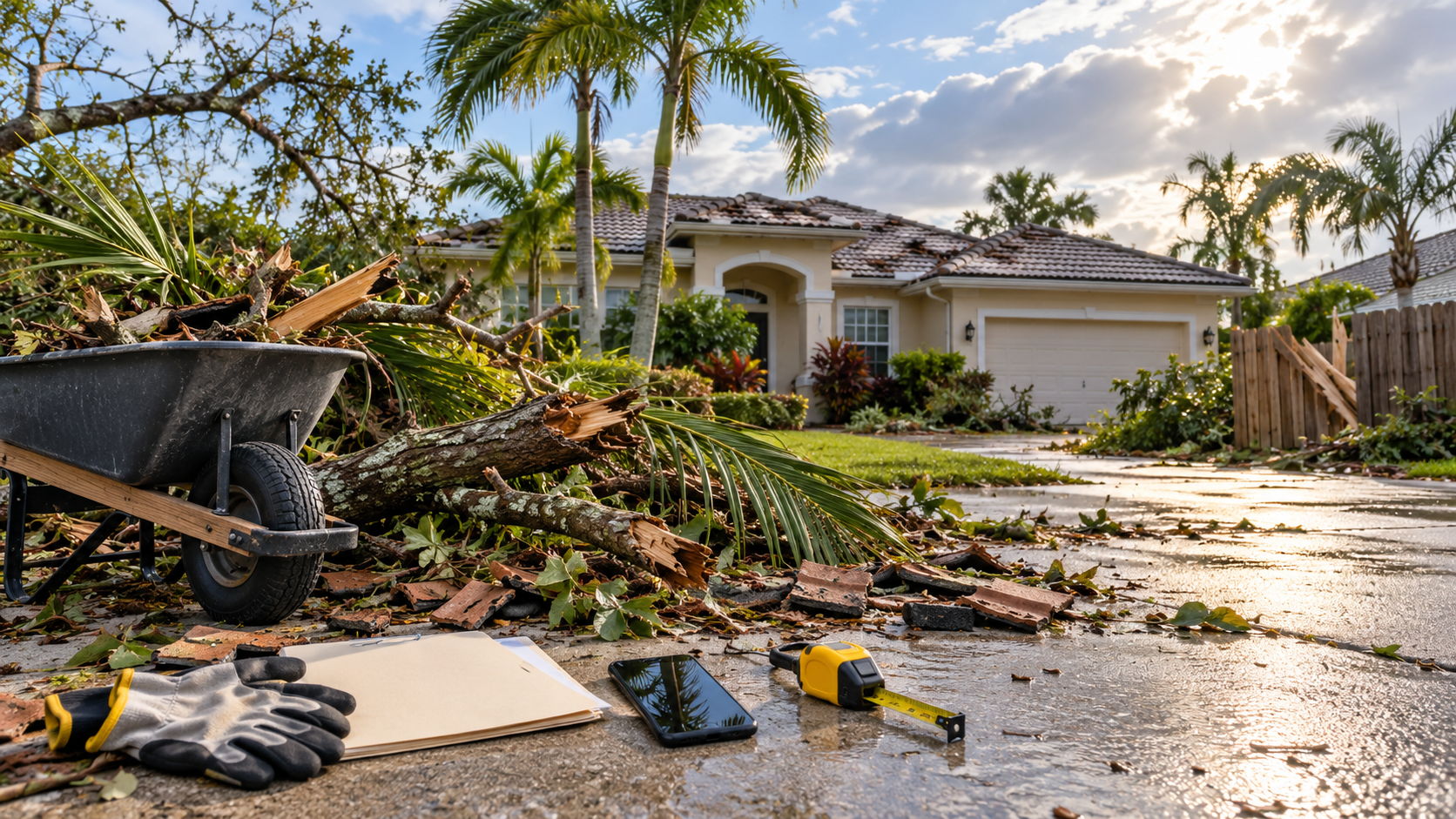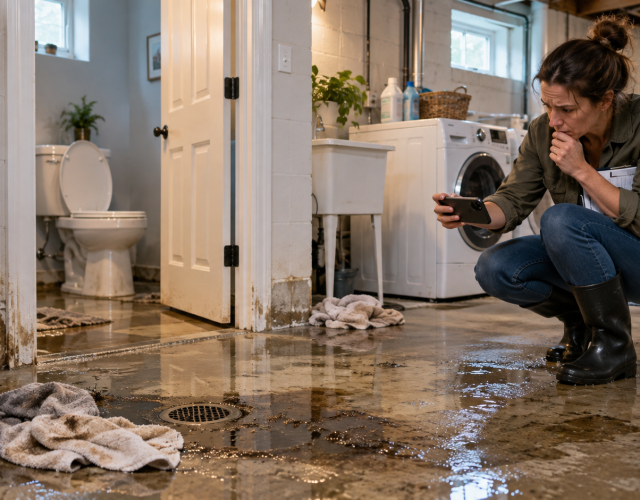
A sewer backup can cause serious water damage inside a home within a short amount of time. Flooring, drywall, cabinets, furniture, personal belongings, and other materials may all be affected. Once the immediate cleanup begins, one of the first questions homeowners usually ask is: does homeowners insurance cover sewer backup damage?
The answer depends on your policy.
Standard homeowners insurance does not typically include sewer backup insurance coverage automatically. In many policies, damage caused when water backs up through a sewer or drain may be excluded unless additional coverage has been added through a water backup endorsement.
At PICC FLA, we help Florida property owners review, document, prepare, and manage water damage insurance claims. When a sewer or drain backup damages your property, we focus on the specific policy language, cause of loss, affected areas, available endorsements, documentation, and other facts that determine how the claim should be presented.
Does Homeowners Insurance Cover Sewer Backup in Florida?
If you are asking, “does homeowners insurance cover sewer backup,” the safest answer is that you should not assume standard coverage applies.
Florida consumer insurance guidance specifically notes that some homeowners policies do not provide sewer backup coverage. Water that backs up from an outside sewer or drain may be excluded, but additional protection may be available through an endorsement.
A water backup endorsement changes or adds coverage to the homeowners policy. Depending on its wording, it may provide coverage for water that backs up into the home through a sewer, sump, or drain.
Coverage still depends on the actual policy.
When we review a residential property insurance claim, we look at the policy provisions together with the facts of the loss rather than assuming that every water loss is treated the same way.
What Is a Water Backup Endorsement?
A water backup endorsement is additional coverage that can be added to certain homeowners insurance policies.
Its purpose is generally to provide coverage for qualifying water damage caused by water backing up through a sewer, sump, or drain when that loss would otherwise fall outside the standard policy coverage.
A homeowner should review:
- Whether the endorsement is actually attached to the policy
- What types of backup or overflow it covers
- The coverage limit
- Any applicable deductible
- Exclusions or limitations
- Requirements that apply after a loss
The existence of a water backup endorsement does not mean every water-related event is automatically covered. The cause of the damage still needs to fit within the language of the policy and endorsement.
That is why our property insurance claim process starts with understanding the loss, reviewing available policy information, inspecting the property, and documenting the damage.
Is Sewer Backup Damage the Same as Flood Damage?
No. Sewer backup and flood damage should not automatically be treated as the same type of insurance loss.
Florida consumer guidance specifically states that a water backup endorsement does not provide coverage for flood damage. The source and cause of the water therefore matter.
For example, water entering the home because a drain or sewer backed up presents a different coverage question from water entering the property because of surface flooding.
When you report a loss, describe what you actually observed rather than guessing about the cause. If you are uncertain about what caused the water intrusion, avoid presenting an assumption as a confirmed fact.
Our guide on how to file a homeowners insurance claim explains why accurate documentation of the loss from the beginning can be important.
What Should You Do Immediately After a Sewer Backup?
Your first priority should be safety and preventing additional property damage when it can be done safely.
Water associated with a sewer backup can create sanitation concerns, so avoid unnecessary contact with contaminated areas. Appropriate cleanup and emergency mitigation may need to begin quickly.
Before cleanup substantially changes the condition of the property, document as much as safely possible.
You should consider:
- Photographing and recording affected rooms
- Taking close photographs of damaged flooring, walls, cabinets, and belongings
- Recording where the water appeared to enter the property
- Saving damaged materials when practical and safe
- Keeping invoices and receipts
- Creating an inventory of damaged personal property
- Saving communications regarding the loss
- Keeping copies of estimates and inspection documents
Florida consumer guidance advises homeowners to make and document necessary emergency repairs that prevent additional damage.
Our guide to temporary repairs before an insurance inspection explains how to protect the property while preserving evidence for the claim.
How Do You File a Sewer Backup Claim?
A sewer backup claim should be reported promptly according to the requirements of your policy.
In Florida, current law generally requires notice of an initial or reopened property insurance claim within one year after the date of loss. Your policy may contain additional duties and reporting requirements, so waiting until the statutory deadline is not a good claim strategy.
When preparing the claim, organize the basic facts:
- When did you first discover the backup?
- Where did the water enter?
- Which rooms or areas were affected?
- What property was damaged?
- What emergency work was performed?
- What photographs and videos were taken?
- What invoices or receipts are available?
- Is a water backup endorsement included in the policy?
A complete file can make it easier to explain what happened and what damage resulted from the event.
What Damage Should You Document in a Sewer Backup Claim?
Water does not always stay in the room where it first appears.
Depending on the severity of the backup, damage may affect flooring, baseboards, drywall, cabinetry, doors, contents, and adjoining areas. Water can also move beneath flooring systems or into areas that are not immediately visible.
At PICC FLA, our role is to evaluate the property damage from the policyholder’s side and help document the loss that is being presented.
Do not focus only on the most visibly damaged location.
Walk through the affected property carefully and document each area. If cleanup or removal reveals additional damage, continue taking photographs and maintaining records.
What Happens During the Insurance Inspection?
After a sewer backup claim is reported, the insurance company may inspect the affected property.
The inspection is an important part of the claim, but it is not necessarily the end of the investigation. The insurer may still review the policy, determine whether the loss falls within available coverage, evaluate the amount of damage, request documents, and prepare an estimate.
Our guide explaining what happens after an insurance adjuster inspects your home provides more detail about this stage of the process.
Continue keeping records even after the inspection. Additional damage may become apparent as cleanup or repairs progress.
How Should You Review a Sewer Backup Insurance Estimate?
If the claim is covered and you receive an estimate, do not judge it only by the final dollar amount.
Compare the estimate with the actual documented damage.
Review:
- Every affected room
- Damaged materials
- Removal and replacement work
- Quantities and measurements
- Personal property, when applicable
- Depreciation
- Deductibles
- Coverage limits
- Any water backup endorsement limit
- Areas that may have been omitted
Our guide on how to read an insurance claim estimate explains why the scope of damage can be just as important as the total at the bottom of the estimate.
An estimate that differs from your expected repair cost is not automatically incorrect. The important question is why the numbers differ and whether the estimate reflects the documented covered damage.
What Happens If Additional Sewer Backup Damage Is Discovered?
Sometimes additional damage becomes apparent after affected materials are removed or repairs begin.
For example, the original inspection may document visible flooring damage, while later removal reveals additional affected materials beneath it.
When additional covered damage or repair costs related to the same loss need to be presented, a supplemental insurance claim may be appropriate.
Florida law generally requires notice of a supplemental property insurance claim within 18 months after the date of loss.
A supplemental claim does not automatically guarantee an additional payment. The policy, coverage, cause of loss, documentation, timing, and connection between the additional damage and original loss still matter.
What If You Are Asked to Provide a Proof of Loss?
During a sewer backup claim, the insurance company may request a proof of loss.
A proof of loss is a formal statement describing information about the loss and the amount being claimed. Depending on the policy, it may need to be signed and sworn.
There is not one universal proof-of-loss deadline that applies to every Florida property claim. Review the policy and any request you receive carefully.
Our guide explaining what a proof of loss is and when it is due provides more information about this important claim document.
How Can PICC FLA Help With a Sewer Backup Claim?
At PICC FLA, we work for the policyholder during the property insurance claim process.
For water-related property claims within our service scope, our work can include inspecting damage, reviewing claim and policy information, documenting the loss, preparing estimates when appropriate, organizing supporting information, communicating during the adjustment process, and negotiating based on the documented covered loss.
If your property has suffered sewer or drain backup damage, the first question should not simply be how much the cleanup costs.
We also need to understand:
- What caused the water to enter the property?
- Does the policy contain applicable sewer backup insurance coverage?
- Is there a water backup endorsement?
- What coverage limits or deductibles apply?
- What areas were actually damaged?
- Has the full loss been documented?
- Has the insurance company inspected the property?
- Does the estimate reflect the documented damage?
If you need assistance reviewing a water damage claim, you can contact PICC FLA to discuss your property loss and claim documentation.
Which Organizations Support This Sewer Backup Insurance Information?
Florida Department of Financial Services. “Homeowners Insurance Overview.” Division of Consumer Services, Florida Department of Financial Services. Accessed 21 Sept. 2026. https://www.myfloridacfo.com/division/consumers/understanding-insurance/homeownersinsuranceoverview.
Florida Department of Financial Services. “Homeowners Insurance Policy Endorsements.” Office of the Insurance Consumer Advocate, Florida Department of Financial Services. Accessed 21 Sept. 2026. https://www.myfloridacfo.com/division/ica/fullcoverage/homeowners/policyendorsements.
Florida Department of Financial Services. “Be Your Own Advocate.” Office of the Insurance Consumer Advocate, Florida Department of Financial Services. Accessed 21 Sept. 2026. https://myfloridacfo.com/division/ica/fullcoverage/homeowners/beyourownadvocate.
Florida Legislature. “Florida Statutes, Section 627.70132: Notice of Property Insurance Claim.” The 2026 Florida Statutes. Accessed 21 Sept. 2026. https://www.leg.state.fl.us/statutes/index.cfm?App_mode=Display_Statute&URL=0600-0699/0627/Sections/0627.70132.html.
National Association of Insurance Commissioners. “Homeowners Insurance.” Insurance Topics. Accessed 21 Sept. 2026. https://content.naic.org/insurance-topics/homeowners-insurance.