When a Florida property insurance claim reaches a point where the policyholder and insurance company cannot agree, mediation may provide another way to resolve the dispute without immediately moving into appraisal or litigation.
At PICC FLA, we help property owners understand the insurance claim process, document their losses, evaluate disputed estimates, and communicate with insurance companies from the policyholder’s side. If a disagreement remains after the insurance company makes its claim determination, property insurance mediation may become one of the options worth considering.
Florida has a state-administered mediation process designed specifically to help certain property insurance disputes reach a negotiated resolution. It brings the policyholder and insurance company together with a neutral mediator who facilitates the discussion.
Mediation does not mean the mediator decides how much your claim is worth. Instead, the goal is to help both sides discuss the disputed issues and determine whether they can voluntarily agree on a resolution.
Understanding how insurance claim mediation in Florida works can help you prepare carefully and avoid confusing mediation with other dispute-resolution procedures.
What Is Property Insurance Mediation in Florida?
Property insurance mediation is an informal dispute-resolution process that gives qualifying policyholders and insurance companies an opportunity to negotiate a claim dispute with the assistance of a neutral mediator.
Florida law describes the process as a nonadversarial alternative intended to encourage effective, fair, and timely resolution of qualifying property insurance disputes before the parties proceed into appraisal or litigation.
For homeowners, this may become relevant when an insurance company has already evaluated the claim but a disagreement remains about matters such as:
- The cause of the property damage
- The amount of the insurance company’s settlement offer
- The scope of covered damage
- The scope of necessary repairs
- The estimated cost of repairing covered damage
At PICC FLA, we regularly help policyholders with the broader property insurance claim process, including inspecting damage, preparing documentation, evaluating estimates, and negotiating disputed property losses.
Mediation does not replace proper claim preparation. A policyholder still needs evidence showing what happened, what was damaged, and why the disputed amount should be reconsidered.
Who Can Use the Florida Insurance Mediation Program?
The Florida insurance mediation program applies to qualifying property insurance disputes, including certain personal residential and commercial residential claims.
Under Florida law, mediation may be requested by a qualifying policyholder or insurer, among other permitted parties. The program generally applies before appraisal or litigation has begun.
For homeowners, mediation may be especially relevant after the insurance company has made a claim determination and the disagreement remains unresolved.
A residential property dispute generally must involve at least $500 after the deductible unless the parties agree to mediate a smaller dispute. Current state guidance also identifies disputes involving disagreements over cause of loss or the amount offered to repair the damage as potential mediation matters.
If you are dealing with damage to your home, our residential insurance claims resources explain how we help inspect, document, prepare, and negotiate property claims from the policyholder’s perspective.
What Types of Insurance Claim Disputes Can Go to Mediation?
Property insurance mediation can address more than simple disagreements over repair prices.
A qualifying dispute may involve questions surrounding the cause of the loss or the insurance company’s evaluation of the amount necessary to repair covered damage.
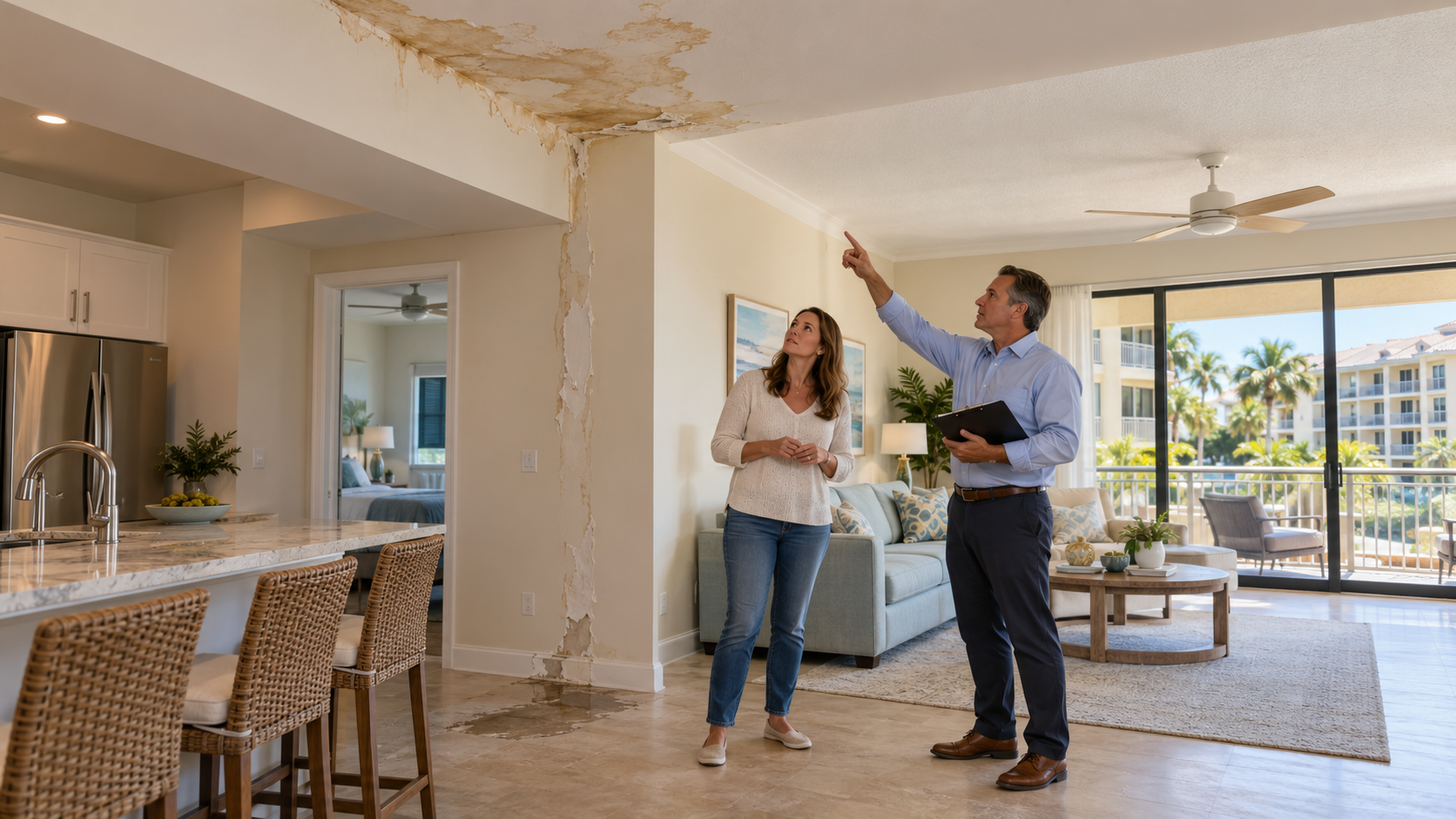
For example, a homeowner may believe storm damage caused a roof leak while the insurance company reaches a different conclusion about the cause. Another policyholder may agree that the loss is covered but believe the insurer’s estimate excludes necessary repairs.
An underpaid property damage claim may involve disagreements about:
- Missing repair items
- Material quantities
- Labor costs
- Damage scope
- Replacement requirements
- Additional documented damage
- Repair estimates
A denied homeowners insurance claim may also create a cause-of-loss dispute that requires careful documentation before mediation is considered.
The exact eligibility still depends on the policy, type of coverage, claim status, and reason for the dispute.
What Claims Are Not Eligible for Florida Property Insurance Mediation?
Not every property insurance disagreement qualifies for the state mediation program.
Current state guidance identifies several categories that generally cannot proceed through residential or commercial residential mediation, including certain commercial-lines claims, National Flood Insurance Program claims, liability disputes, claims already in appraisal or litigation, certain suspected fraud matters, and claims involving causes of loss that are not covered based on agreed facts.
Florida law also excludes certain disputes involving less than $500 unless both sides agree to mediation, as well as losses that do not comply with applicable property-claim notice requirements.
This is why checking the status of the claim before requesting mediation matters.
Our guide explaining Florida property insurance claim deadlines can also help property owners understand why timely notice and documentation remain important throughout the claim process.
How Does the Insurance Claim Mediation Process Begin?
Before requesting mediation, the insurance company generally needs to have made a claim determination so there is an actual dispute to mediate. Current state guidance specifically instructs policyholders to first give the insurer an opportunity to resolve the issue and obtain a claim determination.
Once the dispute qualifies, a mediation request can be submitted through the state program.
Information typically needed includes details such as:
- Policyholder information
- Insurance policy information
- Claim number
- Property information
- Description of the disagreement
- Amount in dispute
- Supporting claim documentation
- Information concerning any representative involved
If a policyholder is represented by a public adjuster, the state may require a copy of the public adjuster contract so the representative can be properly included in mediation communications.
That fits directly within what we do at PICC FLA. We represent policyholders during property insurance claims by helping evaluate the property damage, prepare estimates and supporting documentation, communicate with the insurer, and negotiate the documented loss.
What Should You Prepare Before Property Insurance Mediation?
Good preparation can significantly improve the usefulness of a mediation conference.
The mediator does not inspect your house and independently build your insurance claim for you. You need documentation that clearly explains the disagreement.
State consumer guidance recommends bringing supporting materials such as the policy, photographs, estimates, bills, reports, letters, and specific dollar estimates relating to the disputed items.
Depending on the claim, useful records may include:
- Photographs and videos of the damage
- Contractor estimates
- Repair invoices
- Emergency mitigation invoices
- Contents inventories
- Insurance company estimates
- Payment letters
- Denial or partial-denial letters
- Inspection reports
- Correspondence with the insurance company
- Documentation of additional damage
- Relevant policy provisions
A proof of loss may also be part of the claim documentation depending on the policy and circumstances.
The strongest presentation usually explains not only how much more money is being requested, but why the evidence supports the disputed repair scope or valuation.
What Happens During the Mediation Conference?
During mediation, a neutral mediator facilitates communication between the policyholder and insurance company.
The mediator is not there to act as the policyholder’s adjuster or the insurer’s adjuster. The mediator’s purpose is to help both sides identify the disputed issues and explore whether an acceptable settlement can be reached.
The parties should therefore arrive prepared to explain their positions and negotiate in good faith.
Florida law requires parties participating under this process to have settlement authority, and the insurer’s representative must be able to negotiate the claim meaningfully.
Depending on the circumstances, the conference may also include people who can assist with presenting the claim, including adjusters, contractors, engineers, interpreters, or other appropriate participants. Current guidance allows conferences to occur in person or, when feasible, through telephone, videoconference, or other electronic means.
Is Florida Property Insurance Mediation Binding?
Florida property insurance mediation is generally nonbinding.
That means simply attending mediation does not force either party to accept a proposed resolution.
However, the situation changes if a written settlement is reached.
Under current Florida law, a policyholder generally has three business days to rescind a written mediation settlement, provided the policyholder has not cashed or deposited a payment issued for the disputed matters. If the settlement is not properly rescinded, it becomes binding regarding the specific claims presented during mediation.
Policyholders should therefore review any proposed settlement carefully before making final decisions.
What Is the Difference Between Appraisal and Mediation in Insurance Claims?
Understanding appraisal vs mediation in insurance is important because these procedures serve different purposes.
Mediation is primarily a negotiation process. A neutral mediator helps the parties attempt to reach their own settlement.
Appraisal is generally a policy-based process used when the disagreement centers on the amount of loss. Each side may select an appraiser, and an umpire may become involved if the appraisers cannot agree.
Our detailed guide to the home insurance appraisal process in Florida explains how appraisal is commonly used for disputes involving repair costs, replacement values, damage scope, and claim valuation.
One important difference is timing. The state mediation program is generally designed as a pre-appraisal process. Current state guidance specifically lists claims already in appraisal among those that are not eligible for the residential mediation program.
This makes the order in which dispute-resolution options are considered important.
Can Mediation Help With a Supplemental Property Insurance Claim?
It can potentially become relevant when a valid supplemental claim leads to a qualifying disagreement.
A supplemental claim may arise when additional damage or additional costs related to the same loss become known after the original claim was adjusted.
Our guide to filing a supplemental insurance claim in Florida explains how additional documentation may support changes involving previously overlooked damage, repair requirements, or costs.
Before mediation, we want the claim documentation to clearly establish what is being disputed.
If the insurance company has not yet received important estimates, photographs, inspection findings, invoices, or supplemental documentation, submitting and discussing that information may help clarify the dispute before another resolution process becomes necessary.
How Can We Help Before a Florida Insurance Mediation?
At PICC FLA, our focus is the property insurance claim itself.
We work for the policyholder, not the insurance company. Our role can include inspecting the property, evaluating the loss, reviewing claim documentation, preparing estimates, organizing supporting materials, communicating with the insurance company, and negotiating based on the documented damage.
If mediation becomes relevant, careful preparation can help clearly define:
- What remains disputed
- Which damage has been documented
- What the insurance company included
- What appears to have been omitted
- What repair costs are supported
- Which estimates or reports support the policyholder’s position
For condominium-related property losses, our condominium insurance claims resources explain how we help with property damage affecting condominium claims.
Every claim is different. The policy language, cause of loss, claim history, payments, deadlines, documentation, and dispute status all matter when determining the next appropriate step.
How Can You Prepare for the Next Step in Your Property Insurance Claim?
Mediation works best when the dispute is clearly documented before everyone reaches the conference.
If your property insurance claim has been denied, underpaid, or disputed, start by understanding exactly what the insurance company decided and why. Compare its estimate with the actual property damage, preserve your photographs and records, organize repair estimates, and identify the specific items that remain unresolved.
At PICC FLA, we help Florida property owners document, assess, prepare, present, and negotiate property insurance claims from the policyholder’s perspective.
Mediation is one possible part of that process, but the strength of your position still depends heavily on the quality of the claim documentation behind it.
If you believe the insurance company’s determination does not reflect the documented property damage, having the claim reviewed before accepting a settlement or entering another dispute-resolution process can help you better understand your available options.
Which Organizations Support This Information?
Florida Department of Financial Services. “Mediation and Neutral Evaluation.” Division of Consumer Services. Accessed 2 Sept. 2026.
Florida Department of Financial Services. “Mediation FAQs.” Division of Consumer Services. Accessed 2 Sept. 2026.
Florida Department of Financial Services. “Request Mediation & Neutral Evaluation.” Division of Consumer Services. Accessed 2 Sept. 2026.
Florida Legislature. “Section 627.7015: Alternative Procedure for Resolution of Disputed Property Insurance Claims.” The 2026 Florida Statutes, 2026. Accessed 2 Sept. 2026.
Florida Department of Financial Services. “Rule 69J-166.031: Mediation of Residential Property Insurance Claims.” Florida Administrative Code. Accessed 2 Sept. 2026.