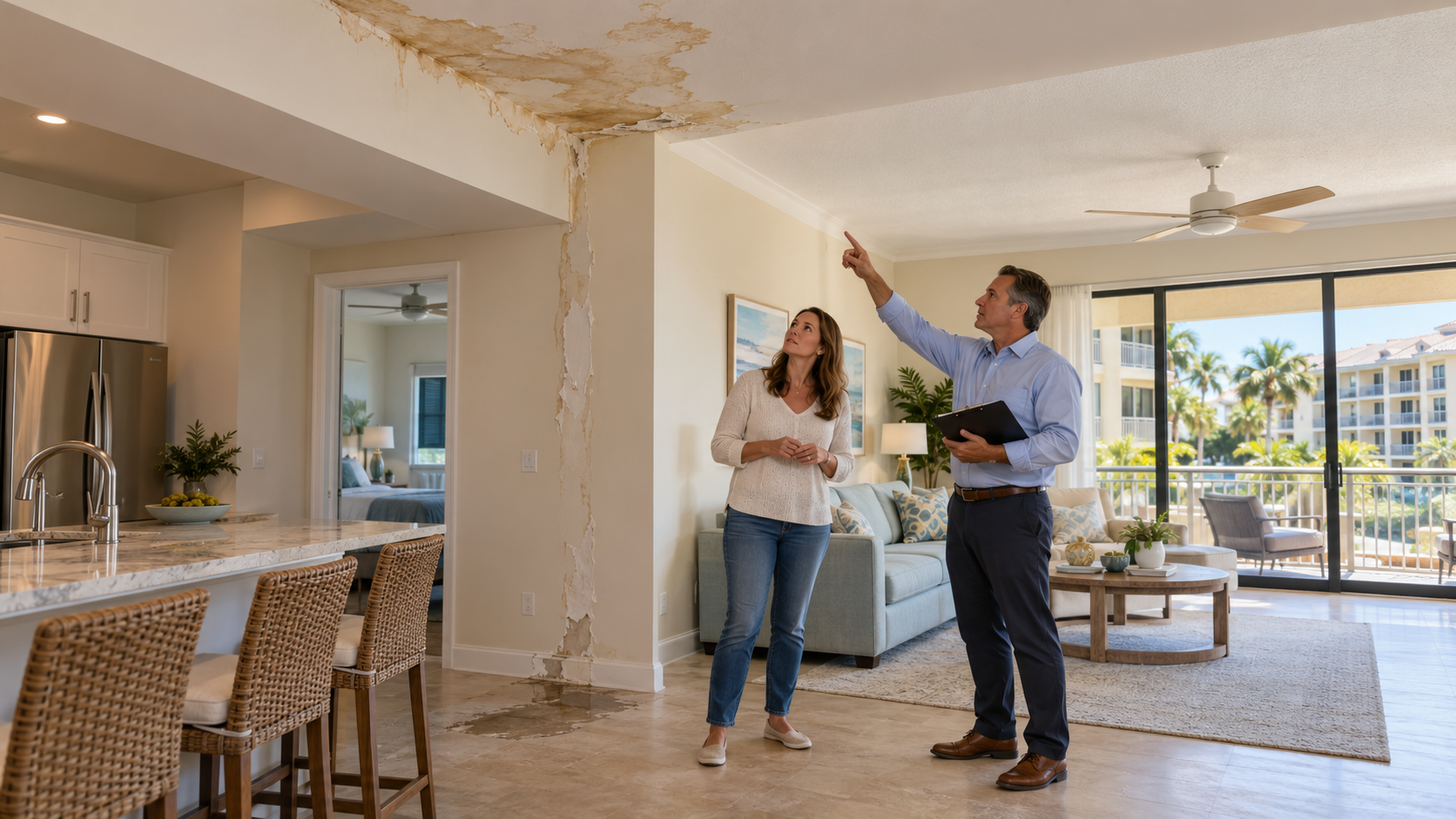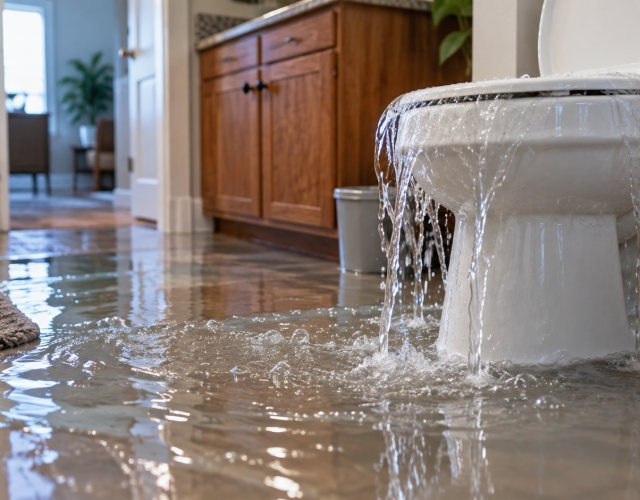
A toilet overflow can turn a normal day into a property damage problem within minutes. Water can spread across bathroom flooring, reach baseboards and drywall, move underneath flooring, and potentially affect nearby rooms. When this happens, one of the first questions we hear is: Does homeowners insurance cover toilet overflow damage?
The answer depends on why the toilet overflowed and what your specific homeowners insurance policy covers.
A sudden and accidental discharge or overflow of water from a plumbing system may fall within homeowners insurance coverage, depending on the policy. However, a toilet that overflows because water or sewage backed up through a sewer or drain can be treated differently and may require water-backup coverage or another endorsement.
At PICC FLA, we help Florida property owners understand, document, prepare, and manage water damage insurance claims. Instead of assuming a toilet overflow is automatically covered or excluded, we look at what caused the water loss, what was damaged, what the policy says, and how the loss has been documented.
When Does Homeowners Insurance Cover Toilet Overflow Damage?
A toilet overflow homeowners insurance claim may be covered when the water damage results from a sudden and accidental plumbing event that falls within the policy’s covered causes of loss.
Florida consumer insurance guidance recognizes accidental discharge or overflow from a pipe, plumbing system, or household appliance as a type of non-weather-related water claim. However, individual policies can contain different deductibles, exclusions, limits, and endorsements.
That means the cause matters.
For example, there is an important difference between water suddenly overflowing from a plumbing fixture and water backing up into the home through a sewer or drain.
When we evaluate a property damage insurance claim, we focus on the facts instead of making assumptions about coverage.
Important questions may include:
- What caused the toilet to overflow?
- Did the water originate from the home’s plumbing system?
- Did sewage or water back up through a drain?
- When was the problem discovered?
- How quickly was the water stopped?
- Which rooms and building materials were affected?
- Is there evidence of previous leakage or deterioration?
- Does the policy contain a water-backup endorsement?
- What deductible, limits, or exclusions apply?
Answering these questions can help establish how a toilet overflow insurance claim should be documented and presented.
When Might a Toilet Overflow Insurance Claim Not Be Covered?
Not every toilet overflow receives the same insurance treatment.
One major issue is sewer and drain backup.
Florida consumer guidance explains that homeowners insurance policies do not typically include water-backup coverage automatically. Coverage may instead be available through a Water Backup and Sump Discharge or Overflow endorsement.
This can apply when water backs up into the home through a sewer, sump, or drain, including certain toilet-overflow situations.
We explain this distinction further in our guide, Does Homeowners Insurance Cover Sewer Backup Damage?.
Coverage can also become more complicated when the insurer believes the damage resulted from an excluded condition, long-term deterioration, repeated leakage, or another cause restricted by the policy.
This is why we never recommend assuming that a sewage overflow insurance claim is covered simply because water entered the bathroom. The actual cause and policy language need to be reviewed.
What Damage Can a Toilet Overflow Cause?
Even a relatively small toilet overflow can affect more than the visible bathroom floor.
Water moves quickly and can reach porous materials, openings around fixtures, flooring seams, wall cavities, and adjacent rooms. Depending on the amount of water and how long it remains, the resulting property damage may include:
- Damaged flooring
- Wet drywall
- Damaged baseboards
- Affected cabinetry
- Wet insulation
- Damage to nearby rooms
- Damaged personal property
- Moisture underneath flooring
- Damage to ceilings below an upstairs bathroom
This is why a bathroom water damage claim should not necessarily be evaluated only by looking at the water visible immediately after the overflow.
Our water damage claim guidance explains how water-related losses can involve more than the immediately visible surface damage.
What Should You Do Immediately After a Toilet Overflows?
Your first priority should be stopping the source and preventing additional property damage when it is safe to do so.
Our property damage claim process emphasizes taking reasonable steps to limit further loss following property damage.
For a toilet overflow, this may include:
- Stop the water source if possible.
- Avoid contact with contaminated water.
- Take photographs and videos of the affected areas.
- Document where the water traveled.
- Photograph damaged flooring, walls, baseboards, cabinets, and belongings.
- Keep invoices and receipts related to emergency work.
- Arrange appropriate water removal or mitigation when necessary.
- Preserve information about the cause of the overflow.
- Review your homeowners insurance policy.
Do not focus only on making the bathroom look dry. Water can move beneath flooring or into other building materials before visible signs become obvious.
Good documentation can become important if questions later arise about the extent or cause of the damage.
How Should You Document a Toilet Overflow Insurance Claim?
Documentation is an important part of nearly every water damage claim we handle.
Start by recording the condition of the property as soon as reasonably possible.
Take wide-angle photographs showing the entire bathroom and surrounding areas. Then take closer photographs of individual damaged materials.
Videos can also help establish how far the water traveled.
Keep records involving:
- Date the overflow occurred or was discovered
- Photographs and videos
- Plumbing evaluations
- Water mitigation records
- Repair estimates
- Invoices and receipts
- Damaged personal property
- Communications concerning the claim
- Temporary repairs or emergency services
If your insurer requests additional claim documentation, read the request carefully.
For example, a proof of loss may be required in some property claims. Our guide, What Is a Proof of Loss and When Is It Due?, explains why requirements and deadlines can depend on the specific policy.
How Do You File a Bathroom Water Damage Claim?
A bathroom water damage claim begins with understanding the loss and preserving evidence.
Our guide on how to file a homeowners insurance claim explains the broader process Florida property owners may encounter.
When reporting the loss, focus on accurate facts.
Identify when you discovered the overflow, what you observed, what steps you took to stop further damage, and which areas appeared affected.
Avoid guessing about the full extent of concealed damage before appropriate inspections have taken place.
Florida law also establishes time limits for property insurance claims. Under Florida Statutes section 627.70132, notice of an initial or reopened property insurance claim generally must be provided within one year after the date of loss, while notice of a supplemental claim generally must be provided within 18 months after the date of loss.
Your policy may contain additional duties and requirements, so timely review is important.
What Happens If the Insurance Company Underpays the Toilet Overflow Claim?
An insurer may acknowledge a water damage claim but disagree about the amount of damage or the necessary repair scope.
For example, the initial estimate might address visible flooring damage but additional affected materials may become apparent during mitigation or repairs.
If you believe important damage was not included, our guide on underpaid property damage insurance claims explains issues that can arise when the amount paid does not reflect the documented extent of the loss.
Additional damage discovered after the initial adjustment may also lead to questions about a supplemental claim.
Our guide to supplemental insurance claims explains how additional damage or repair costs related to the same event may sometimes need to be documented and presented after the original inspection.
The right approach depends on the policy, claim status, damage, and supporting evidence.
What Happens If a Toilet Overflow Homeowners Insurance Claim Is Denied?
A denial does not tell you everything you need to know about the claim.
First, read the denial letter carefully and identify the reason given for the decision. Compare that explanation with your policy and the facts surrounding the overflow.
A toilet overflow claim could involve questions about causation, sewer backup, plumbing failure, policy exclusions, prior conditions, or the timing of the reported loss.
If the claim has already been denied, our guide on what to do when a homeowners insurance claim is denied explains how we approach disputed property damage claims.
We can review the policy, inspect the affected property, evaluate the documented cause and extent of the damage, and determine what options may be available based on the claim.
How Can PICC FLA Help With a Toilet Overflow Insurance Claim?
At PICC FLA, we represent Florida policyholders during the property insurance claim process.
Water damage is one of the property loss categories we handle, including damage associated with plumbing failures and other unexpected water events.
Our work can include reviewing claim and policy information, inspecting affected areas, documenting visible and potentially concealed damage, preparing estimates when appropriate, organizing supporting records, presenting claim information, and communicating during the adjustment process.
We do not assume every toilet overflow is covered.
Instead, we examine what happened and what the policy provides.
That distinction is particularly important when determining whether a loss involves an accidental plumbing overflow, a sewer or drain backup, or another cause.
If your bathroom has suffered water damage, you have already filed a toilet overflow insurance claim, or you believe your claim was denied or underpaid, PICC FLA can review the circumstances and help you understand the next steps.
Which Organizations Support This Information?
Works Cited
Florida Department of Financial Services. “Homeowners Insurance Overview.” Division of Consumer Services, Florida Department of Financial Services. Accessed 23 Sept. 2026.
Florida Department of Financial Services. “Homeowners Insurance Policy Endorsements.” Office of the Insurance Consumer Advocate, Florida Department of Financial Services. Accessed 23 Sept. 2026.
Florida Department of Financial Services. “Tips for Shopping for Homeowners Insurance.” Office of the Insurance Consumer Advocate, Florida Department of Financial Services. Accessed 23 Sept. 2026.
Florida Legislature. “Florida Statutes, Section 627.70132: Notice of Property Insurance Claim.” The Florida Statutes, 2026. Accessed 23 Sept. 2026.