When your condominium suffers property damage, figuring out which insurance policy should cover the repairs can be confusing. Unlike a single-family home, a condominium generally involves two separate insurance policies: the condominium association’s master policy and your individual HO-6 policy.
Understanding condo master policy vs. HO-6 insurance is important because both policies may be relevant after the same property loss. However, they typically cover different parts of the property.
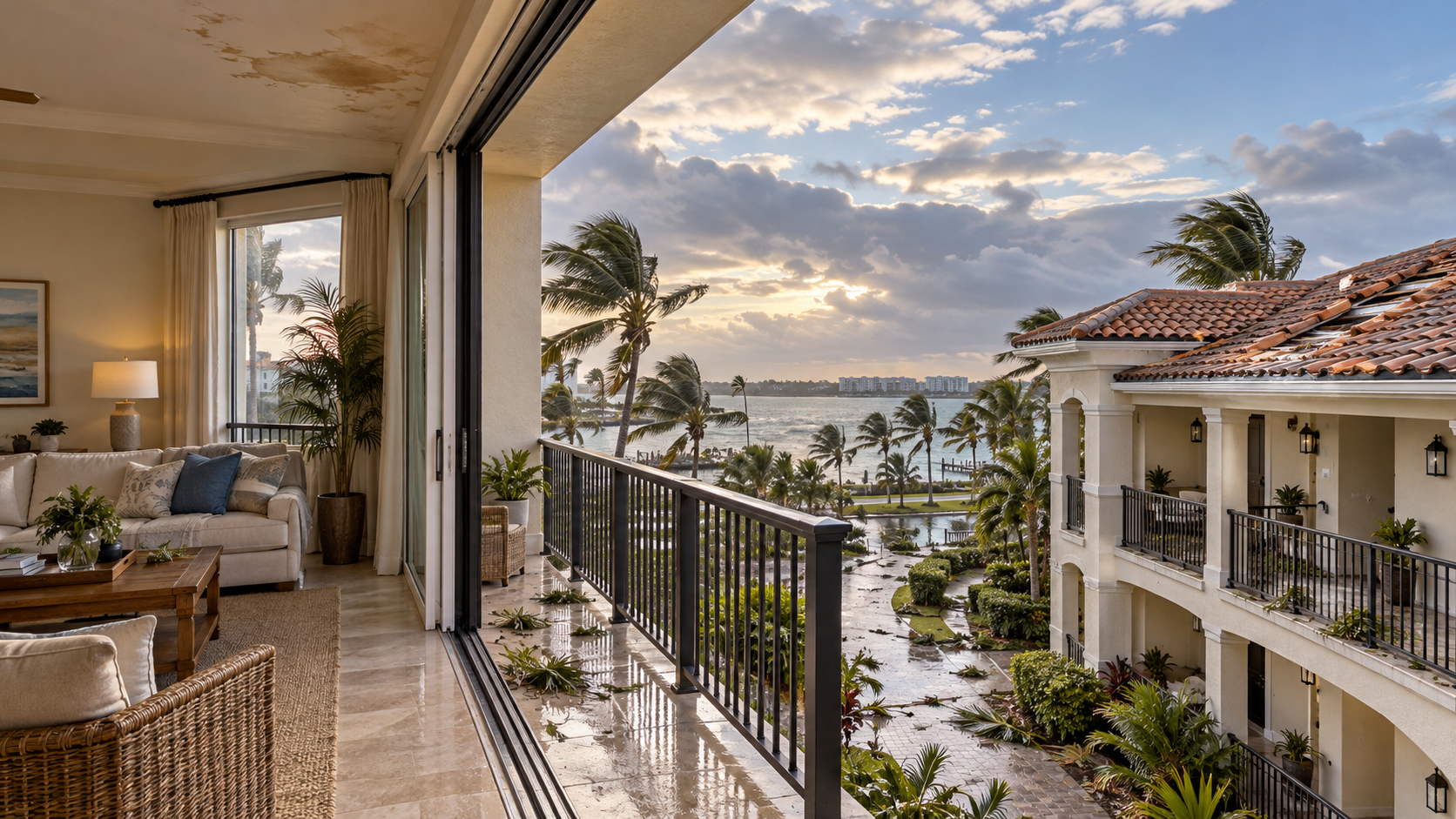
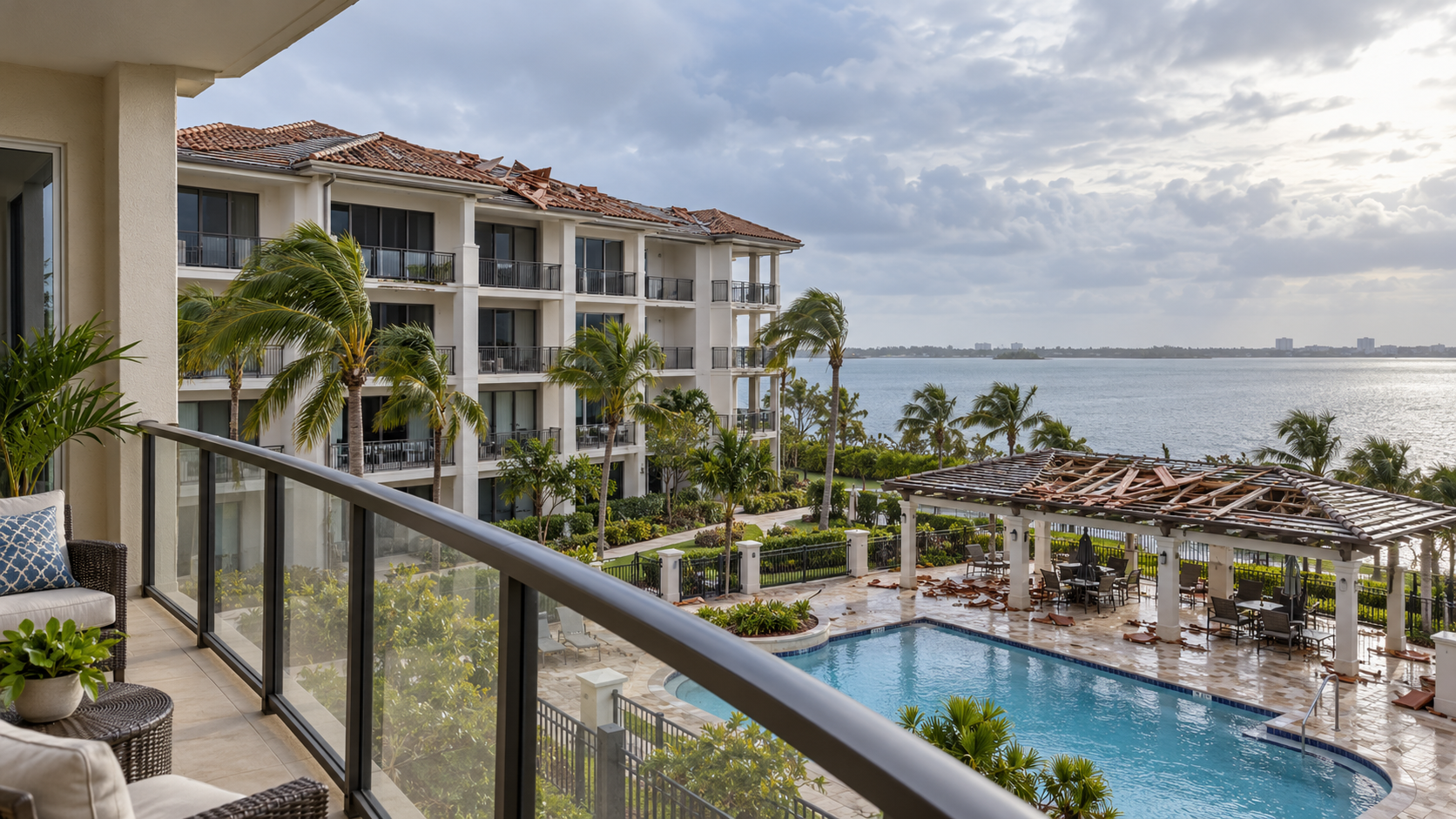
For example, a hurricane may damage the condominium’s roof and allow rainwater to enter your unit. The association’s master policy may cover qualifying roof and building damage, while your HO-6 policy may cover damaged interior finishes, cabinets, and personal belongings.
At PICC FLA, we help Florida condominium owners navigate property insurance claims involving water damage, hurricanes, roof damage, and other property losses. We understand that condo claims become complicated when multiple insurance policies and repair responsibilities are involved.
In this guide, we explain how the two policies work together, which property each policy generally covers, and how to approach an insurance claim involving both.
What Is the Difference Between a Condo Master Policy and HO-6 Insurance?
The main difference is the property each insurance policy protects.
A condominium association’s master policy generally covers designated building components, structural property, and common areas. An individual HO-6 policy generally protects the unit owner’s personal belongings, specified interior building components, and other insured interests.
Florida condominium insurance requirements establish many of these responsibilities.
However, the division is not simply everything outside your unit versus everything inside it.
Certain building components within individual units may remain insured under the association’s policy.
At PICC FLA, we recommend reviewing the association’s governing documents and both insurance policies before assuming which coverage applies.
Our Florida condominium insurance claims services explain how we assist property owners dealing with overlapping condominium insurance responsibilities.
What Does the Condominium Association’s Master Policy Cover?
The association’s master policy generally provides property insurance for the condominium components the association is required to insure.
Under Florida Statutes section 718.111, the association’s required property insurance generally provides primary coverage for designated condominium property as originally installed, subject to specific exclusions.
This may include:
- Structural building components
- Roof systems
- Certain shared plumbing systems
- Common hallways and corridors
- Exterior building components
- Designated common property
- Other building property required to be insured by the association
The association’s obligations depend on Florida law, its governing documents, and the applicable insurance policy.
Does the Condo Master Policy Cover Everything Inside Your Unit?
No. The association’s required property insurance specifically excludes certain items located within the unit boundaries that serve only that unit.
These generally include floor, wall, and ceiling coverings, electrical fixtures, appliances, water heaters, water filters, built-in cabinets, countertops, window treatments, and personal property.
These exclusions are important because a loss may damage association-insured property and individually insured property at the same time.
Our guide on condo insurance vs. association insurance provides more information about these responsibilities.
What Does Your Individual HO-6 Insurance Policy Cover?
An HO-6 policy is designed for condominium unit owners and generally provides coverage for property interests not insured under the association’s master policy.
Depending on the terms and limits, coverage may include:
- Dwelling or building property: Certain interior finishes, cabinets, countertops, fixtures, and improvements.
- Personal property: Furniture, electronics, clothing, and other qualifying belongings.
- Loss of use: Certain additional living expenses when a covered loss makes the unit unfit to live in.
- Personal liability: Qualifying liability claims under the policy.
- Loss assessment: Certain assessments arising from covered losses to collectively owned condominium property.
Every category has separate terms, limits, conditions, and exclusions.
For example, if a covered plumbing incident damages your flooring and furniture, your HO-6 policy may respond to the eligible items.
However, damage to certain structural components may need to be evaluated under the association’s insurance.
How Do Condo Master Policy and HO-6 Claims Work Together?
Both policies may be involved when one event damages property insured under different coverage responsibilities.
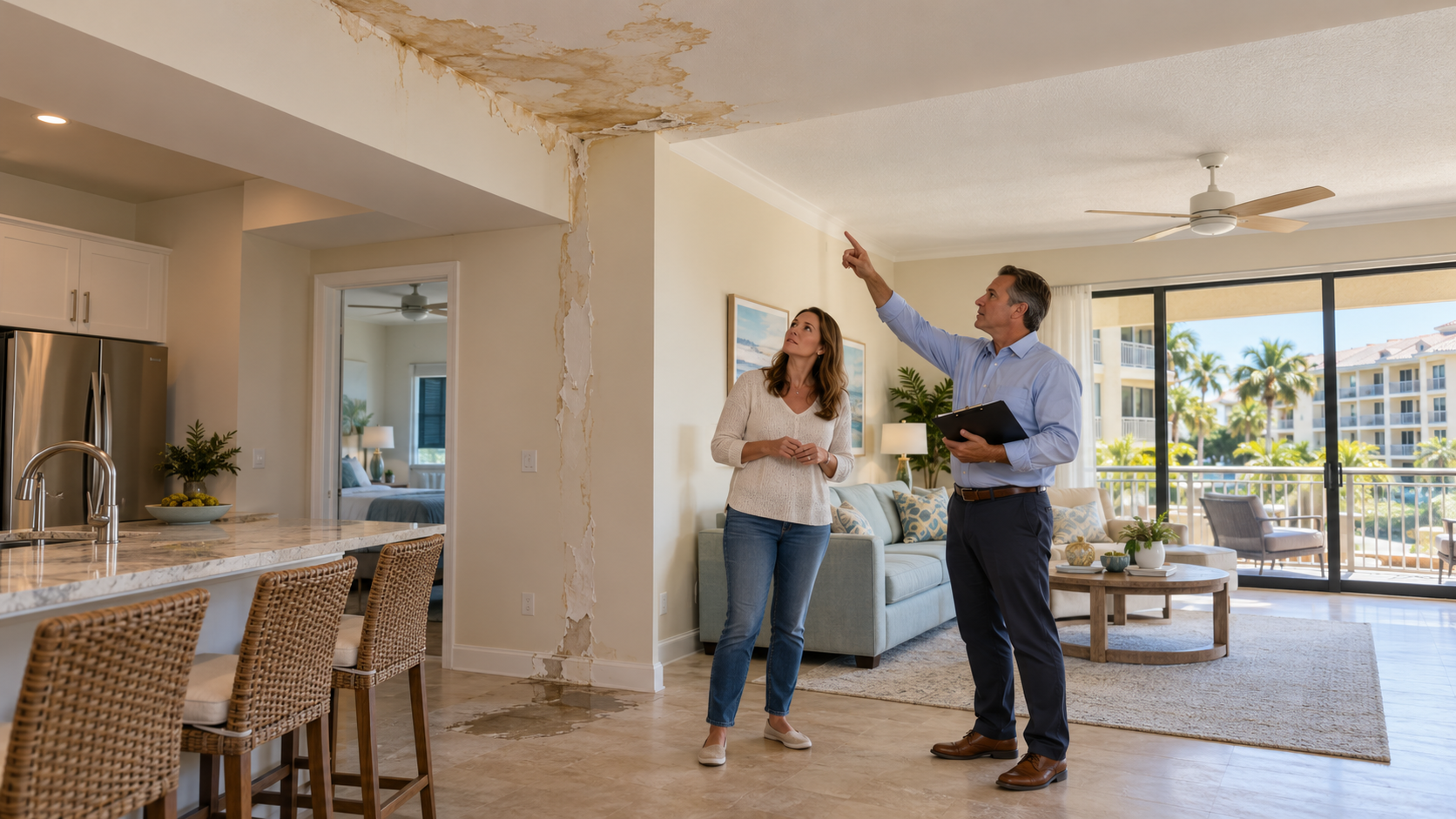
Consider a hurricane that damages the condominium’s roof. Rain enters through the damaged area and affects your ceiling finishes, kitchen cabinets, and furniture.
Depending on the facts and policies:
- The association’s master policy may cover qualifying roof and building damage.
- Your HO-6 policy may cover eligible interior finishes and cabinets.
- Your personal property coverage may apply to qualifying damaged furniture.
- Loss of use coverage may apply if the covered damage makes the unit uninhabitable.
Each insurer evaluates the portion of the loss that may fall under its policy.
Importantly, two policies being involved does not mean both will pay for the same damage.
Florida Statutes section 627.714 also requires individual condominium unit owner policies to include a provision making their coverage excess over amounts recoverable under another policy covering the same property.
This helps establish how overlapping insurance may be coordinated.
What Happens When Water Damage Affects Both Your Unit and Common Property?
Water damage can involve several insurance responsibilities, especially when the source is located outside the affected unit.
A leaking pipe, roof opening, or overflowing fixture may damage multiple units and shared building components.
The important questions are:
- Where did the water originate?
- What caused the water intrusion?
- Which building components were damaged?
- Which property must the association insure?
- Which damaged items belong under the owner’s policy?
- Are any exclusions or limitations applicable?
For example, water from another unit could damage your ceiling finishes, cabinets, flooring, and concealed building materials.
The responsibility for each damaged component may differ.
We explain these distinctions in our guide on who is responsible for water damage in a Florida condo.
Our resource on water damage from the condo above also explains the importance of identifying the water source, documenting the damage, and preserving supporting evidence.
Who Is Responsible for Repairs When Both Policies Are Involved?
Insurance coverage and responsibility for performing repairs are related but separate questions.
Under Florida condominium law, the association generally undertakes reconstruction after an insured property loss unless an applicable exception permits otherwise.
Unit owners may perform certain reconstruction work with the association board’s prior written consent, subject to applicable requirements.
The financial responsibility for repairs also depends on the type of property damaged and the governing insurance provisions.
In some situations, the association may coordinate building repairs while the unit owner remains financially responsible for certain interior components.
This is why we recommend checking with the association before beginning permanent reconstruction.
Emergency steps to prevent additional damage should still be taken when reasonable and safe.
Can a Condo Association Deductible Become Your Responsibility?
Potentially, yes.
Condominium association insurance policies may carry deductibles, including substantial deductibles for certain storm losses.
Under Florida law, property insurance deductibles and certain damages exceeding association insurance coverage are generally common expenses, subject to statutory exceptions and applicable association provisions.
The association may collect qualifying expenses through assessments.
Your individual HO-6 policy may include loss assessment coverage that helps pay certain assessments arising from covered property losses.
Florida Statutes section 627.714 requires qualifying residential condominium unit owner policies to include at least $2,000 in property loss assessment coverage.
However, not every special assessment qualifies. Routine maintenance, general improvements, reserve contributions, and expenses unrelated to a covered property loss generally do not qualify under standard property loss assessment coverage.
Our guide on loss assessment coverage for condo owners explains how these assessments may relate to your individual insurance policy.
How Should You File a Condo Insurance Claim Involving Both Policies?
When damage affects both your unit and association property, proper documentation and communication are important.
At PICC FLA, we recommend approaching the claim systematically.
What Should You Do Immediately After Discovering Damage?
First, make sure the property is safe.
Take reasonable steps to prevent additional damage without exposing yourself to unnecessary danger.
Then:
- Photograph and record all visible damage.
- Identify the apparent cause of the loss.
- Notify the condominium association when building or common property is involved.
- Review your individual insurance policy.
- Report potential claims promptly to the appropriate insurers.
- Keep records of inspections, repairs, and communications.
Our property insurance claim process explains how we approach damage documentation, inspections, estimates, and claim preparation.
What Documents Help Support Both Insurance Claims?
Useful records may include:
- Your HO-6 policy and declarations page
- Available association master insurance information
- Condominium governing documents
- Photographs and videos of affected areas
- Repair estimates and inspection reports
- Emergency repair receipts
- Records identifying the source of damage
- Correspondence with the association
- Insurance claim numbers and written decisions
Organized records can help establish which damaged items belong under each coverage responsibility.
What If the Master Policy and HO-6 Estimates Do Not Match?
Different estimates do not automatically mean an insurer made a mistake.
Each insurer may be evaluating different property interests, repair responsibilities, coverage limits, or policy provisions.
However, differences should be reviewed carefully.
For example, one estimate may address structural drywall while another addresses interior finishes and cabinets.
Problems can arise when damage is omitted, measurements differ, or a repair item is assumed to fall under the other policy.
Our guide on how to read an insurance claim estimate explains why comparing repair quantities, materials, labor, depreciation, and deductibles matters.
At PICC FLA, we focus on documenting the loss and identifying differences between the insurer’s estimate and the affected property.
What If One Insurance Company Denies Part of the Condo Claim?
A condominium claim may be accepted in part and denied in part.
For example, an insurer may accept damage to certain building components while determining that other items belong under a different policy.
Another insurer may disagree with the cause of damage or whether the claimed repairs are covered.
When this happens, review the written explanation and relevant policy provisions.
Our guide on partial denial of an insurance claim explains why identifying exactly what was accepted and excluded is important.
If additional covered damage becomes visible during repairs, our supplemental insurance claim guide explains how further documentation may support additional evaluation.
A denial or incomplete estimate does not automatically establish that more payment is owed. The policies, evidence, and circumstances determine the available options.
How Can PICC FLA Help With Condo Master Policy and HO-6 Claims?
At PICC FLA, we represent policyholders during property insurance claims.
We assist Florida condominium owners with damage involving hurricanes, water intrusion, roof damage, storms, and other property losses within our public adjusting services.
Depending on the claim, our work may include inspecting the property, reviewing available policy and claim information, documenting damage, preparing repair estimates, and communicating and negotiating with insurers.
When multiple policies are involved, we focus on understanding which damaged property is insured under each policy.
Our goal is to present the documented loss accurately and help policyholders navigate the adjustment process.
We cannot guarantee coverage or a particular settlement amount, and our assistance depends on the circumstances and scope of the claim.
What Should Condo Owners Remember About Master Policy and HO-6 Coverage?
The most important point is that the association’s master policy and your individual HO-6 policy serve different purposes, but both may become relevant after one property loss.
The association generally insures designated building components and common property. Your HO-6 policy generally protects specified interior property, belongings, and other individual interests.
When damage affects both, determining which policy applies requires careful review of the cause of loss, Florida condominium requirements, governing documents, and policy provisions.
At PICC FLA, we help condominium owners navigate these situations by documenting property damage, reviewing claim information, preparing supporting documentation, and representing policyholders throughout the adjustment process.
If your condominium has experienced property damage and you need help understanding the claim process, contact us at piccfla.com to discuss your situation.
Which Organizations Support This Condominium Insurance Guidance?
Florida Legislature. “The Association.” The 2026 Florida Statutes, sec. 718.111, Florida Senate, 2026. https://www.flsenate.gov/Laws/Statutes/2026/718.111.
Florida Legislature. “Residential Condominium Unit Owner Coverage; Loss Assessment Coverage Required.” The Florida Statutes, sec. 627.714, Florida Senate, 2025. https://www.flsenate.gov/Laws/Statutes/2025/627.714.
Florida Department of Financial Services. Division of Consumer Services. State of Florida, https://myfloridacfo.com/division/consumers.