Water damage in a Florida condominium can quickly become complicated. A leaking pipe, overflowing appliance, damaged roof, or plumbing failure in another unit can leave you with wet ceilings, damaged flooring, and expensive repairs. When this happens, one of the first questions you may ask is: Who is responsible for water damage in a Florida condo?
The answer depends on what caused the damage, which parts of the property were affected, and how responsibility is divided between the condominium association and individual unit owners.
In Florida, condominium associations generally insure certain building components and common property, while individual owners are responsible for insuring specified interior finishes, improvements, and personal belongings. However, negligence, governing documents, and the circumstances of the loss can affect who ultimately pays.
At PICC FLA, we help Florida condominium owners navigate property insurance claims involving plumbing leaks, water intrusion, roof damage, hurricanes, and other property losses. We understand that dealing with water damage becomes more difficult when multiple units, insurance policies, and property responsibilities are involved.
In this guide, we explain how condo water damage responsibility works, what your insurance may cover, and how to document your loss.
How Is Responsibility for Water Damage Determined in a Florida Condo?
Determining responsibility begins with identifying the source of the water and the property affected.
Florida condominium law establishes different insurance responsibilities for associations and individual unit owners. However, insurance responsibility, maintenance responsibility, and liability for causing damage are not necessarily the same thing.
For example, a plumbing failure could damage a building component insured by the association while also damaging flooring and personal belongings insured by an individual unit owner.
That means more than one insurance policy may become relevant.
When evaluating a condo water damage claim, we recommend considering several questions:
- Where did the water originate?
- What caused the leak or water intrusion?
- Was the damage sudden or gradual?
- Which building components were affected?
- Does the association’s master policy insure those components?
- What property is covered under the individual HO-6 policy?
- Is there evidence of negligence or a failure to comply with condominium rules?
- What do the association’s governing documents require?
A leak originating from another unit does not automatically establish that the other owner must pay for everything.
Our guide on water damage from the condo above explains why identifying the cause of the leak and documenting the resulting damage are important first steps.
When Is the Condo Association Responsible for Water Damage?
A Florida condominium association generally has insurance and maintenance responsibilities for designated building components and common property.
Under Florida Statutes section 718.111, the association’s required property insurance generally covers portions of condominium property identified by law, including certain originally installed building components and qualifying replacements.
Depending on the property and circumstances, association-insured components may include structural elements, roofing systems, and designated shared building systems.
When an insurable event damages property the association is required to insure, Florida law generally requires the association to arrange reconstruction, repair, or replacement as a common expense, subject to statutory exceptions.
However, this does not mean the association must pay for every damaged item inside your unit.
What Happens When a Common Plumbing Line Leaks?
Suppose a shared plumbing line develops a leak and water enters multiple condominium units.
The association may have responsibility for certain shared plumbing components and building repairs, while individual owners may need to address damage to their insured interior property.
Responsibility for the original plumbing repair may also depend on the condominium’s governing documents and maintenance obligations.
A proper evaluation should distinguish between repairing the failed plumbing component and repairing the property damaged by escaping water.
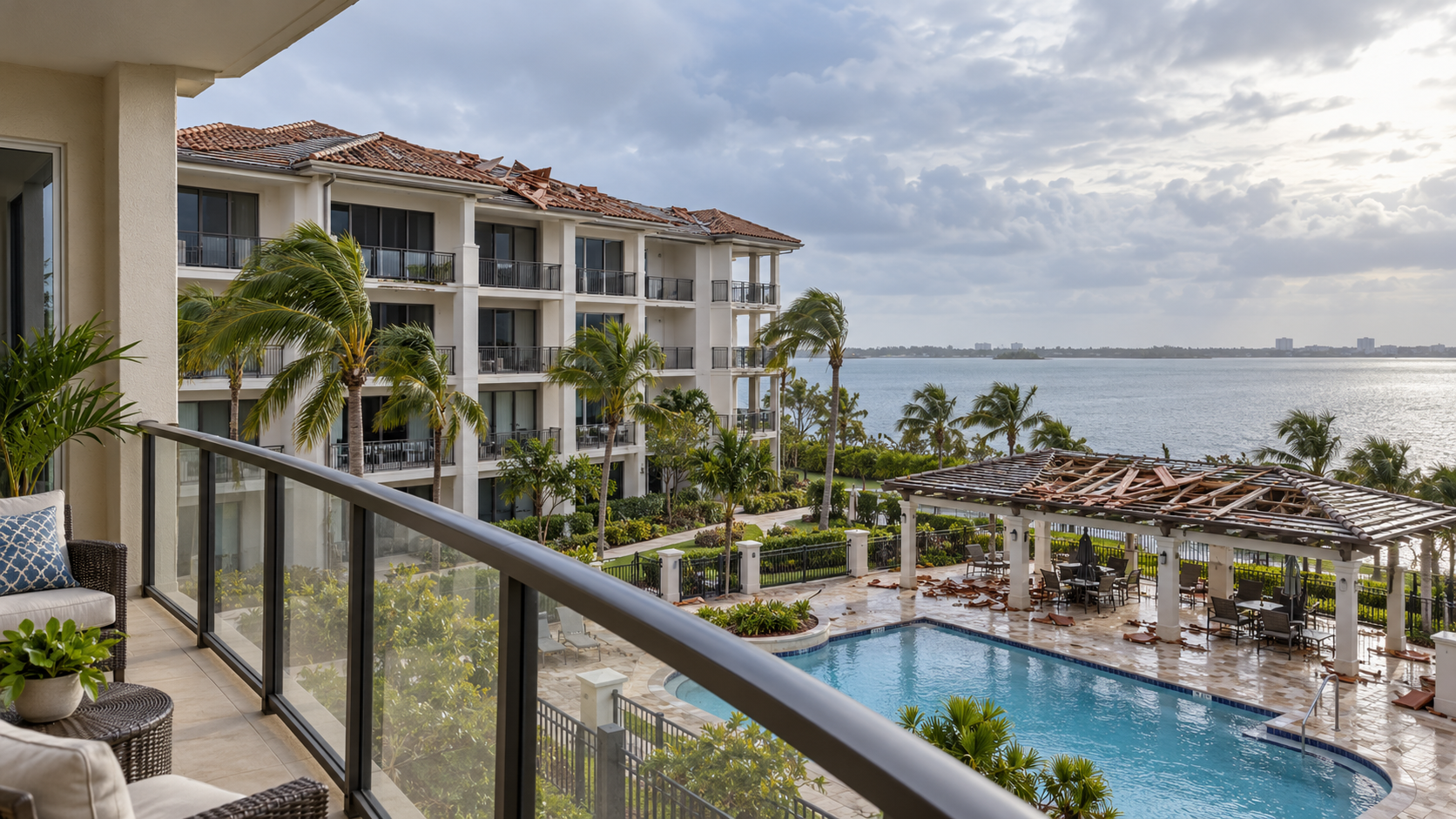
What Happens When a Roof Leak Damages Your Condo?
Roof leaks can create similar questions.
The association generally insures designated roof and structural building components. However, water entering through a damaged roof may also affect flooring, cabinets, belongings, and other property covered under individual policies.
Coverage depends on the cause of the roof leak and the applicable insurance provisions.
At PICC FLA, our condominium insurance claim services address situations involving association coverage, individual unit insurance, and property damage affecting multiple areas.
When Is an Individual Condo Owner Responsible for Water Damage?
Individual condominium owners generally have responsibility for insuring certain property within their units.
Florida law excludes specified unit components from the association’s required property insurance, including certain floor, wall, and ceiling coverings, appliances, water heaters, built-in cabinets, countertops, electrical fixtures, and window treatments that serve only the unit.
These items are generally the individual owner’s insurance responsibility.
For example, a plumbing leak might damage kitchen cabinets, laminate flooring, and furniture. The individual owner’s HO-6 policy may provide coverage for qualifying damage to these items, depending on the policy and cause of loss.
However, being responsible for insuring an item does not automatically mean the owner caused the damage.
Can a Condo Owner Be Responsible for Damage to Another Unit?
Potentially, yes.
Florida law provides circumstances in which an owner may be financially responsible for repair costs not paid by insurance when damage results from intentional conduct, negligence, or failure to comply with condominium governing documents or rules.
These provisions can also extend to qualifying damage involving another owner’s property.
For example, an overflowing fixture caused by negligent conduct may raise different responsibility questions from a sudden, unforeseeable plumbing failure.
The facts must be established before assigning financial responsibility.
We recommend reviewing inspection findings, maintenance records, photographs, communications, and relevant governing documents rather than assuming fault based only on where the water originated.
Who Pays When Water Damage Comes From the Condo Above?
Water damage from an upstairs condominium is a common situation that can involve several parties.
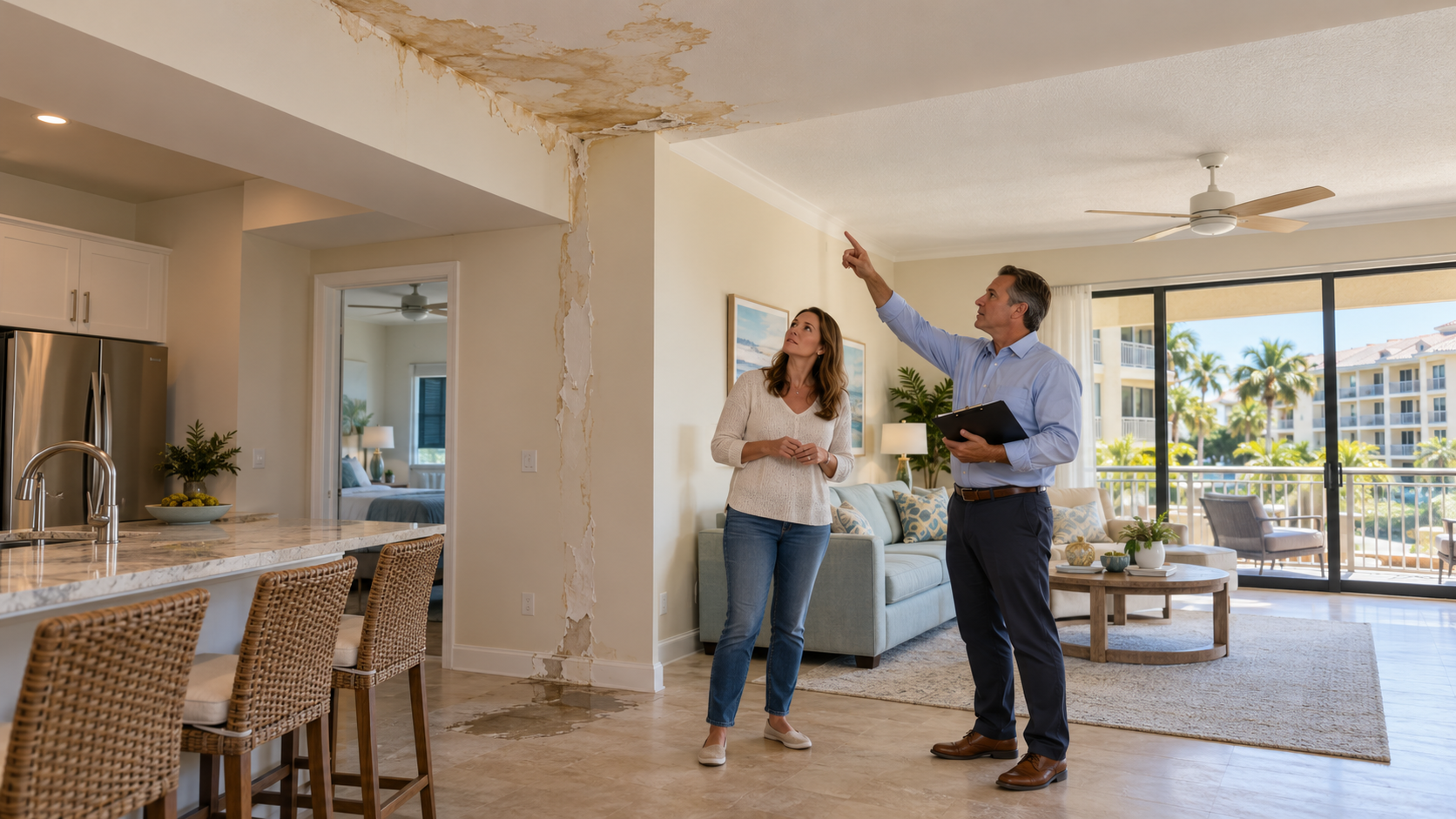
Imagine water begins dripping through your ceiling from the unit above. You discover damaged drywall, wet flooring, and moisture near your cabinets.
Your immediate concern is stopping the leak and protecting your property. However, determining who pays requires further investigation.
Possible sources include:
- A leaking supply pipe
- An overflowing bathtub or sink
- A malfunctioning appliance
- A water heater failure
- A shared plumbing line
- A roof leak affecting multiple units
- Another building system
If the water originated from an upstairs appliance, the upstairs owner is not automatically responsible for every resulting repair. Responsibility may depend on negligence, maintenance obligations, applicable condominium documents, and insurance coverage.
Similarly, if a shared building component caused the damage, the association’s responsibilities may need to be reviewed.
We recommend notifying condominium management promptly, documenting the damage, and obtaining information about the suspected source of the water.
Our water damage insurance claim services address losses involving plumbing failures, leaking roofs, appliance problems, and other water-related property damage.
The important point is to establish what happened before determining which party or policy may be responsible.
Which Insurance Policy Covers Water Damage in a Florida Condo?
Florida condominium water damage may involve the association’s master insurance policy, an individual HO-6 policy, or both.
Each policy generally protects different property interests.
| Association Master Policy | Individual HO-6 Policy |
| Designated structural and building components | Specified unit interior components |
| Certain shared plumbing and building systems | Certain cabinets, countertops, and interior finishes |
| Designated roof and common property | Personal belongings |
| Property required to be insured by the association | Other eligible property and coverages under the individual policy |
These are general distinctions. Actual coverage must be determined from Florida law, the governing documents, and the applicable policies.
A sudden covered plumbing loss may be treated differently from gradual deterioration, an excluded flood event, or a long-standing maintenance problem.
Water can also move beyond the initially visible area. Moisture may reach insulation, wall cavities, flooring systems, and concealed building materials.
Our guide on how to prove hidden water damage in an insurance claim explains how photographs, inspections, repair findings, and supporting documentation can establish the extent of a loss.
At PICC FLA, we focus on identifying the affected property and reviewing relevant coverage information so the claim is supported by the actual damage rather than assumptions.
What Should You Do After Discovering Water Damage in Your Florida Condo?
Taking appropriate steps after discovering water damage can help protect your property and preserve important insurance evidence.
We recommend addressing immediate hazards and documenting the damage as soon as it is safe.
What Steps Should You Take Immediately?
- Identify the possible water source. Determine where the water appears to be coming from without entering unsafe areas.
- Stop additional damage when possible. Arrange appropriate emergency measures to stop an ongoing leak or limit further water intrusion.
- Notify condominium management. Report the issue, especially if shared building components or another unit may be involved.
- Photograph the affected property. Document ceilings, walls, flooring, cabinets, appliances, and personal belongings.
- Preserve relevant records. Keep maintenance information, inspection findings, repair estimates, and written communications.
- Review your insurance policy. Check applicable coverage, exclusions, deductibles, and claim reporting requirements.
- Report the loss promptly. Follow your policy’s requirements and provide accurate information about the damage.
Avoid discarding damaged materials unnecessarily before they can be documented, but do not delay necessary emergency repairs or mitigation simply to preserve evidence.
What If the Insurance Estimate Does Not Include Everything?
An initial insurance inspection may not identify every affected area, especially when water has traveled behind walls or beneath flooring.
If you receive an estimate, compare it with the documented damage and required repairs.
Our guide on how to read an insurance claim estimate explains how repair quantities, depreciation, deductibles, and omitted items can affect the amount paid.
If the insurer accepts some damage but rejects another portion, our guide on partial denial of an insurance claim explains why the written decision and supporting evidence should be reviewed carefully.
If additional damage related to the original loss is discovered later, our supplemental insurance claim guide explains how further documentation may be relevant to the adjustment process.
What Should Florida Condo Owners Remember About Water Damage Responsibility?
The most important point is that responsibility for water damage in a Florida condo depends on more than where the water came from.
Florida law establishes separate insurance responsibilities for condominium associations and individual owners. However, the cause of damage, affected property, governing documents, negligence, and insurance policy provisions may all influence who is financially responsible.
A leak originating in another unit does not automatically mean that owner must pay for every repair. Likewise, damage involving a shared building component does not necessarily mean the association’s policy covers all resulting interior losses.
At PICC FLA, we help Florida condominium owners navigate these situations by reviewing property damage, examining relevant policy information, preparing supporting claim documentation, and representing policyholders throughout the insurance adjustment process.
If your condominium has experienced plumbing leaks, water intrusion, roof damage, or another property loss, contact PICC FLA to discuss your insurance claim and available assistance.
Works Cited
Florida Legislature. “The Association.” The 2026 Florida Statutes, sec. 718.111, particularly subsection (11), concerning condominium property insurance, reconstruction obligations, and allocation of certain property loss expenses. Florida Legislature.
Florida Legislature. “Residential Condominium Unit Owner Coverage; Loss Assessment Coverage Required.” The 2026 Florida Statutes, sec. 627.714. Florida Legislature.