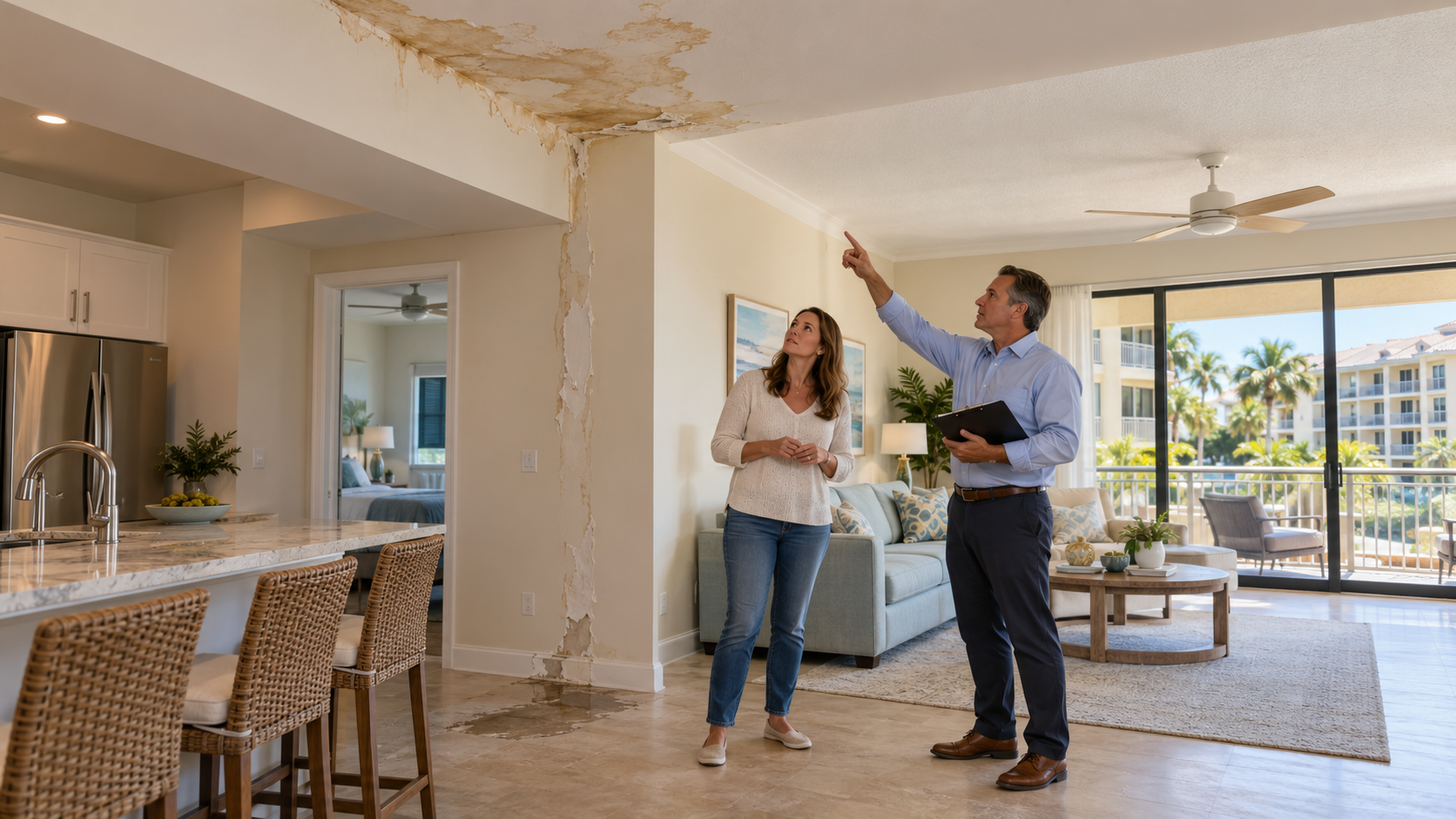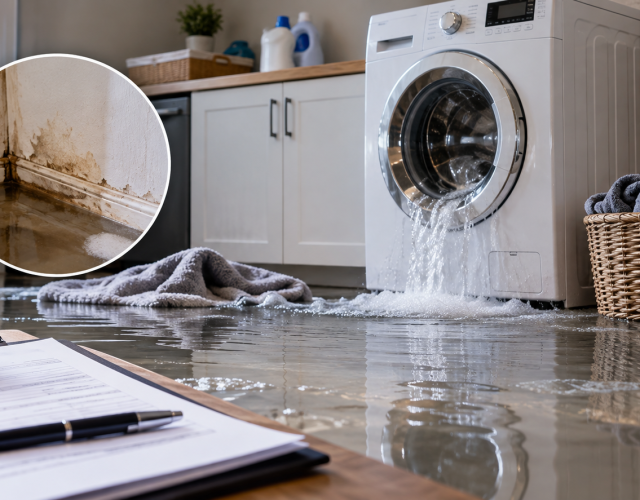
A washing machine can release a surprising amount of water in a short period of time. A hose can suddenly burst, a connection can fail, or the machine can overflow and send water across the laundry room and into nearby flooring, walls, cabinets, or other rooms.
So, does homeowners insurance cover washing machine water damage?
It may, depending on how the damage happened and what your policy covers. At PICC FLA, we help Florida property owners with water damage insurance claims, including losses involving appliance failures. Our website specifically identifies washing machines and other appliance failures as potential causes of residential water damage.
The important distinction is usually between a sudden water-loss event and damage that developed gradually. A washer hose that suddenly bursts is different from a small leak that has been occurring for an extended period.
Coverage is never automatic. Your specific policy, cause of loss, timing, maintenance history, exclusions, deductible, and documentation all matter.
When May Homeowners Insurance Cover Washing Machine Water Damage?
A homeowners policy may provide coverage when the washing machine causes sudden and accidental water damage and the loss falls within the policy’s terms.
For example, imagine that you start a normal load of laundry and leave the room. A short time later, you discover that a supply hose has unexpectedly failed and water is spreading across the laundry room.
The resulting damage might include:
- Wet drywall and baseboards
- Damaged flooring
- Water beneath flooring materials
- Damaged cabinets
- Moisture in adjacent rooms
- Damage to personal property
- Water entering wall cavities or other concealed areas
PICC’s water-damage guidance identifies sudden appliance leaks as a type of water loss that may be covered. However, we never assume that a loss is covered simply because a washing machine was involved. We review the policy and facts surrounding the incident.
This is why a washing machine leak insurance claim should focus on what happened, when it happened, and what property was damaged.
When Might Washing Machine Water Damage Not Be Covered?
Not every leak or overflow results in a covered claim.
One of the biggest issues is whether the water escaped suddenly or whether the condition developed gradually.
Our water-damage guidance explains that gradual damage from smaller leaks that have been left unrepaired may fall outside coverage. This can become important if a hose, valve, fitting, drain connection, or other component has been leaking for an extended period.
For example, there is a major factual difference between discovering a hose that suddenly split this morning and discovering deterioration around a connection that appears to have been leaking slowly for months.
Other policy provisions and exclusions can also affect coverage.
That is why we recommend reviewing the actual policy rather than assuming that every washing machine incident receives the same treatment.
Does Insurance Cover a Washer Hose Burst Claim?
A washer hose burst claim is one of the clearest examples of why the cause and timing of water damage matter.
PICC’s water-damage resources identify burst pipes and sudden appliance leaks as examples of water-related incidents that may be covered, depending on the policy.
Suppose a washing machine supply hose unexpectedly ruptures while the machine is operating. Water quickly spreads across the floor and reaches the walls and nearby rooms. This type of event has very different characteristics from gradual seepage that has been occurring unnoticed over a long period.
If a hose bursts, focus first on preventing additional damage and documenting what occurred.
Photograph or record:
- The washing machine
- The failed hose or connection
- Standing water
- The laundry room
- Damaged flooring
- Wet walls and baseboards
- Adjacent affected rooms
- Damaged personal belongings
Preserve the failed component when reasonably possible. Avoid throwing away potentially important evidence before the cause of the loss has been documented.
Our guide to the property damage claim process explains why controlling additional damage and documenting the property are important parts of handling a claim.
What Should You Do After a Washing Machine Overflows?
If water is actively escaping, your first priority should be stopping additional damage when it is safe to do so.
A washing machine overflow insurance claim can become more complicated if water continues spreading after reasonable steps could have been taken to control it.
After discovering an overflow, consider these immediate steps:
- Stop the washing machine if it is safe.
- Shut off the water supply when possible.
- Avoid electrical hazards around standing water.
- Photograph and video the affected areas.
- Remove standing water when it is safe to do so.
- Move undamaged belongings away from the water.
- Keep receipts and records related to emergency work.
- Preserve evidence showing where the water originated.
Florida consumer guidance advises property owners to take necessary steps to mitigate damage and prevent additional damage, including measures such as removing standing water.
Our guide to temporary repairs before an insurance inspection also explains the difference between reasonable emergency measures and completing major permanent repairs before the loss has been adequately documented.
Why Should You Document Laundry Room Water Damage Carefully?
A laundry room water damage insurance claim is not necessarily limited to what you can see from the doorway.
Water can move beneath flooring, into walls, behind baseboards, and into nearby rooms. PICC’s claim resources explain that water can affect concealed materials and that additional damage may sometimes become apparent after an initial inspection.
This makes documentation especially important.
Take wide photographs showing the entire affected area as well as close photographs showing specific damage. Videos can also help establish how different areas of the property were affected.
Keep records such as:
- Photos and videos
- Repair estimates
- Emergency service invoices
- Plumber or technician documentation
- Receipts
- Damaged-property inventories
- Insurance correspondence
- Claim documents
Do not assume that the first visible puddle represents the entire scope of the loss.
How Do You File a Washing Machine Leak Insurance Claim?
The exact requirements depend on your policy, but the general process begins with documenting the event and reporting the loss.
Our guide on how to file a water insurance claim discusses the basic process, while our more detailed guide explains how to file a successful water damage insurance claim.
When reporting a washing machine loss, be accurate about what you actually know.
Record when you discovered the water, where you first saw it, what the washing machine was doing, and what immediate steps you took.
Avoid guessing about the technical cause if you do not know it.
For Florida property claims, current law generally requires notice of an initial or reopened property insurance claim within one year after the date of loss. Notice of a supplemental claim generally must be provided within 18 months after the date of loss.
Those legal deadlines should not be treated as a reason to wait. Prompt reporting and documentation can make it easier to preserve evidence and establish what happened.
What Happens After You File the Water Damage Claim?
After the claim is reported, the damage may be inspected and documentation reviewed.
An inspection is important, but it may not reveal every affected material immediately.
Our explanation of what happens after an insurance adjuster inspects your home notes that water can migrate into walls, flooring, cabinets, insulation, and other concealed areas.
If additional damage becomes visible during mitigation or repairs, document it.
Do not assume the initial inspection automatically captured the full extent of the washing machine water loss.
What If Your Washing Machine Water Damage Claim Is Denied?
A denial does not tell you everything about why the claim was rejected.
Start by reading the written explanation carefully and identifying the specific policy language or factual issue being relied upon.
Disputes involving water damage may involve questions about:
- Whether the event was sudden or gradual
- The source of the water
- Maintenance issues
- The extent of damage
- Policy exclusions
- Missing documentation
- Timing of the reported loss
Our guide explaining what to do when a water damage insurance claim is denied discusses reviewing the denial and gathering documentation that supports the loss.
PICC FLA also assists Florida property owners with denied and underpaid property claims.
What If the Insurance Payment Seems Too Low?
Receiving a payment does not necessarily mean every part of the claim has been fully evaluated.
Compare the insurance estimate against the actual documented damage.
Look at whether the estimate includes:
- Every affected room
- Damaged flooring
- Baseboards
- Drywall
- Cabinets
- Personal property when applicable
- Appropriate material quantities
- Necessary repair operations
- Later-discovered damage
Our guide to underpaid property damage insurance claims explains that disagreements may involve the extent of damage, documentation, or the cost and scope of repairs.
A difference between an estimate and expected repair costs does not automatically establish that additional money is owed. The policy, evidence, covered damage, and facts of the loss still determine what may be payable.
How Can We Help With a Washing Machine Water Damage Claim?
At PICC FLA, we represent Florida policyholders during the property insurance claim process.
Washing machine leaks fall within the type of appliance-related water damage described in our water-damage services.
Depending on the circumstances of the claim, our work can include:
- Inspecting the affected property
- Reviewing policy and claim information
- Documenting visible and potentially overlooked damage
- Organizing supporting records
- Reviewing insurance estimates
- Preparing estimates when appropriate
- Communicating during the adjustment process
- Negotiating from the policyholder’s side
You do not necessarily need to wait until your washing machine leak insurance claim is denied before asking us to review the situation.
If your washing machine has leaked, overflowed, or suffered a sudden hose failure, you can contact us through PICC FLA for a claim review.
What Should You Remember About Washing Machine Water Damage Insurance?
So, does homeowners insurance cover washing machine water damage?
It can, particularly when the resulting water damage comes from a sudden and accidental event that falls within the policy’s coverage. A sudden washer hose failure or unexpected appliance leak may be treated differently from long-term leakage, deterioration, or an excluded cause.
The specific insurance policy always controls.
If you experience a washing machine overflow, hose rupture, or other appliance-related water loss, focus on preventing additional damage, preserving evidence, documenting affected areas, and reporting the loss according to your policy.
At PICC FLA, we can review the circumstances of the loss and help Florida property owners understand and manage the property insurance claim process.
Which Organizations Support This Information?
Works Cited
Florida Department of Financial Services. “Homeowners Insurance Overview.” Division of Consumer Services, Florida Department of Financial Services. Accessed 23 Sept. 2026. The department provides consumer guidance concerning homeowners insurance and water-damage claims.
Florida Department of Financial Services. “Assignment of Benefits.” Division of Consumer Services, Florida Department of Financial Services. Accessed 23 Sept. 2026. The department advises insured property owners to mitigate damage, prevent additional loss, remove standing water when appropriate, and promptly report property damage.
Florida Legislature. “Florida Statutes, Section 627.70132: Notice of Property Insurance Claim.” The Florida Statutes, 2025. Accessed 23 Sept. 2026. Section 627.70132 establishes the notice periods applicable to initial, reopened, and supplemental Florida property insurance claims.