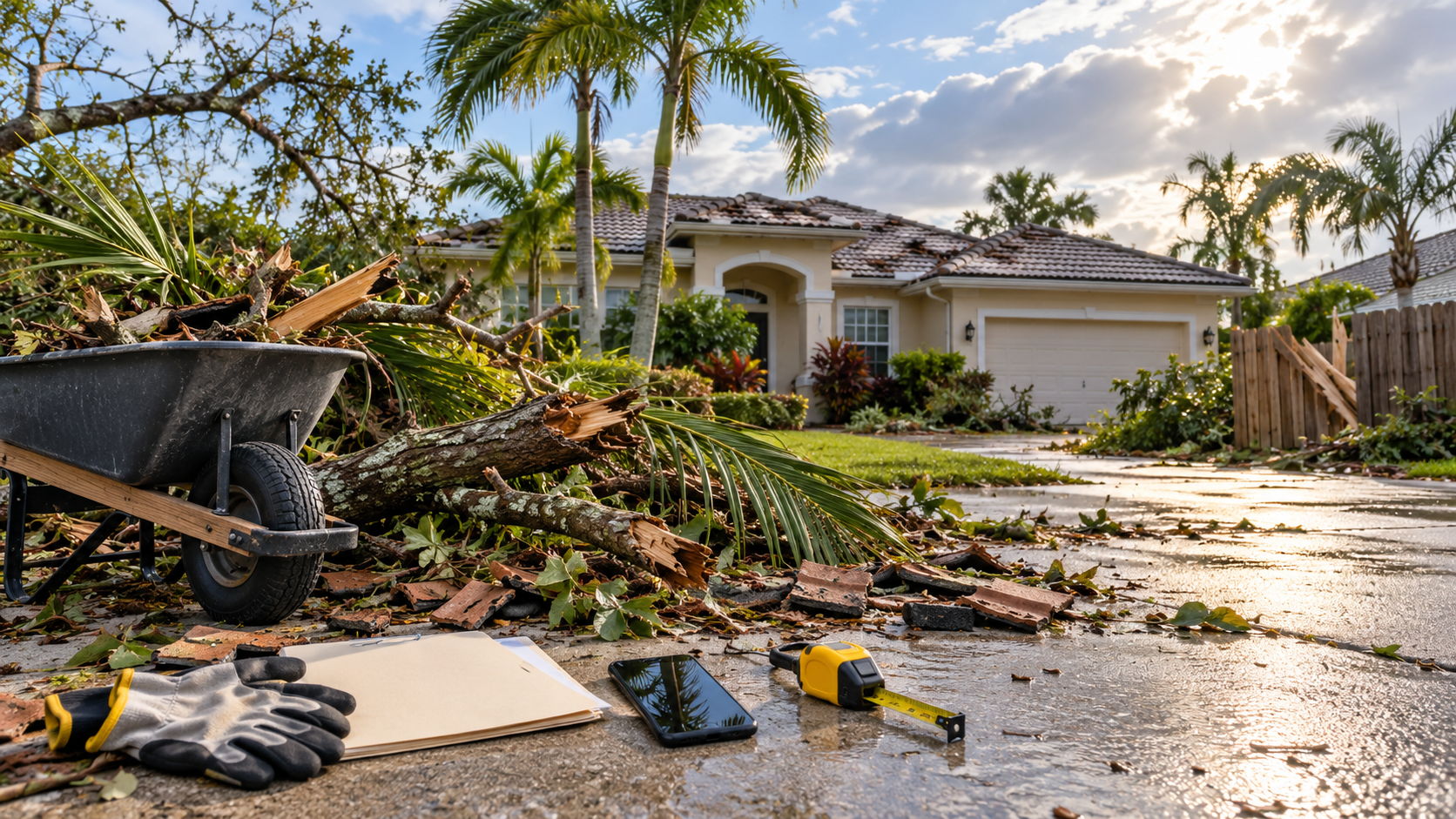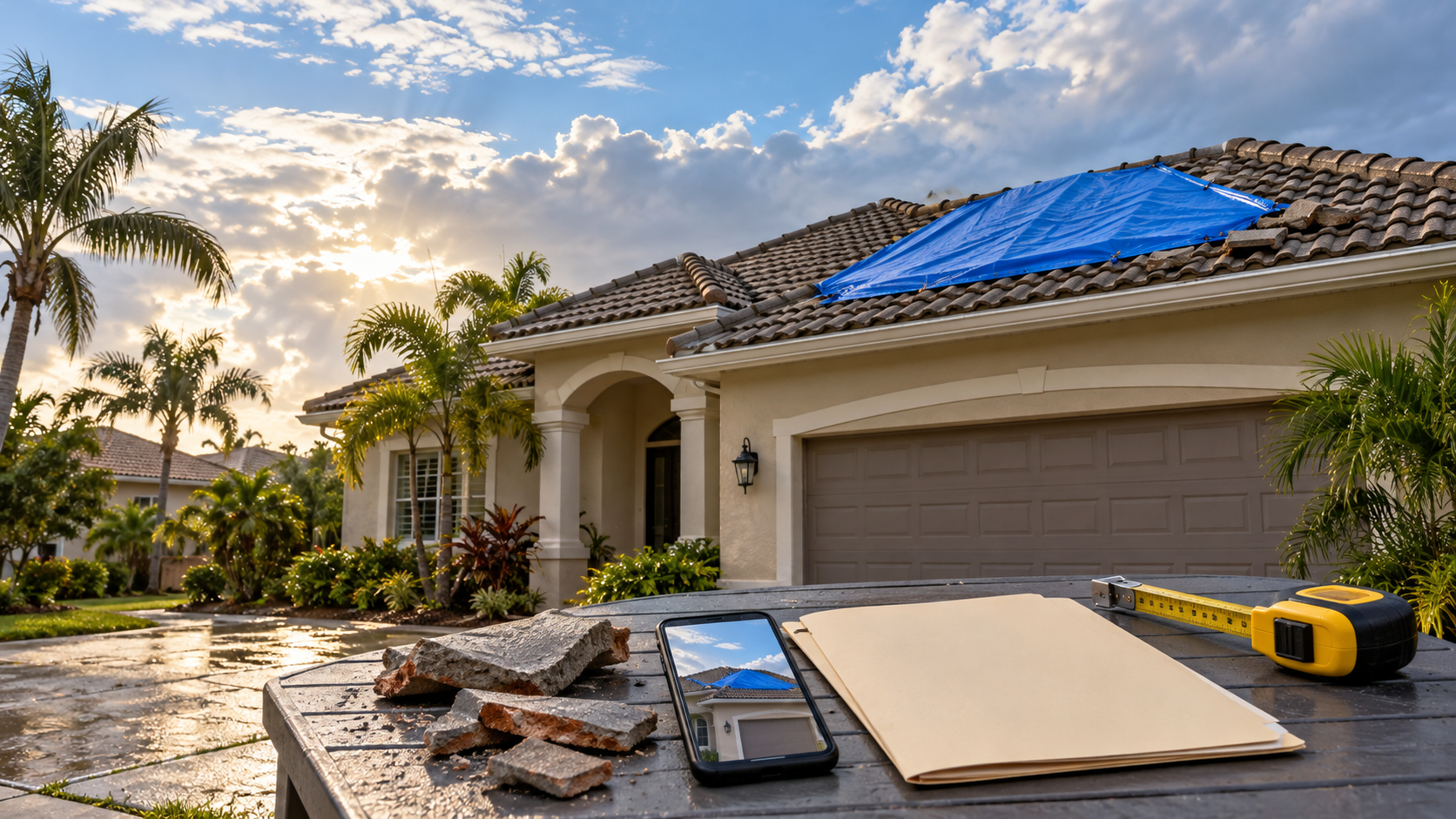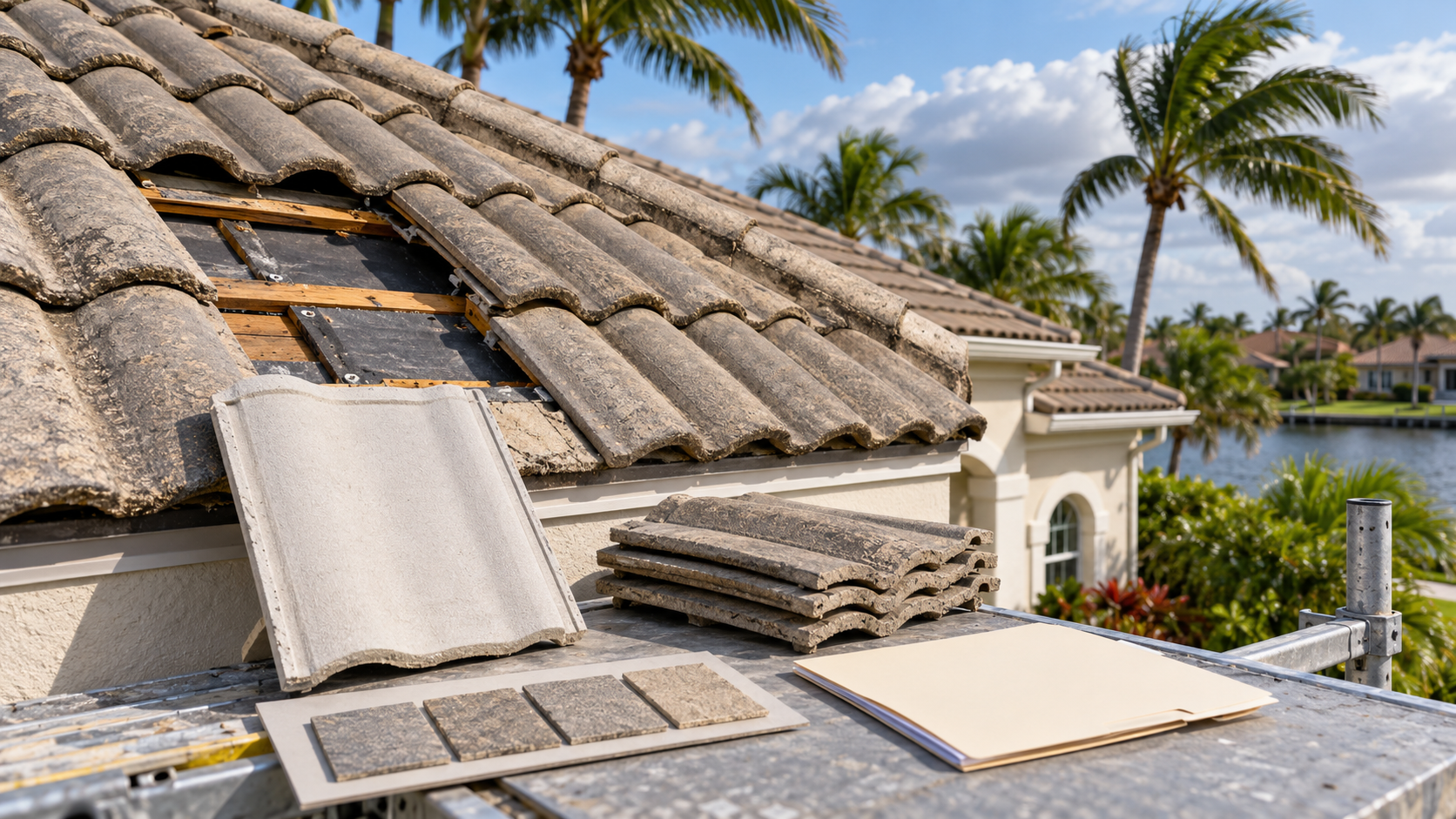
When your home has been damaged, waiting for an insurance decision can become almost as stressful as dealing with the damage itself. You may have reported the loss, met with an adjuster, provided photographs, and answered questions, yet weeks later you may still be wondering why nothing seems to be happening.
If your insurance claim is taking too long, the delay does not always mean that your claim has been forgotten or denied. Property insurance claims can involve inspections, documentation, policy review, damage estimates, requests for additional information, and disagreements about the cause or value of a loss.
At PICC FLA, we help Florida property owners understand and manage the property insurance claim process. Our role is to represent the policyholder by documenting the loss, reviewing available claim information, preparing estimates and supporting documentation, communicating with the insurance company, and helping move the claim through the adjustment process.
Understanding what may be slowing your claim down is the first step toward determining what you should do next.
How Long Should a Home Insurance Claim Take in Florida?
There is no single completion time that applies to every property insurance claim. A relatively straightforward loss may move more quickly than a claim involving concealed damage, multiple affected areas, disputed repair costs, or additional documentation.
Florida law does, however, establish important timing requirements for qualifying property insurance claims.
Under the current Florida statute, an insurer generally must acknowledge a claim-related communication within seven calendar days. If the insurer receives proof-of-loss statements, it generally must begin the reasonably necessary investigation within seven days. When a physical inspection is required, the inspection generally must occur within 30 days after receipt of the proof-of-loss statements.
Most importantly, for qualifying initial, reopened, or supplemental property insurance claims, the insurer generally must pay or deny the claim, or a portion of it, within 60 days after receiving notice of the claim. Exceptions and statutory tolling provisions can apply.
Our guide explaining how long a home insurance claim takes in Florida provides a closer look at these timelines.
The 60-day benchmark does not necessarily mean every issue connected with your claim will be completely resolved within 60 days. Additional damage, supplemental payments, appraisal, mediation, or disputes about the amount of loss can extend the overall process.
Why Can an Insurance Claim Delay Happen?
An insurance claim delay can occur for several reasons. Some involve the investigation itself, while others involve missing information or disagreements about what should be included in the claim.
Understanding where your claim currently stands can help you identify whether the process is progressing normally or whether additional action may be appropriate.
Can Missing Documentation Slow Down Your Claim?
Yes. Documentation plays an important role in a property insurance investigation.
Depending on the loss and policy requirements, relevant documentation may include:
- Photographs and videos of the damage
- Repair estimates
- Receipts and invoices
- Damaged personal property inventories
- Proof of ownership
- Temporary repair records
- Communications concerning the loss
- Reports or other supporting documentation
- A proof of loss when required
A claim can become more difficult to evaluate when the available documentation does not clearly establish what happened, which areas were affected, or what repairs may be necessary.
Florida law also contains provisions under which certain failures to provide requested material claim information can affect the statutory claim timeline.
If you have been asked to submit formal loss documentation, our guide explaining what a proof of loss is and when it may be due can help you understand why this document deserves careful attention.
Can the Inspection Process Take Additional Time?
An insurer may need to inspect your property before making its claim determination.
During an inspection, the adjuster may photograph affected areas, take measurements, document visible damage, examine the suspected source of the loss, and gather information that will later be reviewed with the terms of your policy.
The inspection itself does not necessarily complete the claim.
Afterward, the insurance company may still need to evaluate coverage, review the damage, prepare or review an estimate, apply the deductible and other policy provisions, and determine what it believes should be paid.
If your inspection has already happened, read our guide explaining what happens after the insurance adjuster inspects your home.
Can Hidden Damage Make a Claim Take Longer?
Yes. Not every type of property damage is immediately visible.
Water can move behind walls, beneath flooring, into cabinetry, or through insulation. Roof damage may contribute to interior moisture that becomes more apparent later. Fire and smoke losses may also affect areas beyond those that initially appear damaged.
When additional damage is discovered, the scope of the claim may need further evaluation.
This does not automatically mean the additional damage will be covered. Coverage depends on the policy and facts surrounding the loss. However, newly discovered damage should generally be documented promptly rather than ignored.
Why Does My Homeowners Insurance Claim Feel Like It Is Taking Forever?
A homeowners insurance claim taking forever often feels especially frustrating when you have already completed an inspection and believe the insurer has everything it needs.
One possible reason is that the parties may disagree about the scope or value of the loss.
For example, an insurance company may recognize that covered damage occurred but calculate a repair scope that differs from what you observe at the property. Differences may involve affected rooms, quantities of damaged materials, repair methods, labor costs, replacement requirements, or damage discovered after the initial inspection.
When you receive an insurance estimate, do not review only the final dollar amount.
Compare the estimate with:
- The actual areas damaged
- Photographs and videos
- Repair requirements
- Material quantities
- Labor and material pricing
- Items excluded from the estimate
- Your deductible
- Depreciation shown on the estimate
- Newly discovered damage
Our guide on how to read an insurance claim estimate explains what homeowners should examine when reviewing the insurer’s calculation.
Can Additional Information Requests Affect a Delayed Property Insurance Claim?
Yes. An insurer may request additional information while investigating a claim.
A request does not automatically indicate that something is wrong. Property losses can require additional documentation to establish the cause, extent, or value of damage.
However, unanswered requests can create complications.
If you receive a request, review exactly what is being requested and keep a copy of your response. Maintain records showing when documents were sent and what information was included.
Creating a simple claim file can help. Keep insurance correspondence, photographs, estimates, receipts, inspection records, and notes about telephone conversations together.
If you are beginning the process and want to understand the documentation involved from the start, our guide on how to file a home insurance claim in Florida explains the basic steps.
Can Newly Discovered Damage Create a Supplemental Claim?
Sometimes.
Receiving an initial payment does not necessarily mean that every part of a property loss has been identified or valued.
During repairs, additional damage may become visible. Repair requirements may also differ from the original estimate once damaged materials are removed.
Depending on the policy and circumstances, this may lead to a supplemental insurance claim connected with the original loss.
A supplemental claim should be supported by appropriate documentation. It is not automatically an opportunity to increase a claim simply because the first payment was lower than expected.
At PICC FLA, we can review an existing claim and compare the documented property conditions with what was included in the original adjustment.
Read more about when a supplemental insurance claim may be appropriate.
What Should I Do If My Property Insurance Claim Is Taking Too Long?
If you believe you have a delayed property insurance claim, staying organised and proactive is important.
Consider taking these steps:
- Review your claim correspondence.
- Confirm the date the claim was reported.
- Ask for a written status update.
- Determine whether additional documentation has been requested.
- Keep copies of everything you submit.
- Review the insurer’s estimate when one is provided.
- Continue photographing newly discovered damage.
- Save receipts connected with temporary repairs and the loss.
- Review the duties and conditions contained in your policy.
- Keep a written timeline of important claim events.
You should also continue taking reasonable steps to protect your property from additional damage when it is safe to do so.
Do not assume silence means your claim has been denied. At the same time, do not ignore long periods without clear communication.
Knowing exactly what stage your claim has reached is much more useful than repeatedly waiting without understanding what remains unresolved.
When Should I Have a Delayed Claim Professionally Reviewed?
You do not necessarily need to wait for a final denial before having your property claim reviewed.
Consider seeking assistance when:
- Important damage appears to have been missed.
- You do not understand the insurance estimate.
- You have repeatedly provided information without understanding the claim status.
- Newly discovered damage needs to be documented.
- You disagree with the repair scope.
- Your payment appears to be lower than the documented loss.
- Your claim has been denied.
- You are unsure how to respond to documentation requests.
- Managing the claim has become difficult on your own.
A public adjuster represents the policyholder rather than the insurance company. Florida’s consumer guidance confirms that public adjusters may assist with claim documentation, filing requirements, adjusting the claim, and presenting it to the insurance company.
At PICC FLA, our residential property insurance claim services focus on helping homeowners document, assess, present, and negotiate their property claims.
What Happens If the Claim Is Eventually Denied?
A delay and a denial are different situations.
If an insurer denies or partially denies a qualifying claim, Florida law generally requires a reasonable written explanation identifying the basis for that decision in relation to the policy, facts, or applicable law.
Read the denial carefully instead of assuming that it automatically ends every possible claim option.
Look at:
- The stated reason for denial
- Policy provisions referenced
- The stated cause of damage
- Documentation considered
- Areas included or excluded
- Whether relevant damage was overlooked
We regularly help property owners evaluate situations involving unfavorable claim decisions. Our guide explaining what to do after a homeowners insurance claim is denied discusses the next steps in greater detail.
Can Appraisal Help When the Delay Involves the Amount of the Claim?
In some cases, the unresolved issue is not whether damage occurred but how much the covered loss is worth.
Depending on the insurance policy and nature of the disagreement, an appraisal process may be available to address disputes concerning the amount of loss.
Appraisal generally focuses on valuation issues rather than deciding whether coverage exists in the first place.
Because appraisal rights and procedures depend on the insurance policy and circumstances, homeowners should review the applicable policy provisions before deciding whether the process is appropriate.
Our guide to the home insurance appraisal process explains how appraisal can fit into a disputed property insurance claim.
How Can PICC FLA Help When an Insurance Claim Is Taking Too Long?
When a property claim becomes difficult to manage, our role is to help organise and present the claim from the policyholder’s perspective.
Depending on the circumstances, we can help:
- Inspect and document property damage
- Review existing claim information
- Examine relevant policy information
- Prepare damage estimates and supporting documentation
- Identify damage that may require further evaluation
- Communicate with the insurance company
- Present the documented claim
- Negotiate regarding the property loss
- Review underpaid or denied claims
- Assist with supplemental claim documentation when appropriate
Our goal is not to promise a particular outcome or claim completion date. Every claim depends on its policy, facts, documentation, damage, and applicable requirements.
What we can do is help make sure your claim is properly documented, organised, and presented while keeping the process moving as effectively as the circumstances allow.
What Should Florida Homeowners Remember About Claim Delays?
If your insurance claim is taking too long, start by determining exactly where the process has stalled.
Has the property been inspected? Is the insurer waiting for documentation? Has an estimate been issued? Is additional damage being evaluated? Is there a disagreement over repair costs? Has the insurer communicated a coverage position?
Those answers help distinguish an ordinary investigation from a claim that may need additional attention.
Florida law provides important claim-handling deadlines, but the complete resolution of a property loss can involve several stages. Staying organised, documenting your damage, responding to legitimate information requests, preserving claim records, and reviewing estimates carefully can help protect your position.
If you are unsure why your claim has stalled, PICC FLA can review the circumstances and help you understand what may need to happen next.
What Sources Support This Guidance?
Florida Department of Financial Services. “Public Adjusters.” Division of Consumer Services, State of Florida. Accessed 3 Sept. 2026.
Florida Department of Financial Services. “Working With a Public Adjuster: Your Consumer Rights.” Office of the Insurance Consumer Advocate, State of Florida. Accessed 3 Sept. 2026.
Florida Legislature. “Florida Statutes, Section 627.70131: Insurer’s Duty to Acknowledge Communications Regarding Claims; Investigation.” The 2026 Florida Statutes, State of Florida. Accessed 3 Sept. 2026.