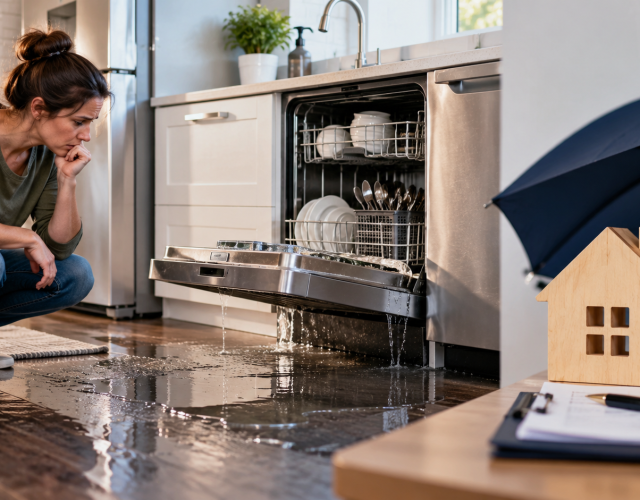
A dishwasher leak can turn an ordinary day into a stressful property damage situation. Water may spread beneath cabinets, soak flooring, reach drywall, or move into areas you cannot immediately see. One of the first questions we hear from homeowners is, “Does homeowners insurance cover dishwasher leaks?”
In many situations, homeowners insurance may cover the resulting water damage from a dishwasher leak when the water is released suddenly and accidentally. However, coverage is never automatic. Your individual policy, the cause of the leak, how long the problem existed, exclusions, coverage limits, and deductibles can all affect a claim.
At PICC, we help Florida property owners understand their policies, document property damage, prepare claims, and address claims that may have been denied or underpaid.
If your dishwasher suddenly leaked and damaged your kitchen, the key is to determine what happened, document the loss, prevent further damage, and review the policy before making assumptions about coverage.
When Does Homeowners Insurance Cover Dishwasher Leaks?
A dishwasher leak may be covered when the incident is sudden and accidental and the resulting damage falls within the terms of your homeowners policy.
For example, imagine that a dishwasher hose, connection, seal, or another component unexpectedly fails while the appliance is operating. Water escapes onto the kitchen floor and damages flooring, cabinets, drywall, or other parts of the property.
The resulting property damage may qualify for coverage, depending on your policy.
This is consistent with how we explain water damage insurance claims. Household appliances are among the potential sources of residential water damage, and every claim should be reviewed according to the specific policy.
A dishwasher leak insurance claim may involve damage to:
- Kitchen flooring
- Baseboards
- Drywall
- Cabinetry
- Areas beneath cabinets
- Nearby rooms
- Personal property
- Other building materials affected by escaping water
The important distinction is between the cause of the water damage and the resulting damage itself.
What Is the Difference Between Sudden Water Damage and a Long-Term Leak?
Timing can make a major difference when dealing with dishwasher water damage insurance.
A sudden discharge of water is different from moisture that has been leaking slowly for weeks or months.
If a dishwasher connection suddenly breaks and water spreads across the kitchen, the circumstances may support an accidental water damage claim. PICC’s existing guidance regarding water damage from household appliances explains that sudden dishwasher leaks are generally handled similarly to sudden leaks involving other water-using appliances.
Gradual leaks can be more difficult.
A small leak may remain hidden beneath the dishwasher or cabinets. Over time, it can cause staining, deterioration, damaged flooring, or other problems. An insurer may examine whether the damage developed gradually, whether it resulted from maintenance issues, and whether the homeowner reasonably knew about the problem.
This is why we do not recommend assuming that every instance of appliance leak homeowners insurance works the same way.
Coverage depends on the language of your policy and the facts surrounding the loss.
Does Homeowners Insurance Pay to Replace the Dishwasher?
Not necessarily.
There is an important difference between paying for the appliance that failed and paying for covered property damage caused by water escaping from the appliance.
For example, if an aging or defective dishwasher component fails and water damages your kitchen floor, the policy may address covered resulting water damage without necessarily paying to replace the failed dishwasher itself.
The exact outcome depends on your policy.
This distinction matters because homeowners sometimes calculate their kitchen water damage claim based only on the appliance. In reality, the more significant loss may be the damage surrounding it.
Water can move underneath materials and into locations that are difficult to inspect without carefully evaluating the affected area.
What Types of Kitchen Damage Should Be Documented?
When we evaluate a water damage claim, we look beyond the first visible puddle.
Dishwasher water can potentially reach several components of a kitchen. Depending on the amount of water and where it traveled, affected areas may include:
- Flooring near and underneath the dishwasher
- Kitchen cabinets and toe kicks
- Drywall and baseboards
- Adjacent rooms
- Areas underneath fixed cabinetry
- Personal belongings stored nearby
The extent of damage is different in every situation.
Our role during a property insurance claim includes helping document and present property damage based on the evidence available and the policy that applies.
Taking detailed photographs and videos shortly after discovering the leak can help establish what the property looked like following the incident.
What Should You Do Immediately After Discovering a Dishwasher Leak?
Your first priority should be preventing additional damage while preserving evidence of the loss.
If it is safe to do so, stop the source of the water. Then begin documenting what happened.
Useful steps can include:
- Photographing the dishwasher and surrounding areas
- Taking videos showing the affected flooring, cabinets, and walls
- Recording when you discovered the leak
- Keeping damaged materials when reasonably possible
- Saving receipts associated with necessary temporary measures
- Reviewing your homeowners insurance policy
- Avoiding unnecessary permanent repairs before the damage has been properly documented
Homeowners generally have a responsibility to take reasonable steps to prevent additional damage after a loss.
At the same time, documentation matters.
Removing flooring, cabinets, drywall, or other damaged materials before documenting their condition may make it more difficult to show the extent of the original damage.
Our guide explaining how to file a water damage claim provides additional information about documenting a loss and organizing important claim information.
Why Should You Review Your Policy Before Assuming the Leak Is Covered?
Homeowners policies are not identical.
A policy may contain:
- Water damage provisions
- Coverage limits
- Exclusions
- Deductibles
- Duties after a loss
- Requirements for notifying the insurer
- Conditions affecting how damage is valued
Florida consumer insurance guidance specifically advises homeowners to review their own policy because water damage coverage can vary.
Some policies may also have a separate deductible for non-weather-related water damage, including accidental water discharge or overflow involving household appliances.
That is why we recommend reviewing the actual policy rather than relying on a general statement found online.
At PICC, our water damage public adjusters can review the circumstances surrounding a loss and help property owners understand how their policy may apply.
What Can Cause Problems With a Dishwasher Leak Insurance Claim?
Not every dishwasher water loss produces a straightforward claim.
Questions may arise about:
- When the leak started
- What component failed
- Whether the water release was sudden
- Whether there were previous signs of moisture
- Whether maintenance contributed to the problem
- Which parts of the property were damaged
- Whether certain damage existed before the leak
- Whether an exclusion or limitation applies
Insurers may request information supporting the date, cause, and extent of a loss.
That makes accurate documentation important.
We recommend being factual. Do not guess about when a leak began or what caused it if you do not know. Record what you actually observed and preserve evidence that may help establish the circumstances.
Can Hidden Water Damage Affect a Kitchen Water Damage Claim?
Yes. Water does not always remain where you can see it.
A dishwasher is usually installed next to or underneath cabinetry. Water can travel beneath flooring, underneath cabinets, along walls, or into nearby building materials.
That does not mean hidden damage exists in every dishwasher leak. It means the affected area should be evaluated based on the facts rather than assuming that the visible surface represents the entire loss.
Water intrusion can also create additional concerns if moisture remains in building materials. PICC handles both water damage claims and mold damage claims, although whether any particular resulting damage is covered depends on the policy and cause of loss.
Prompt action can help reduce the possibility of additional property damage.
How Is Dishwasher Water Damage Different From Flood Damage?
Not all water damage is treated the same under homeowners insurance.
Water escaping from a dishwasher inside your home is different from outside flood water entering the property.
Standard homeowners insurance generally does not provide the same coverage for external flooding that it may provide for certain sudden and accidental internal water losses.
PICC therefore treats flood damage claims separately from plumbing and appliance-related water damage claims.
Identifying the source of the water is important because the source can affect which policy provisions apply.
A leaking dishwasher, broken plumbing connection, external flood, roof leak, and sewer backup should not automatically be treated as identical types of losses.
How Can We Help With a Dishwasher Water Damage Insurance Claim?
When a dishwasher leak causes significant property damage, determining the true extent of the loss can become complicated.
At PICC, we represent policyholders during property insurance claims. We can help with areas such as:
- Reviewing the insurance policy
- Evaluating the property damage
- Documenting visible and potentially concealed damage
- Organizing claim information
- Preparing the loss for presentation
- Communicating during the claim process
- Addressing denied or underpaid claims when appropriate
Our property insurance claim process is focused on helping property owners document and present their losses properly.
We can become involved before, during, or after a claim has been filed. If you are unsure whether your dishwasher damage may qualify for coverage, reviewing the policy and the circumstances surrounding the leak is the best place to start.
You can also learn more about PICC and the types of property claims we handle.
Should You File a Dishwasher Leak Insurance Claim?
Whether filing a claim makes sense depends on the circumstances.
Before moving forward, important factors can include:
- The amount of resulting property damage
- Your deductible
- The source and cause of the leak
- Your policy’s water damage provisions
- Applicable exclusions or limitations
- The estimated cost of restoring damaged areas
A small amount of water with little resulting damage may be very different from a leak that damages flooring, cabinetry, drywall, and nearby rooms.
Instead of assuming that you either do or do not have a claim, review the actual circumstances and policy.
If the damage is significant or the policy language is unclear, we can help you evaluate your options.
What Should You Remember About Homeowners Insurance and Dishwasher Leaks?
So, does homeowners insurance cover dishwasher leaks?
Potentially, yes.
When a dishwasher suddenly and accidentally releases water, homeowners insurance may cover resulting damage to covered parts of your property. However, coverage depends on the specific terms of your policy, and gradual leaks, maintenance-related problems, exclusions, limits, and deductibles can affect the outcome.
The dishwasher itself may also be treated differently from the property damaged by the escaping water.
Our recommendation is simple: stop additional water damage when safe, document everything carefully, preserve evidence, review your insurance policy, and avoid assuming what is or is not covered before the claim has been properly evaluated.
If you are dealing with dishwasher water damage in Florida, PICC can help you review the situation and understand the property insurance claim process.
Which Organizations Support This Information?
Works Cited
Florida Department of Financial Services. “Homeowners Insurance Overview.” Division of Consumer Services, Florida Department of Financial Services. Accessed 23 Sept. 2026.
Florida Department of Financial Services. “Tips for Shopping for Homeowners Insurance.” Office of the Insurance Consumer Advocate, Florida Department of Financial Services. Accessed 23 Sept. 2026.
Florida Department of Financial Services. “Determine Your Coverage Needs.” Office of the Insurance Consumer Advocate, Florida Department of Financial Services. Accessed 23 Sept. 2026.